
News WOSCU
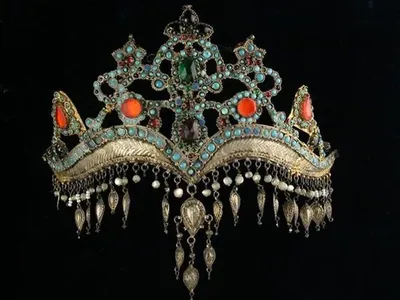
Traditional head jewelry of Uzbek women
The traditional woman’s jewelry is divided into several types and groups: the head, forehead-temporal, braid, nose, ear, neck, chest, armpit, waist, wrist, and occipital jewelry, as well as their sets in different combinations.
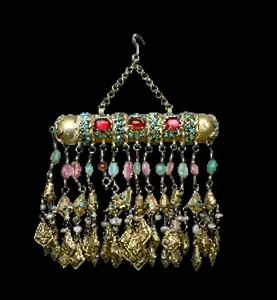
What functions did Uzbek silver and gold jewelry perform?
From time immemorial silverware served not only as jewelry, but also as amulets.
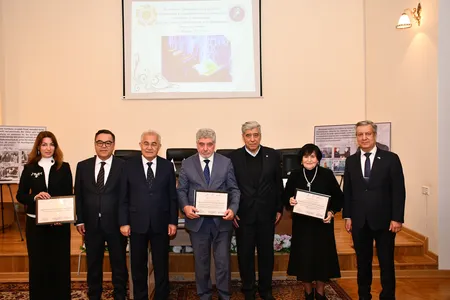
Uzbekistan and Azerbaijan: Dialogue of Cultures: Days of Uzbek Science and Culture started in Baku
The series of cultural events opened with a unique exhibition at the Fuzuli Institute of Manuscripts dedicated to manuscripts related to Uzbekistan and a round table titled "Uzbekistan and Azerbaijan: Dialogue of Cultures".
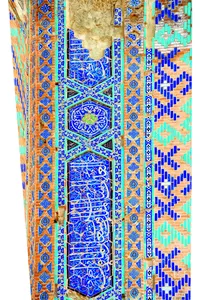
Image in Aksaray decor
Equilateral hexagons are inscribed between each cartouche with the above-mentioned texts.
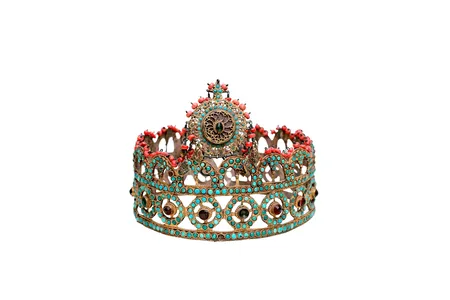
What styles did Uzbek jewelers work in?
Having just the simplest tools, mastering knowledge of natural material in empirical way, jewelers–zargars created rings, earrings, bracelets, complex manytier compositions, amazing in beauty and subtlety of work, with corals, carnelian, turquoise, and pearls, favored in the East.
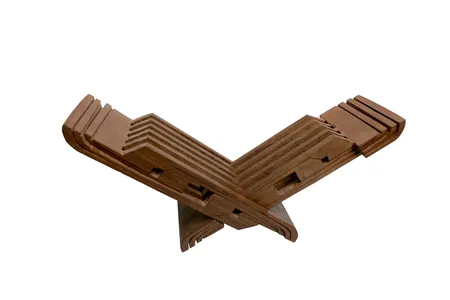
Samples of woodcarving in the State Museum of History of Uzbekistan
Visitors of the State Museum of the History of Uzbekistan may appreciate the art of Uzbek carvers on the way to the building.
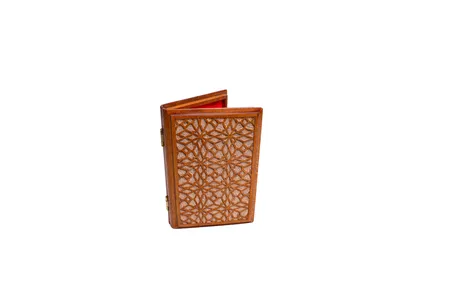
Do you know the three main styles of wood carving?
The carvers uymakor single out three main style directions in the methods of flat-relief carving: pargori, islimi and bagdadi.
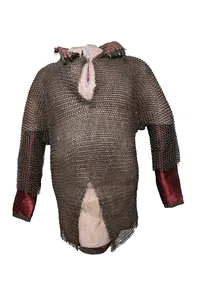
Defensive armor stored in the collection of the State Museum of History of Uzbekistan
The State Museum of History of Uzbekistan also stores defensive armor: coat of mails, chain mails, helmets, shields made of leather and metal.
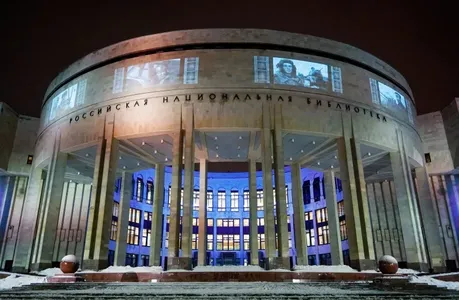
Who created the list of oriental manuscripts in the Russian Public Library?
According to sources, as soon as the eastern manuscripts were acquired by the Public Library, they were catalogued.
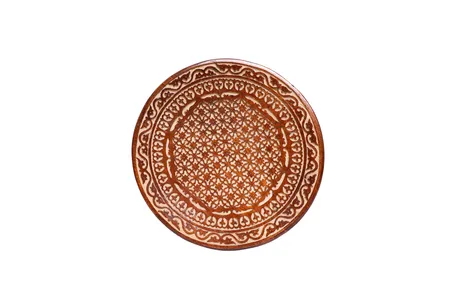
Wood carving using the example of household items
Woodcarving is still widely used in the design of architectural structures and details – the door wings , gates, columns, ceilings, cornices and consoles.
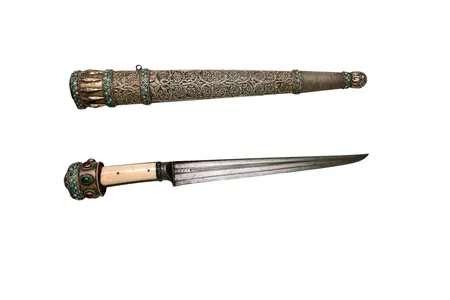
Axes and knives stored in the collection of the State Museum of History of Uzbekistan
The oybolta axes, which are part of the weapons collection of the State Museum of History of Uzbekistan, have some features.
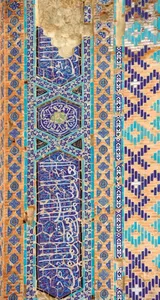
"Justice is the fundamental principle of a state and the motto of its governors": about another inscription in Oqsaroy
What is written above the basement of the front facade of the western pylon in the wide ornamented band attached to the corner tower of the greatest achievement in the history of architecture of the entire Islamic world, the Oqsaroy Palace?
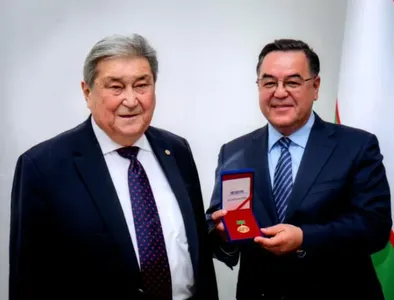
The Chairman of WOSCU was awarded a commemorative medal of the Academy of Sciences of the Republic of Uzbekistan
According to the order of the President of the Academy of Sciences of the Republic of Uzbekistan dated December 27, 2023 on the occasion of the 80th anniversary of the Academy of Sciences of the Republic of Uzbekistan, for his worthy contribution to the development of the field of science, the Chairman of WOSCU, Doctor of Philosophy (PhD) on Art History Firdavs Abdukhalikov was awarded the commemorative medal “80th Anniversary of the Academy of Sciences” Republic of Uzbekistan".
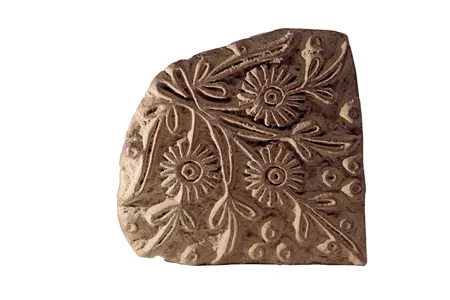
Uzbek woodcarving
Woodcarving is a craft, favorite and popular among many peoples.
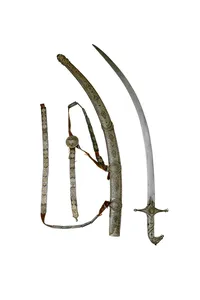
Decoration of handles and sheaths, indicating the high skill of the gunsmiths
The high skill of the gunsmiths is evident in the design of round and three-sided handles.
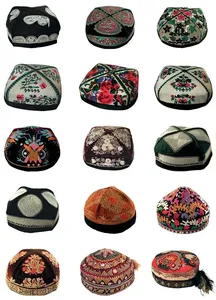
Khorezm skull-caps
Skull-caps (sappush, toppas) were also worn in Khorezm, mainly as a home headdress, and artisans at work also worn them.
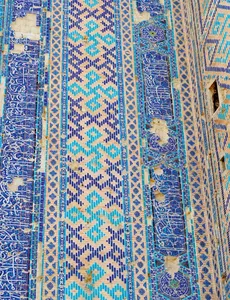
Appeal to Allah: Wise sayings in the inscriptions of Oqsaroy
During the reign of Amir Temur and his descendants, the Oqsaroy Palace witnessed the former prosperity of Islamic civilization.
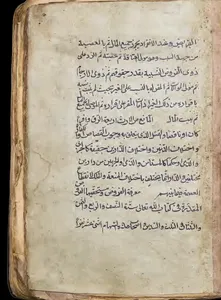
Works of a famous lawyer who lived in the 12th century
The al-Biruni Institute of Oriental Studies of the Academy of Sciences of the Republic of Uzbekistan was founded in 1943 on the basis of the Oriental Department of the State Public Library of Uzbekistan (now the Alisher Navoi National Library).
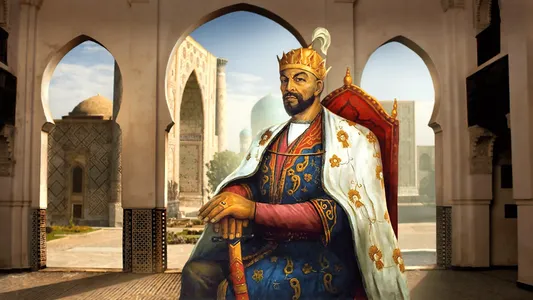
Who was considered worthy of the title of Sahib-Kiran?
Epithet (Sahib-kiran) was used to describe those who were born when the two celestial bodies met (Venus and Jupiter or Venus and Sun).
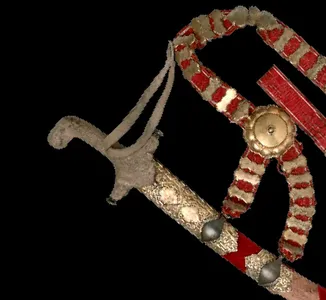
The ceremonial weapon
The appearance of weapons in the old days, especially in the East, was especially important.
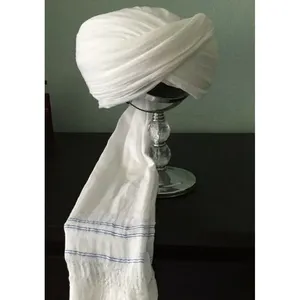
Who wore a turban in Khorezm?
In addition to the chugirma and skullcap, Khorezm also had such a type of headdress as the salla - turban.
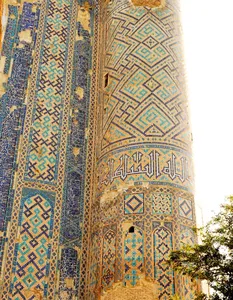
Epigraphy of Oqsaroy: what is written there?
The palace's epigraphy is mostly preserved on the right (western) pylon.
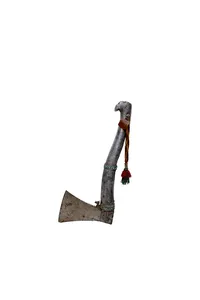
The Collection of weapons of the State Museum of the History of Uzbekistan
The Museum’s collection of weapons of the 18th – 19th centuries is significant.
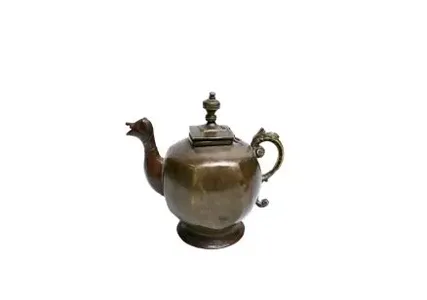
Changes in Uzbek copper-chasing In the late 19th – early 20th centuries
In the late 19th – early 20th centuries the Kokand craftsmen began to emboss the image of the palace of the last Kokand khan Khudayar Khan on trays, as well as fabulous beasts, birds, people, copying them from lithographed editions.
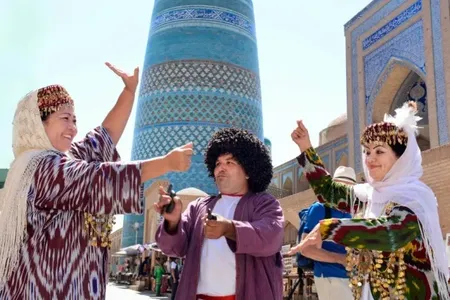
What was worn under the chugurma?
A quilted hat made of takhiya (tayha) fabric was worn under the chugurma. Takhiya (tayha) were of two types – conical and with a lower crown.
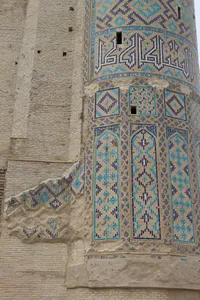
Which Arabic script was most often used in the decor of architectural structures during the reign of Temurids?
All the extant epigraphic compositions, one way or another, provide an opportunity to trace down the letter types and its varieties.
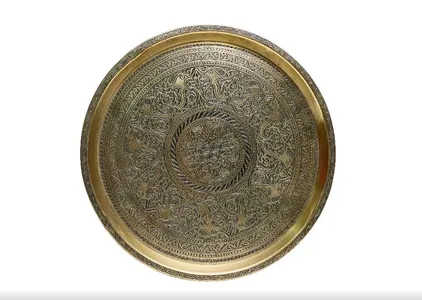
Where were geometric motifs most often used in copper chasing?
The embossing as fine manual work was carried out with simple tools: various types of chisels kalam, small hammer bolga, special tools randa and maskol for smooth finish of the surface after the pattern was applied.
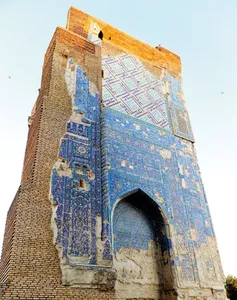
How do Oqsaroy inscriptions differ from others?
The decor of the building used a variety of styles of the Arabic script.
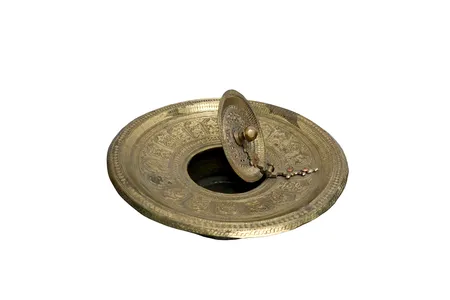
Floral motifs (islimi) in copper chasing
In copper-chased goods сompositions are linear, as a rule, when a pattern is constructed in the form of horizontal and vertical stripes; centric with emphasis of central motif and all the motifs (medallions, rosettes, etc.).
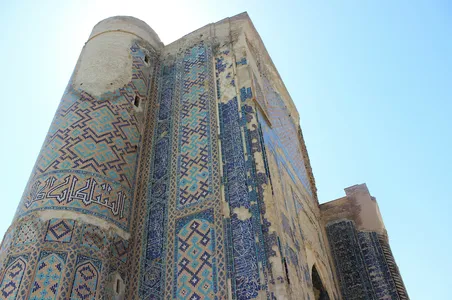
A monument reflecting the best achievements of the art of calligraphy related to the epoch of Amir Temur
From the point of view of the art of calligraphy, the palace is an example of skilful application of a variety of Arab scripts, which became one of the most integral elements of Oqsaroy decor.
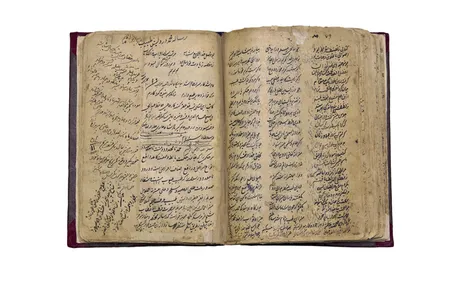
Many medieval doctors were talented poets...
Many medieval doctors were talented poets and they successfully used the skill for their scientific works.
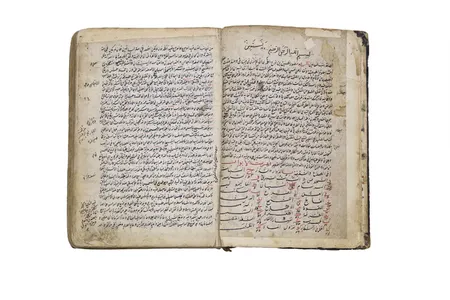
Ancient copies of manuscripts of the 13th century
In the collection of the Institute of Oriental Studies named after Abu Raikhan Beruni of the Academy of Sciences of the Republic of Uzbekistan, a work in Arabic titled “Kitab al-ghina wa al-muna” (Sufficient and Desired Book) by Bukharan doctor Hasan ibn Nuh al-Qumri (al-Qamari) al-Bukhari (d. 999) that also referred to as “Kunnash” (Collection and “Shamsiya al-Mansuriyya” (Solar [Book of] Mansur) is of great scientific interest.
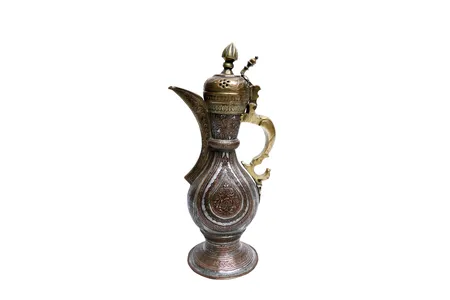
New forms of traditional copper-chased goods in the second half of the 19th century
The embossing as fine manual work was carried out with simple tools: various types of chisels kalam, small hammer bolga, special tools randa and maskol for smooth finish of the surface after the pattern was applied.
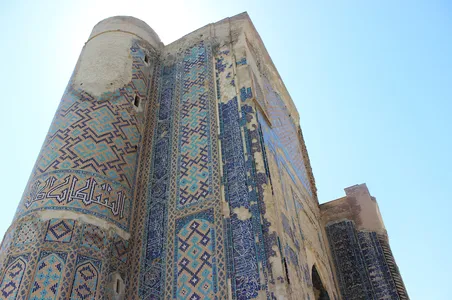
Mosaic floors of a magnificent 15th century building: who first identified it?
In the course of research carried out at Oqsaroy, which is the highest achievement in the history of architecture throughout the Islamic world, the mosaic floors of the building were also noted.
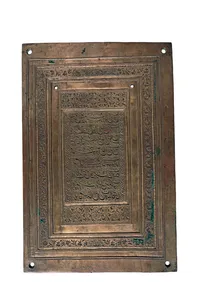
What is the difference between the chasing technique of Uzbekistan based on its regions?
The local peculiarity of the copper-chased goods of Uzbekistan manifested mainly in ornamental decoration and in some details in the general uniformity of forms.
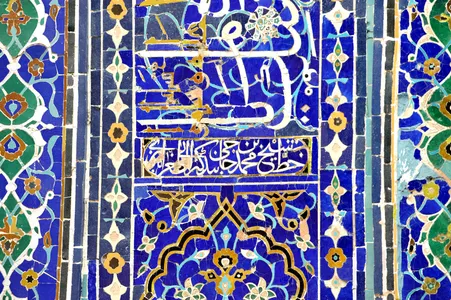
What are the inscriptions on the portal of the Tuman Aqo mausoleum about?
There is an inscription with white characters in the thuluth script along the perimeter of the portal.