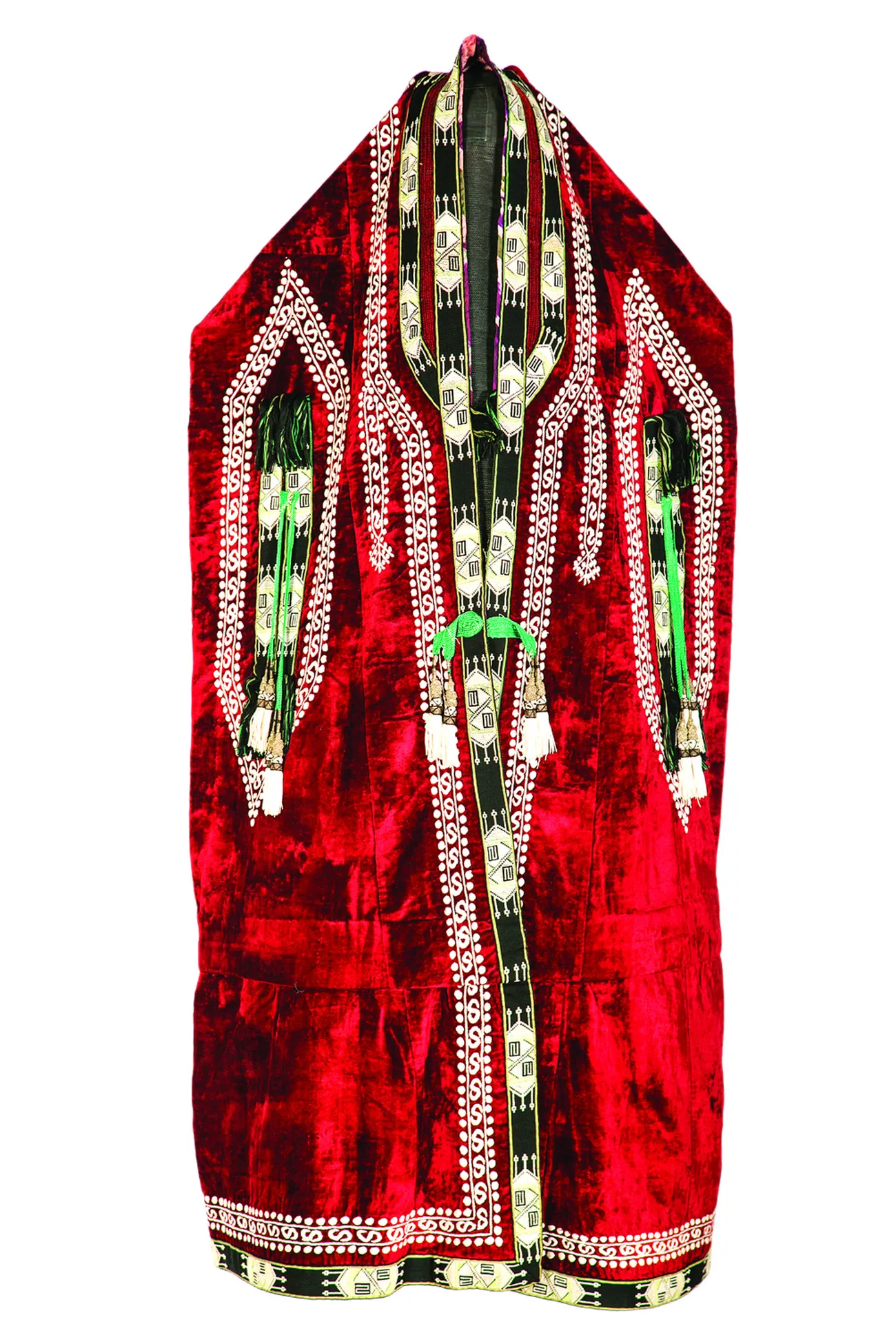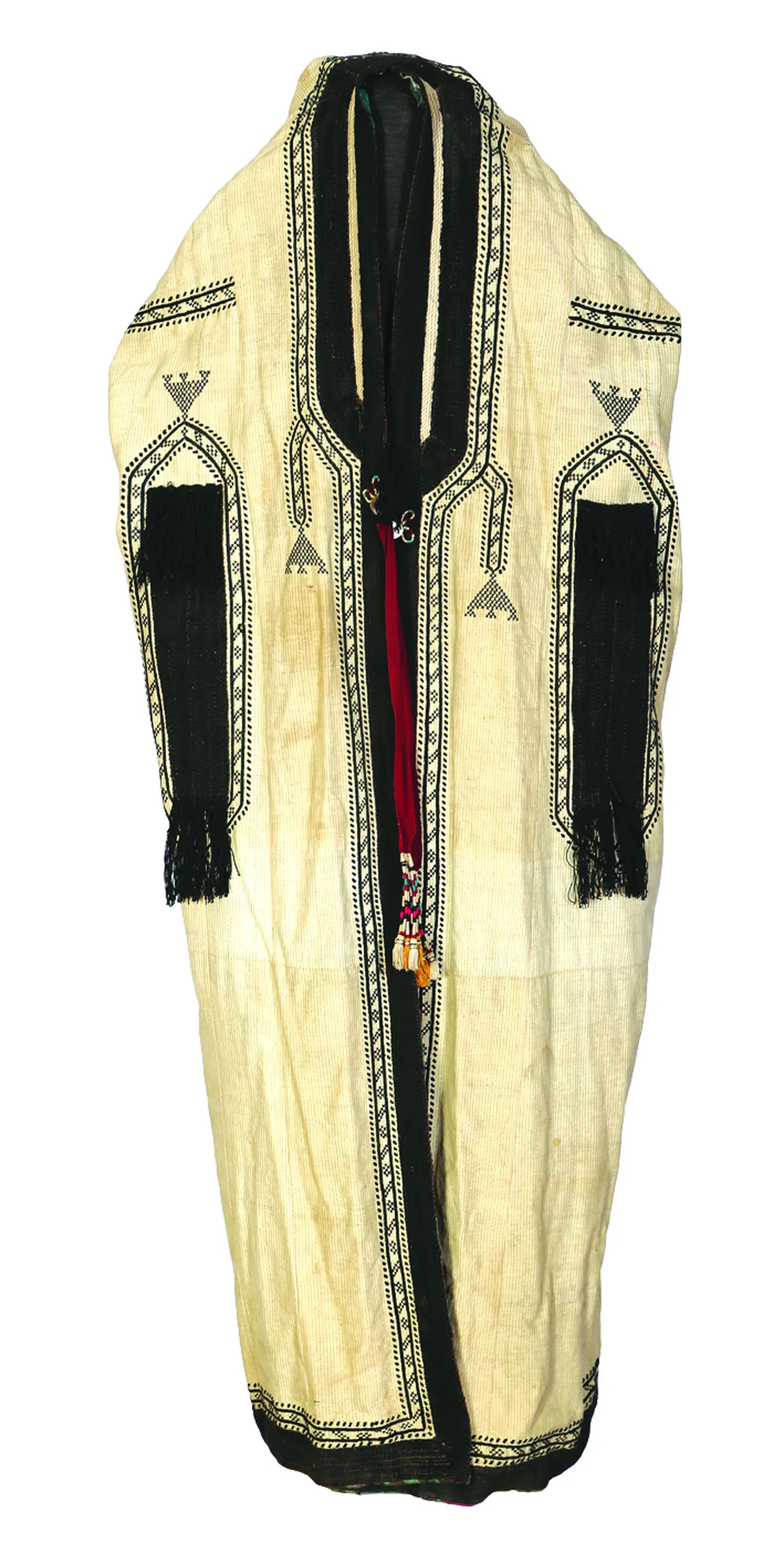
Worn as an outer garment, is characterised by long, narrowing sleeves sewn together at the back. This body-concealing robe conforming to the rules of Islam was complemented with the chachvan, a rectangular, heavy in weight face covering made from horsehair. Traditionally, women would wear the paranja and chachvan whenever they went outside the home.
Early paranjas dating back to the 19th century were rather low-key and modest, usually made of blue or silver grey fabric, often ribbed cotton. With the arrival of other types of fabrics, paranjas became more lavish, some sporting different colours and made from luxurious materials, such as ikat, velvet, and even brocade. While the fabrics changed and the repertoire of adornments evolved to include buttons and metal plates, the cut of the robes remained unchanged with time. Unlike other elements of female clothing, paranjas were not sewn at home by the women themselves, but commissioned from expert tailors.
Paranjas were trimmed with a black-and-white edging called zeh or dziyak embroidered with a row of geometric zigzags and ram’s horns.
More information about this can be found in the book-album "Cultural Legacy of Uzbekistan in the Museums of Poland" (volume XL) from the series "Cultural Legacy of Uzbekistan in the Collections of the World".
The general sponsor of the project is the oilfield service company Eriell-Group.