
A complete set was used at wedding ceremonies. So, among the most common breast ornaments were zebigardon and nozigardon necklaces, buyin tumor and kyltik tumor pendants; forehead-temples – sinsil, bibishok, mohitillo and tavk. A bride‘s head was decorated with tillakosh. Head adornments were usually worn after marriage. They indicated that the woman was already married. In general, since ancient times, jewelry has been used not only to adorn, but also to identify the age and social status of the person that wore it.
Tumors (amulets) are a special type of jewelry. They were used to protect its owner from the evil eye. Amulets varied according to how they were worn, although their functions and purposes were the same – buyin-tumar (neck amulet), kukrak-tumar or kultik-tumar (armpit amulet) and so on. Items from this category of jewelry had a triangular, rectangular or cylindrical shape and had the forms of specific cases, in which a protective prayer written on a piece of paper was hidden. Women could use tumors for other purposes, e.g. putting medicinal or aromatic substances inside.
Rings and bracelets were mainly made of gold and silver and decorated with precious stones. Rings were an important part of the image; they were popular among both women and men. Rings were in special demand among officials who used them as seals. Men wore gold rings up until the 10th century. Later, under the influence of Islam, wearing gold jewelry by men was prohibited, which led to the growing popularity of silver. Another type of jewelry worn by both men and women is camarband (belt). Women‘s belts were most often sewn f rom velvet a nd decorated with gold or silver elements and embroidery. Men‘s ones were usually made of leather, their decor depended on the well-being of the owner.
Earrings worn by both children and adults were no less popular. The shapes of the earrings showed a greatest variety. The most common types included besh-ayak, oy-baldok, kashkar-baldok and zarkokil.
Almost all types of the 18th-19th-century jewelry can be found displayed at the Kokand State Museum-Reserve and its divisions.
You can learn more about the topic in the book-album “The Collection of the Kokand State Museum-Reserve” (Volume XLIII) in the series “The Cultural Legacy of Uzbekistan in the World Collections”.
The main sponsor of the project is the oilfield services company Eriell-Group.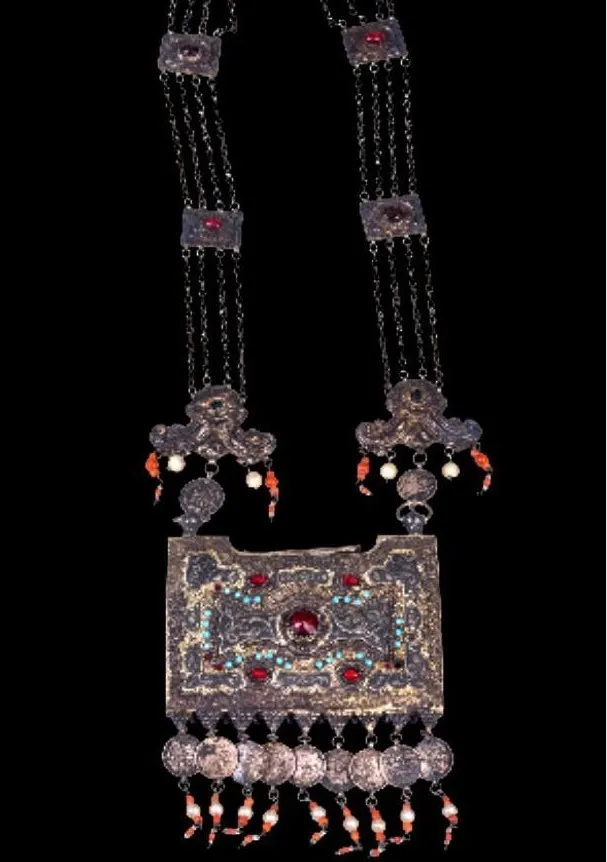
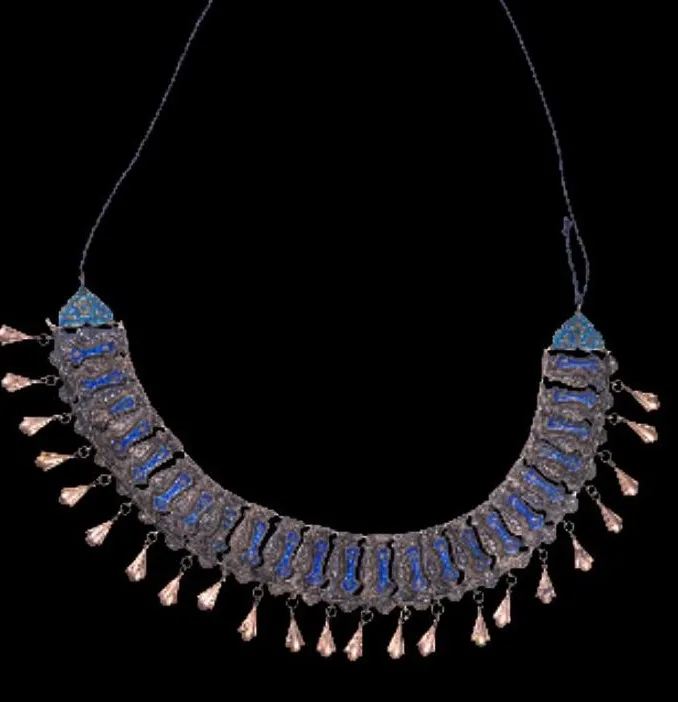
The jewelry worn by Uzbek women
The jewelry worn by women in the Uzbek khanates could be divided into several groups, depending on the parts of the body they adorned: forehead-temples, forehead, forehead-temples-neck, temples, braid, neck and breast, earrings, hand jewelry and so on.