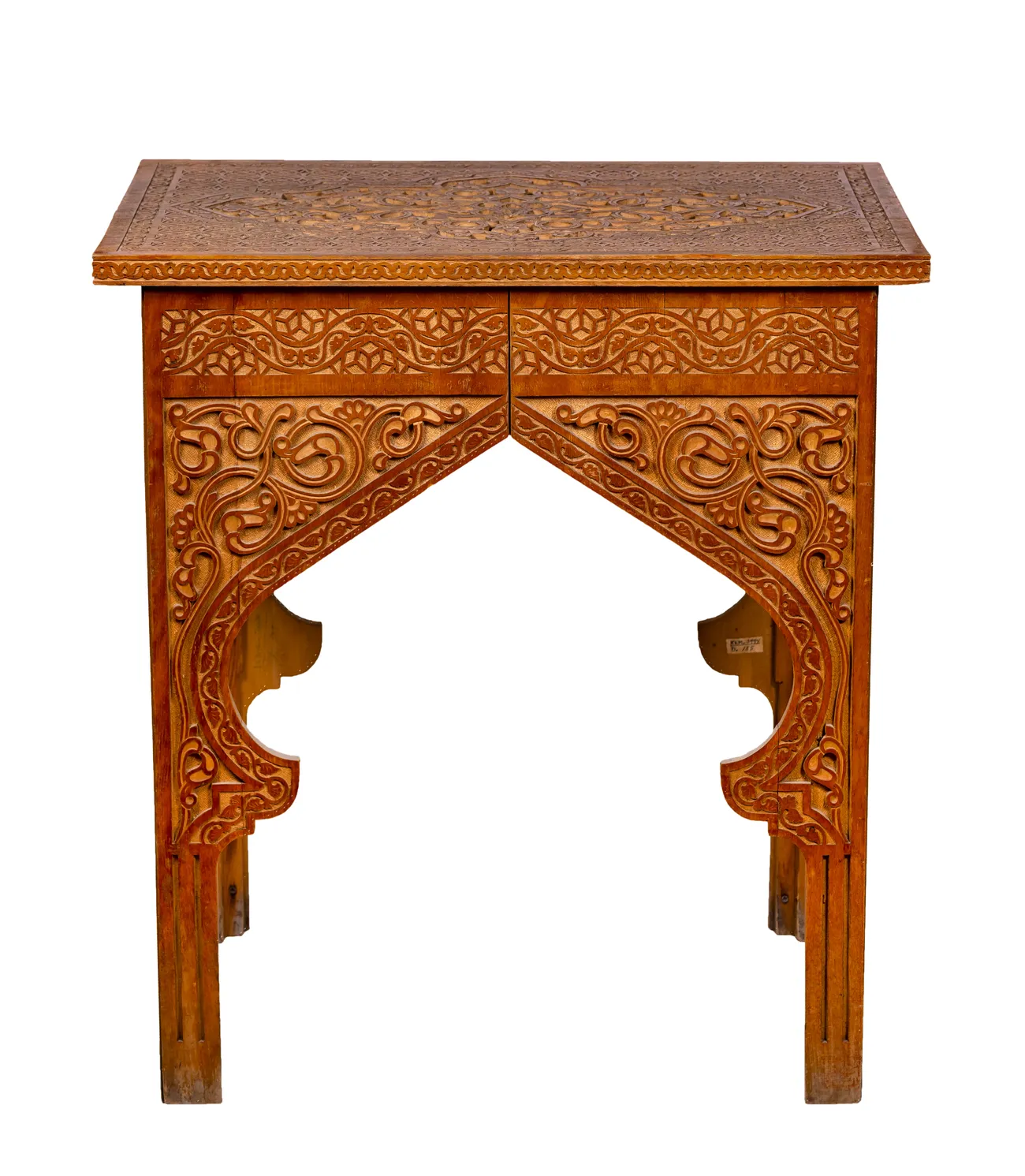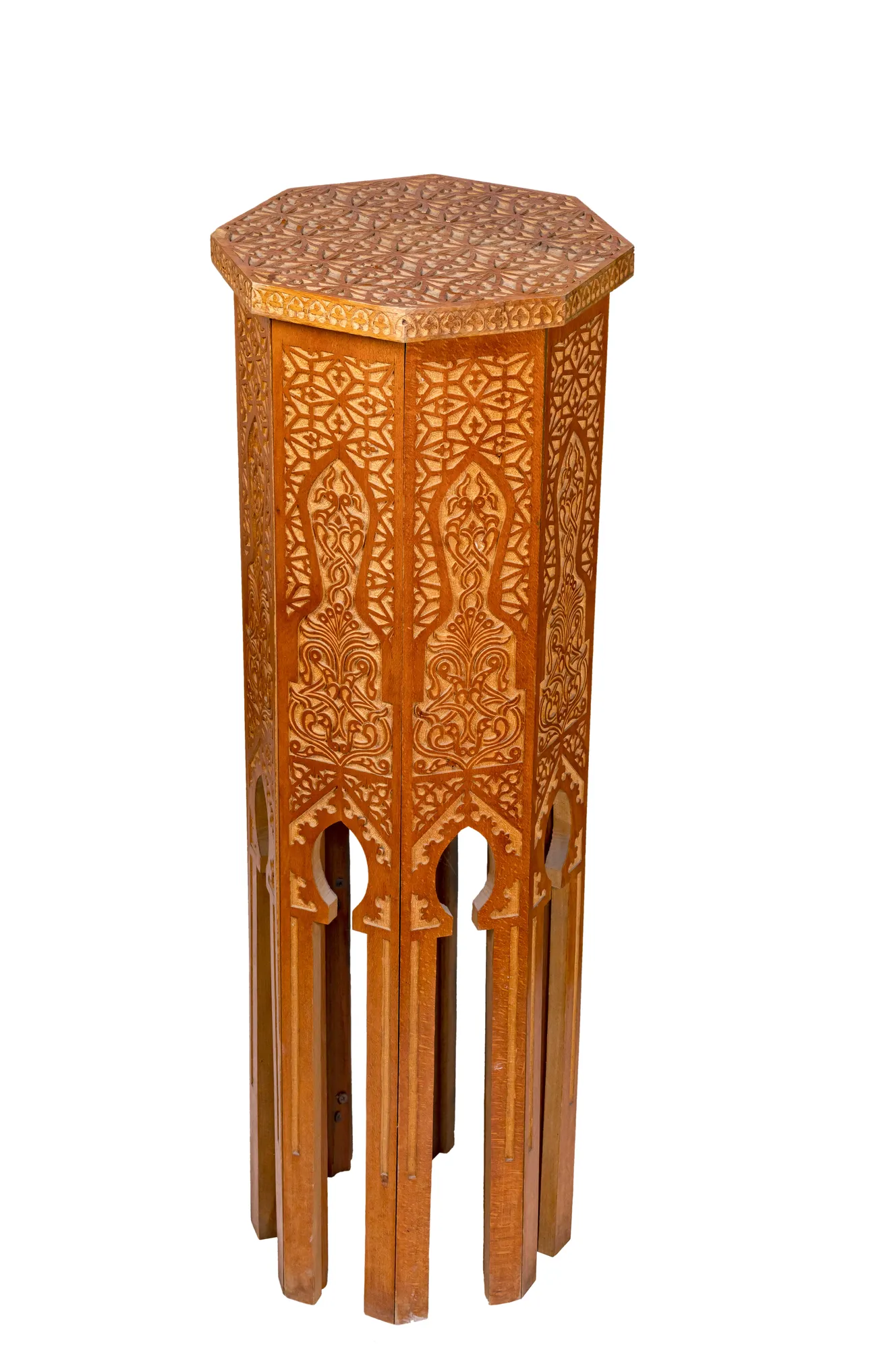
All of them were accepted into the museum fund from the 1950s to 2020. Local craftsmen used carving styles such as pargori, baghdadi and islimi. The name of the pargori style comes from the word pargor – a compass. The master uses this tool when applying a geometric pattern. Circles, squares, triangles are drawn on the workpiece, and then a very delicate pattern is marked on them. The depth of the thread is 1–1.5 mm.
Baghdadi style is widely used in the art of Central Asia, India, Afghanistan, Iran and other states. Its name comes from the ancient paneled door construction. The style itself is quite simple, but graceful, based on geometric ornaments. It is used in the manufacture of doors, columns, trellises, tables and chairs. Finally, the islimi style is a classic type of endlessly curling floral decor. There are many types of it, depending on additional elements: islimi mehrob, islimi bodom, islimi bulbul and others.
You can learn more about the topic in the book-album “The Collection of the Kokand State Museum-Reserve” (Volume XLIII) in the series “The Cultural Legacy of Uzbekistan in the World Collections”.
The main sponsor of the project is the oilfield services company Eriell-Group.
2_1_1.webp)
_1_1.webp)