So when did folk craftsmen master this technology?
According to information from the 12th century tiles with turquoise glaze are gradually introduced into the architectural decor. Early samples of carved glazed terracotta can be seen on the portal of the oldest mosque of Bukhara, Magoki-Attari.
In the 12th century, ornamental compositions began to be widely used in the production of ceramics. In the eastern areas of Mavarannahr, pottery covered with unpierced green glaze also spreads. In cities and even villages, pottery became the most common type of craft.
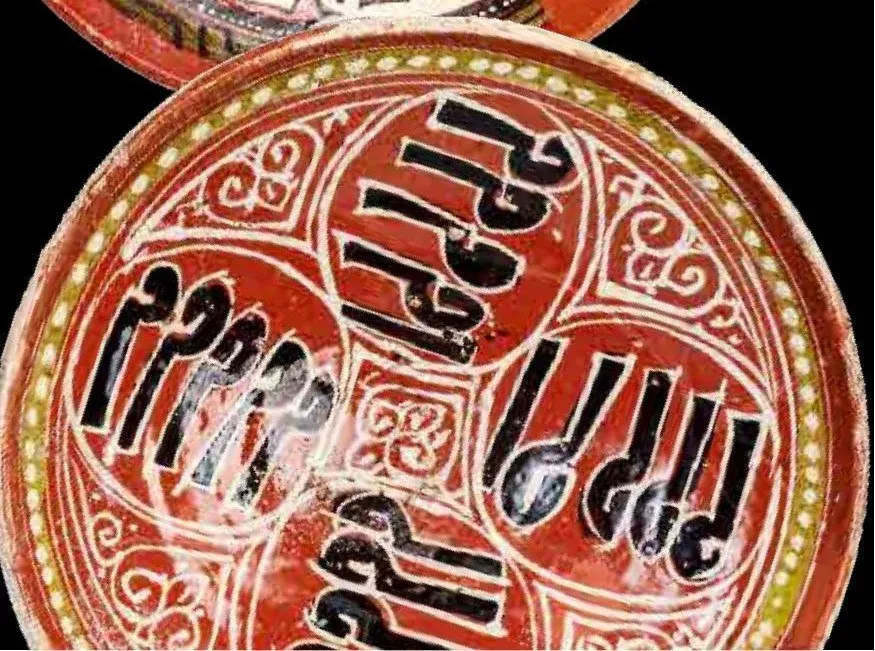
In ancient times in Samarkand, Bukhara, Tashkent there were whole quarters of potters who made excellent glazed dishes. In its decor one can distinguish both the Sogdian heritage (most often these are the images of birds in a circle of pearls) and the new Islamic design techniques most clearly manifested in the pottery of the Samanid era.
Also Samanid traditions includes an epigraphic decor: good wishes, written in a slender “ceramic” Kufic script. Later, underglazed painting, imitating Arabic writing – the so-called pseudo-epigraphic ornament - becomes a very frequent decoration of Karakhanid ceramics.
The buds, vortex rosettes, various kinds of braids and variations of different palmettes that appeared in the ceramic decor can be attributed to the genuine Karakhanid style.
Glazed ceramics was quite expensive and much appreciated. Unlike the Samanid period, if the dish cracked or broke into large pieces, it was repaired, by making holes at the chipped or cracked edges and tightening them with copper wire. Glazed ceramics was an indicator of the status of homeowners, a hallmark of their solvency.
You can learn more about the topic in the book-album "Collection of the State Hermitage Mavarannakhr Art 8th – 15th centuries" (XV volume) from the series "Cultural Legacy of Uzbekistan in the World Collections".
The main sponsor of the project is the oilfield services company Eriell-Group.
_1_1.webp)