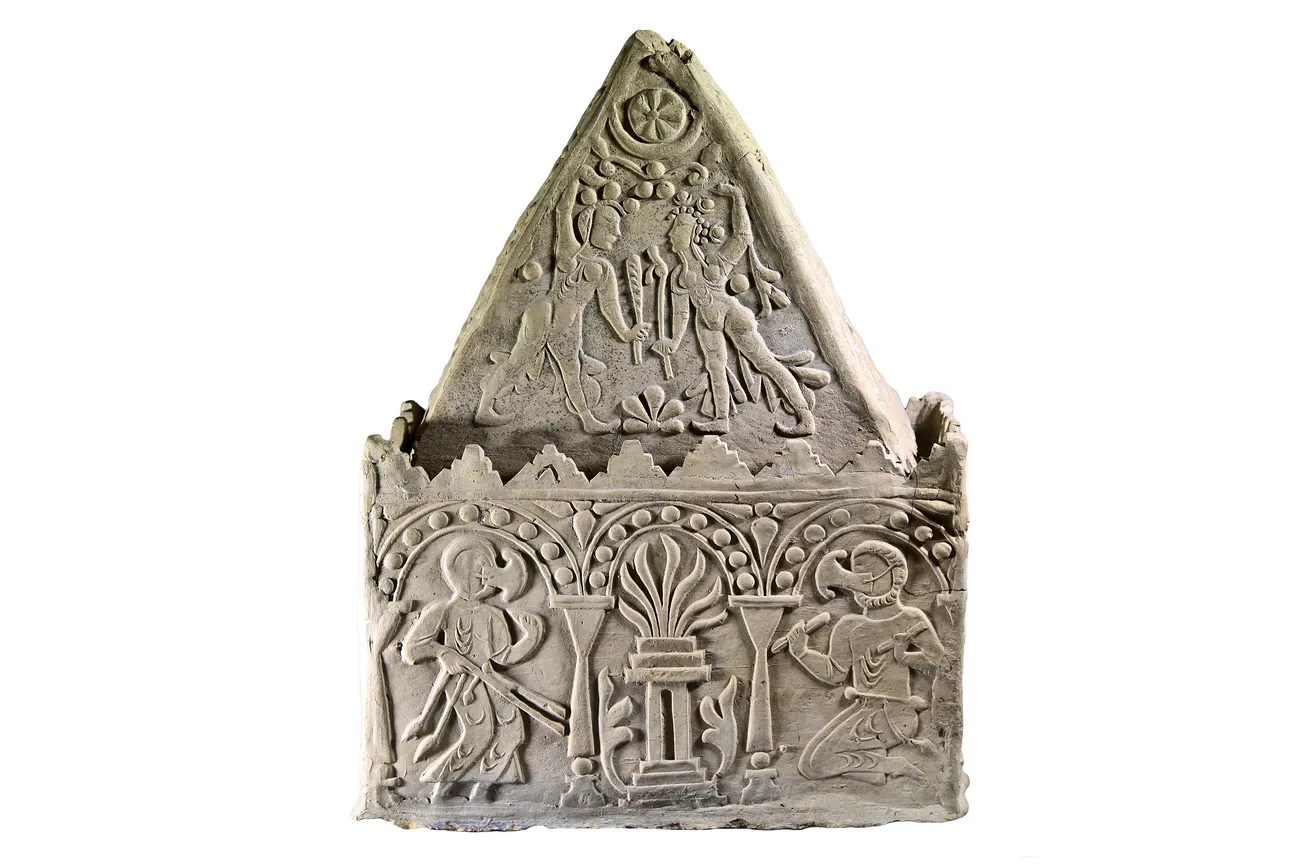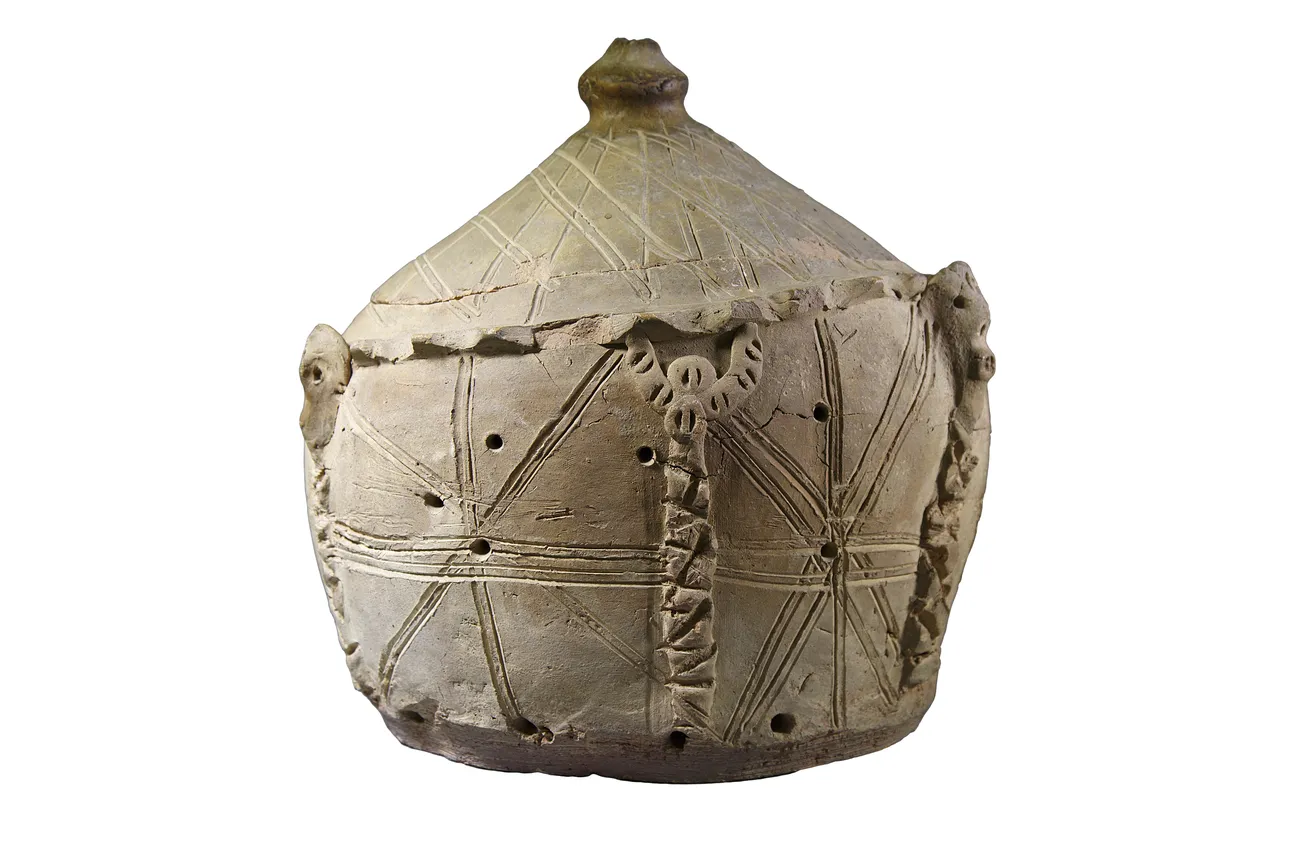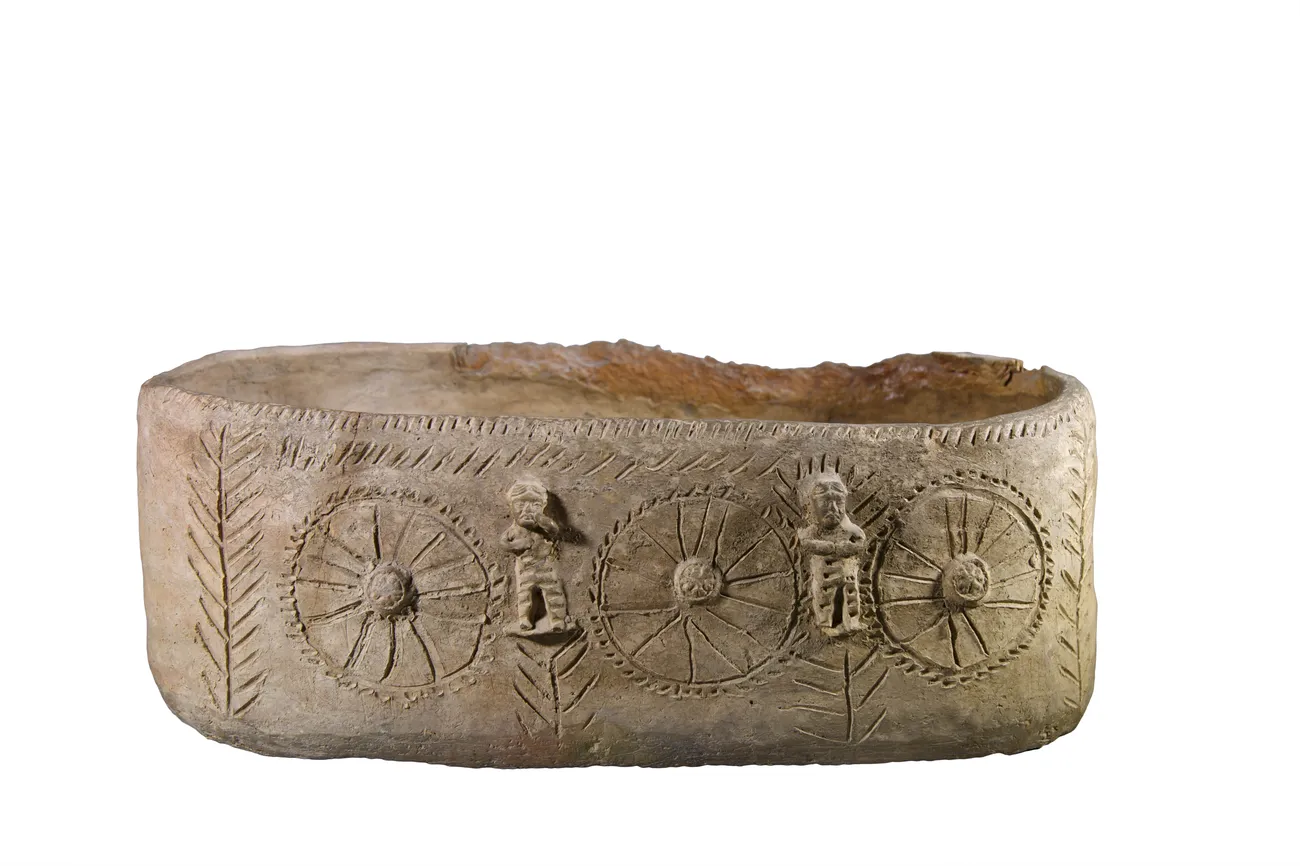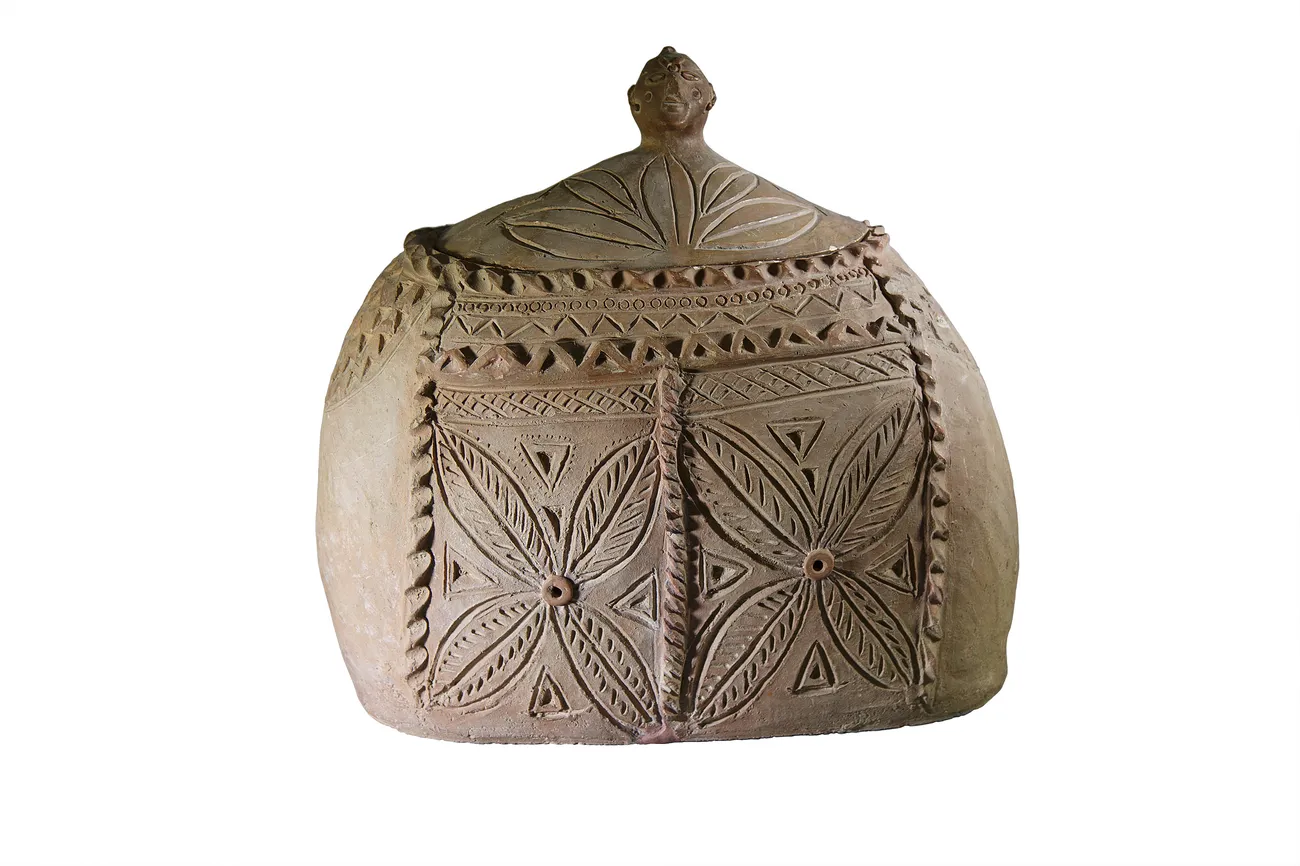
Clay sculpture with coloring of the V century from the settlement of Kuyovkurgan is psychologically expressive and professionally executed. Among the original monuments of this period are ossuaries or astodans - special cult ceramic ossuaries used in the funeral rites of fire worshipers. In accordance with these customs, after death, the body of the deceased was taken out to the platforms (dakhma) in order to specially learned dogs or birds cleaned it of meat, and then the bones were put in ossuaries and placed in special burial chambers - nauses. The first ossuaries in the region appeared in the 3rd-2nd centuries BC (Khorezm) and became widespread until the conquest of Central Asia by the Arabs in the VII-VIII centuries. In Khorezm, the so-called statuary ossuaries were widespread in the form of a rectangular or oval box, the top of which was decorated with a sculpture of a man or woman.
The Samarkand Museum has a large collection of mainly Sogdian ossuaries, which have various shapes - rectangular, oval. They were decorated with relief images on vertical walls. Only sometimes the lid of the ossuary was made in the form of a small human figure. The Museum has dozens of ossuaries and over 700 examples of small plastic art, which were created mainly in Sogd - from the 2nd century BC according to the 8th century AD.
The ossuaries of Sogd date mainly from the 5th-7th centuries, the scenes depicted on them are associated with the deities and characters of the Zoroastrian religion. The most common composition was an arcade, in the openings of which there were figures of the gods of the Sogdian pantheon. Sometimes Sogdian ossuaries were decorated with moldings or engraved, scratched images of zoomorphic or plant origin.
You can learn more about the topic in the book-album "Collection of the Samarkand State Museum-Reserve" (XVIII volume) in the series "Cultural legacy of Uzbekistan in the world collections".
The main sponsor of the project is the oilfield services company Eriell-Group.ъ