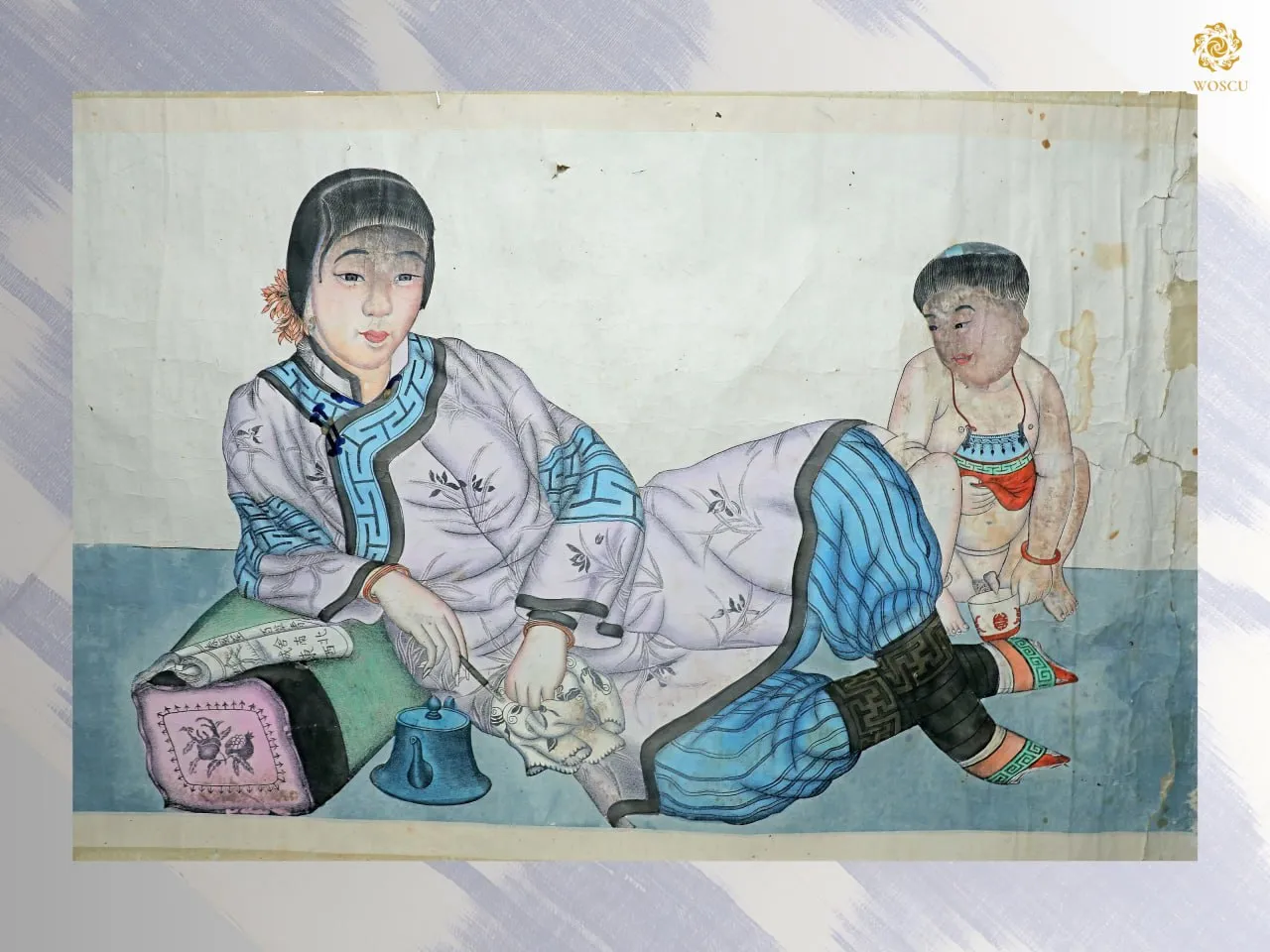
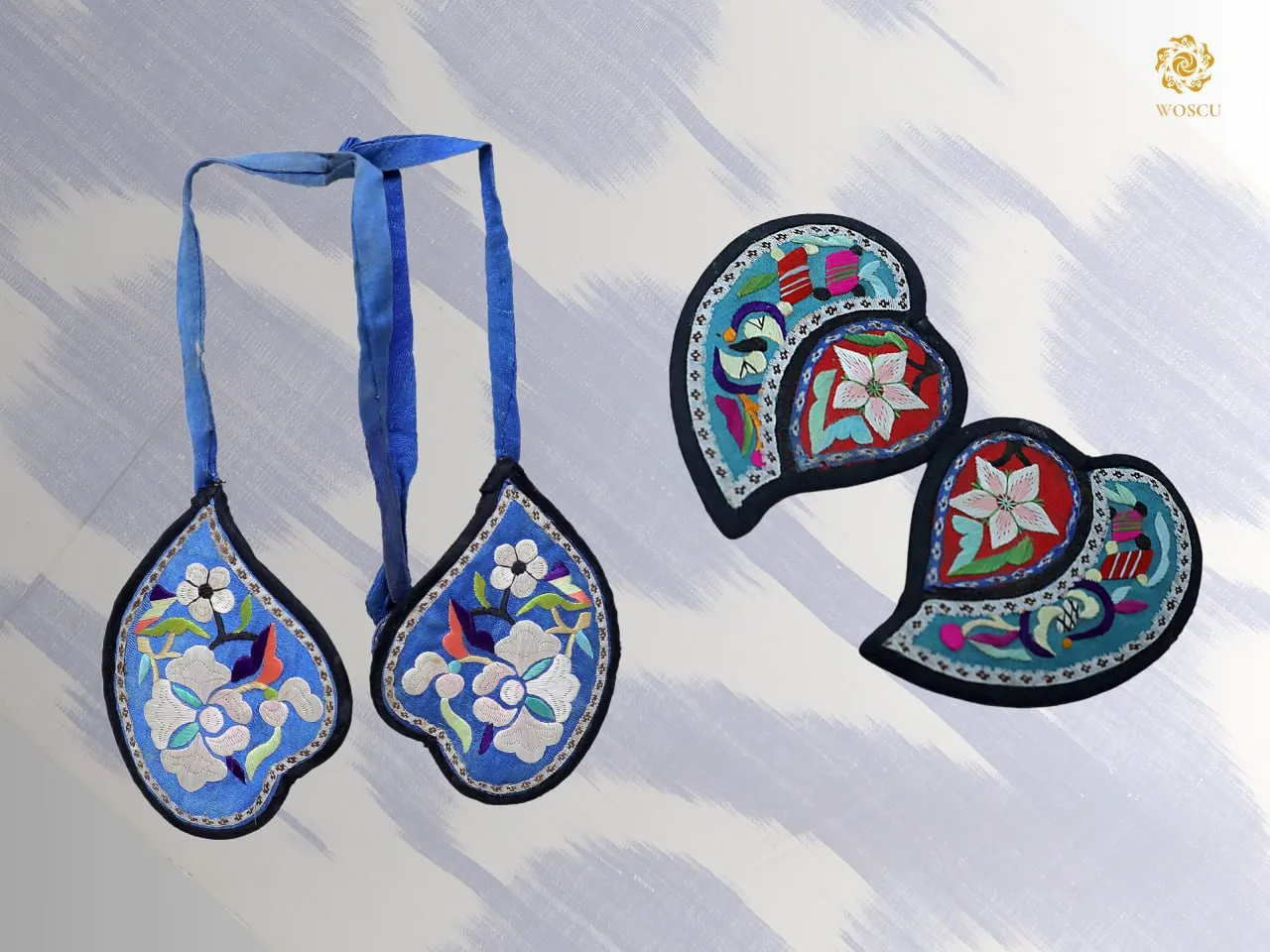
Most of them were collected by museum researchers, including the famous ethnographer Turda Mirgiyazov, in 1927 – 1928 in the village of Shortyuba in Kazakhstan and the cities of Tokmak, Pishpek, the village of Kara-Kunguz in Kyrgyzstan. Samples of Dungan applied art are evidence of the original culture of the people who, more than 130 years ago, came from China to the Central Asian region and found a new homeland here.
Currently, about two thousand Dungans live in Uzbekistan, Tashkent, Andijan and some other cities of the Fergana Valley. The most compact Dungan settlement is called Dungan Mahalla. It is located in Urtachirchik district of Tashkent region. This is a true seat of folk culture. The Dungans carefully preserve the age-old traditions that are revived in independent Uzbekistan. The Dungan collection of the Museum numbers 339 items.
You can learn more about the topic in the book-album "The Collection of the State Museum of the History of Uzbekistan" (Part 2, Volume XXVII) in the series "Сultural legacy of Uzbekistan in the world collections".
The general sponsor of the project is the oilfield services company Eriell-Group.