
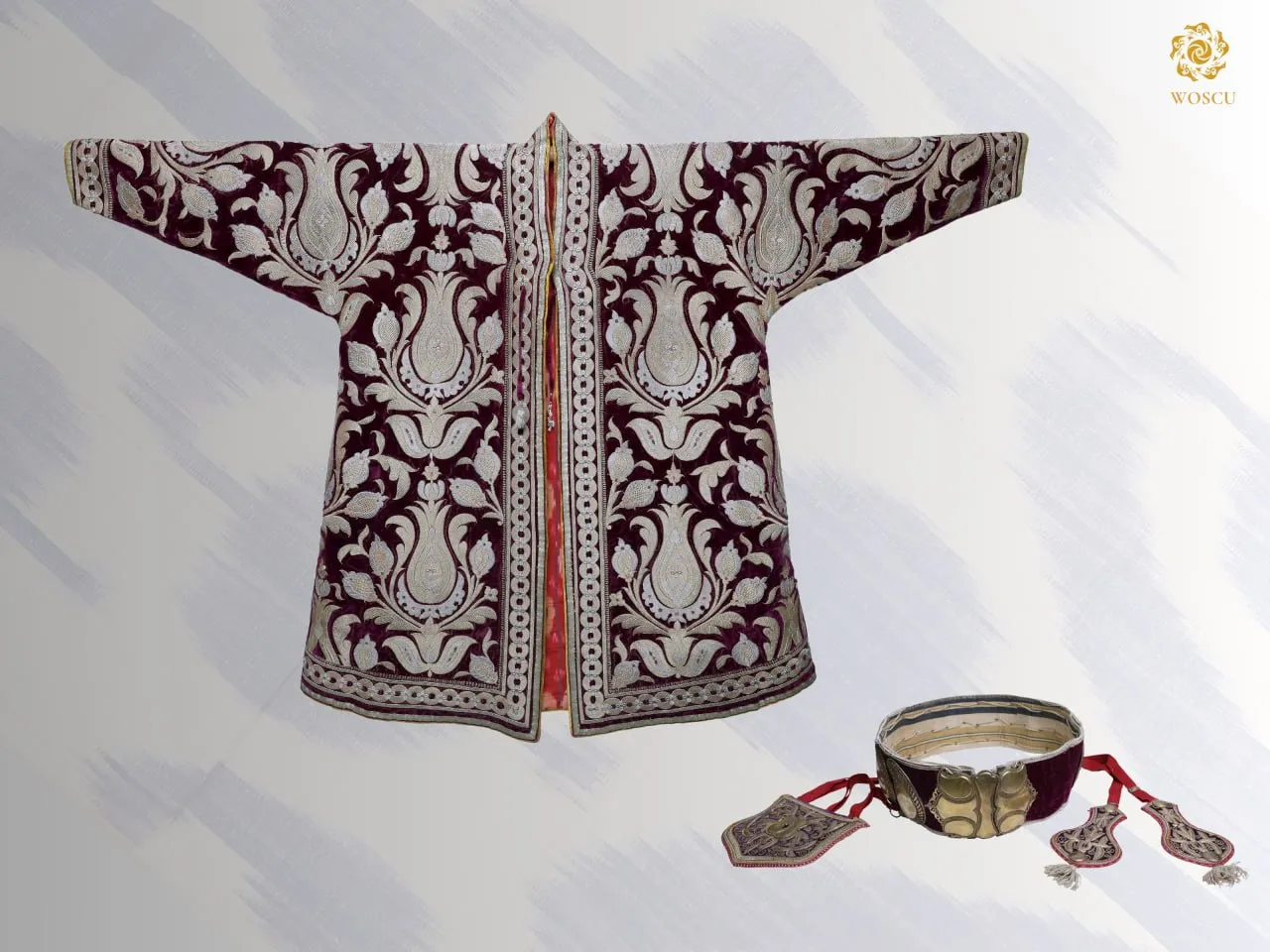
The paintings of the palaces of Bolalikktepa, Varakhsha, Afrasiyab (6th – 8th centuries) depicted people dressed in gold-woven clothes. Ruy Gonzalez de Clavijo, the Spanish ambassador at Amir Temur’s court in 1403 – 1406 mentioned Amir Temur’s wife Saray Mulk Khanum (Bibi-Khanum) that she was present at the solemn feast wearing the silk embroidered gold dress. By the end of the 19th century, the traditions of gold weaving were preserved at the court of the Amir of Bukhara.
Ceremonial clothing, hats, shoes, horse accessories were decorated with gold embroidery. The craft of the gold sewers was exclusively masculine. In the twentieth century gold-embroidered products begin to be produced in Samarkand, Urgut, Tashkent, Gijduvan and other cities. The sophistication of the patterns, the subtlety of the work and the fantastic art of painting brought the worldwide fame.
Now women are mainly engaged in this business. Like many years ago, they sew handmade oriental lush things. And whether it is a skullcap or a wall panel, shoes or a bathrobe – everything is a true work of art.
You can learn more about the topic in the book-album "The Collection of the State Museum of the History of Uzbekistan" (Part 2, Volume XXVII) in the series "Сultural legacy of Uzbekistan in the world collections".
The general sponsor of the project is the oilfield services company Eriell-Group.