
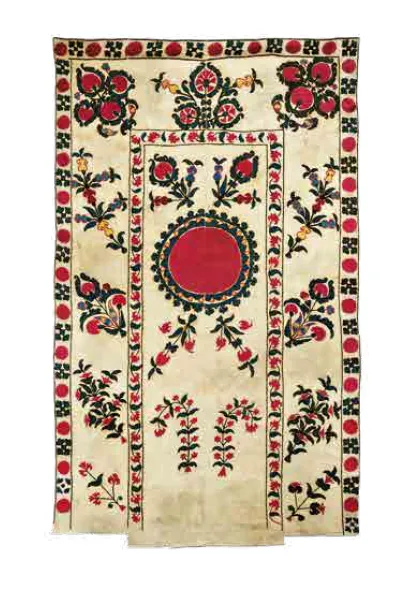
Women independently grew silkworms and unwound cocoons or forwarded them to a cocoon workshop for processing. Threads were also dyed at home with the use of natural pigments. The commonest were madder, which gave the red color; cochineal used for a wide range of colors – from pink to carmine; and isparak, to get the yellow color, which in combination with indigo also gave green. Professional dyers, mostly Jews, were engaged in dyeing threads in indigo. Embroidered items of the 19th century featured from 9 to 14 and even 15 colors, with red predominating in the main motifs – palmettes and rosettes. The richness of red shades – from brick and crimson to carmine and rust – was astounding!
You can learn more about the topic in the book-album "The Collection of the Czech Republic" (Volume XVI) in the series "Cultural Legacy of Uzbekistan in the World Collections".
The main sponsor of the project is the oilfield services company Eriell-Group.