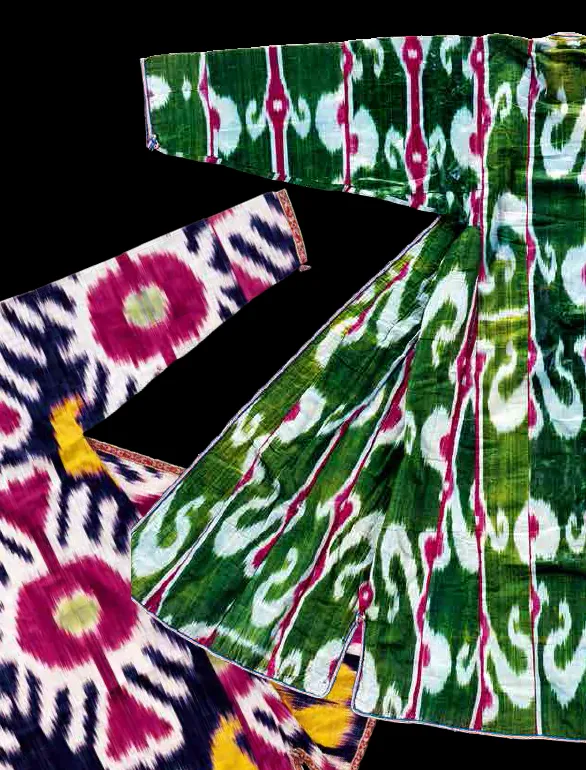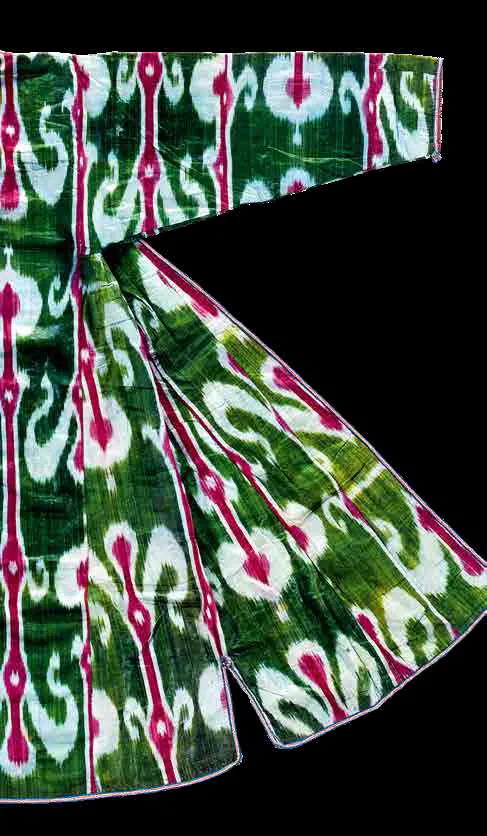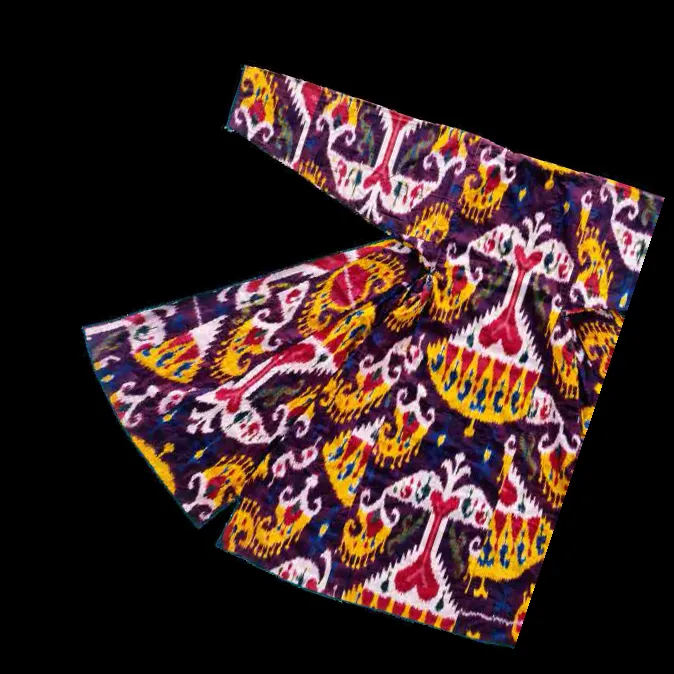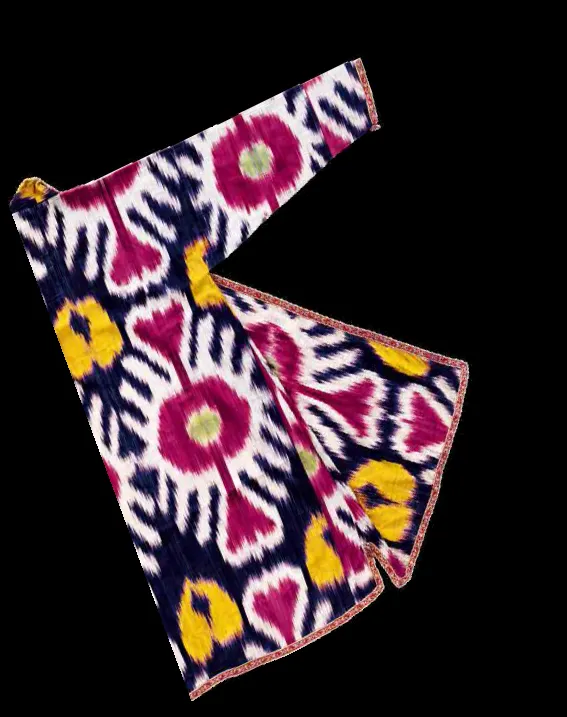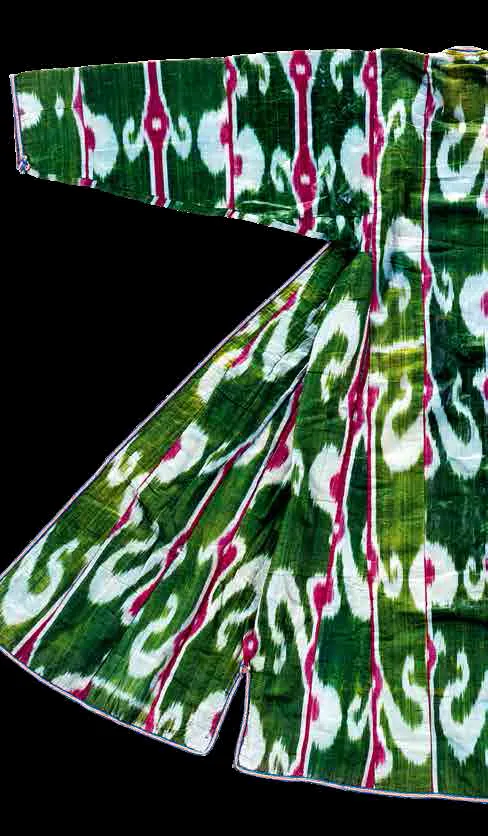
First of all, there should be mentioned a so-called seven-color khan-atlas. It was produced in workshops where the principle of labor division was used.
In Central Asia, in order to produce Ikat textile the warp threads were dyed before they were installed to the loom. For the joom, both silk and cotton yarn could be used. Thus, fabrics of different quality were made. To produce a shiny surface of the finished fabric, it was moistened with egg white, and then knocked out with wooden hammers.
You can learn more about the topic in the book-album "Cultural legacy of Central Asia in Japanese Museums" (volume XX) in the series "Cultural Legacy of Uzbekistan in the World Collections".
The main sponsor of the project is the oilfield services company Eriell-Group.