
A symposium on "Youth Dialogue for the Future along the Silk Road" was held at UNESCO headquarters on June 13.
The event was organized in cooperation with the Permanent Representative of Uzbekistan to this organization, UNESCO's Silk Road program, and China's diplomatic mission to the organization. The event was attended by Assistant Director-General of UNESCO for Natural Sciences Lydia Brito, heads and representatives of diplomatic missions of the member states to UNESCO, as well as young scientists and international experts.
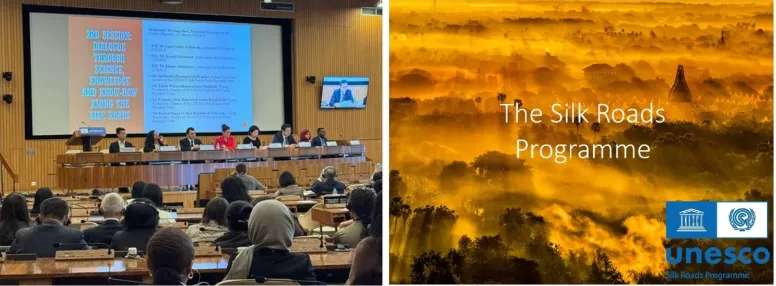
The participants discussed the historical heritage of the Silk Road and its contribution to the development of dialogue and cooperation between different cultures and civilizations, including in such areas as art and literature, philosophy and spirituality, science, knowledge and know-how. He emphasized the importance of dialogue and exchanges between different cultures and civilizations along the Silk Road for common development and sustainable peace.
In particular, the Permanent Representative of Uzbekistan to UNESCO informed the participants of the event about the role of such historical cities as Bukhara, Samarkand, and Khiva, located at the crossroads of the Great Silk Road, in the development of dialogue between different peoples, cultures, and civilizations, and the exchange of scientific discoveries, technologies, and intellectual traditions.
It was emphasized that President Shavkat Mirziyoyev pays special attention to building the Third Renaissance in New Uzbekistan through the development of science, education, and culture. The participants also familiarized themselves with Uzbekistan's international initiatives to develop scientific cooperation, establish partnerships with leading world scientific centers, create new research networks, and expand scientific and technical exchange between different countries and regions of the world.
In particular, the establishment of the Center of Islamic Civilization in Tashkent and the establishment of the UNESCO - Uzbekistan International Award named after Beruni for scientific research in the field of artificial intelligence ethics were noted.