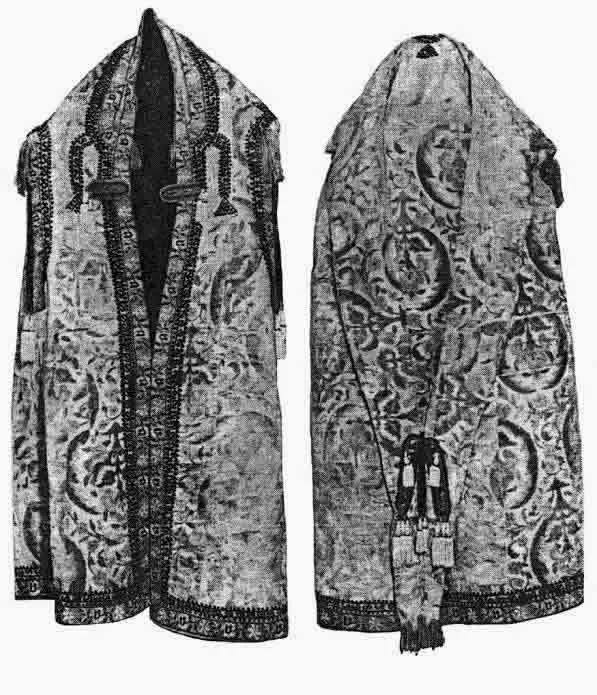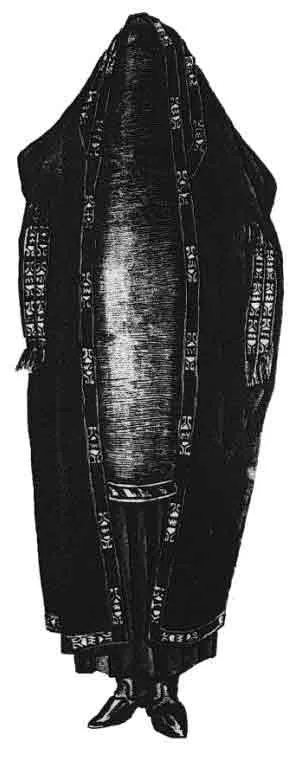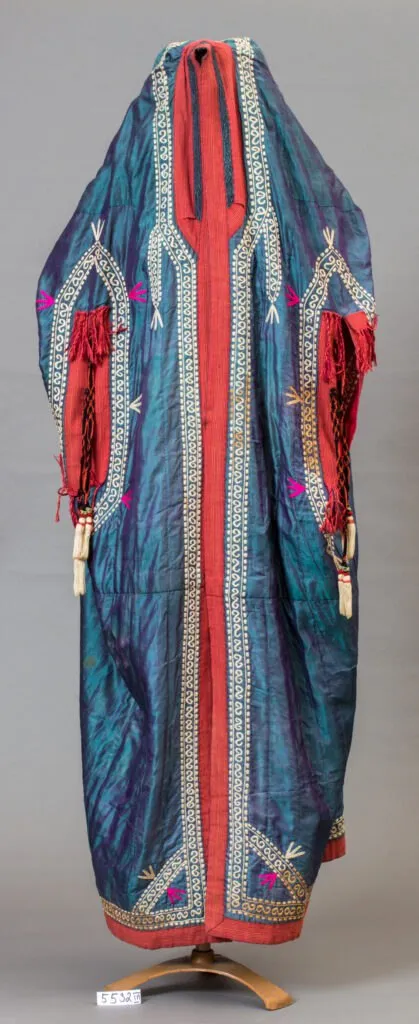
They were made of multi-colored bright Russian velvet, homemade grosgrain fabric parpasha (wings of fly), homemade fabric with silver tinge misri or nukrakub (forged by silver).
On the sides and the hem of paranja was trimmed with braid woven in a black and green narrow strip of, which was also one of the local features of Samarkand paranji. Near to the braid was a narrow satin stitch “pattern of chamois.” Chachvan of Samarkand’s paranja was short, it reached up to the waist, in expensive options at the bottom was decorated with pink or blue beads, making as a strip to the down or along the entire length of chachvan.
You will find more examples of national Uzbek clothes in the book-album "Traditional Uzbek costume on materials of museum and private collections of Uzbekistan (Part 1)" (volume XLVIII) from the series "Cultural legacy of Uzbekistan in the world collections."
The general sponsor of the project is the oilfield services company Eriell-Group.