
Thus, by the late 19th – early 20th century there were about 60 caravanserais in Bukhara. In order to save space, they often had two stories.
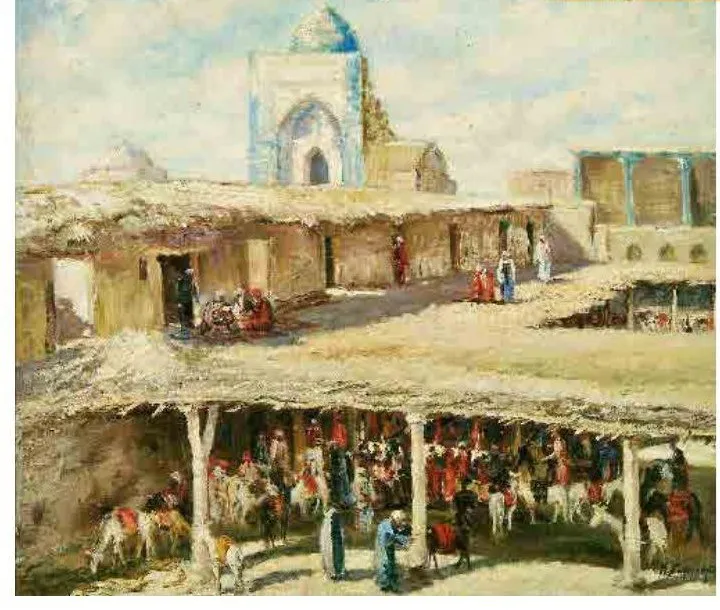
The ground-floor rooms were leased, as a rule, by more prosperous traders. In the caravanserai they kept stocks of goods and made trade deals. The rooms served as a resting place and a place for namaz. The courtyard depicted in Sidorenko’s painting conveys very accurately the originality of Bukhara’s caravanserai.
You can learn more about this topic in the book-album “The Collection of the State Museum of the History of Religion” (Volume XII) from the series “Cultural legacy of Uzbekistan in the world collections”.
The general sponsor of the project is the oilfield services company Eriell-Group.