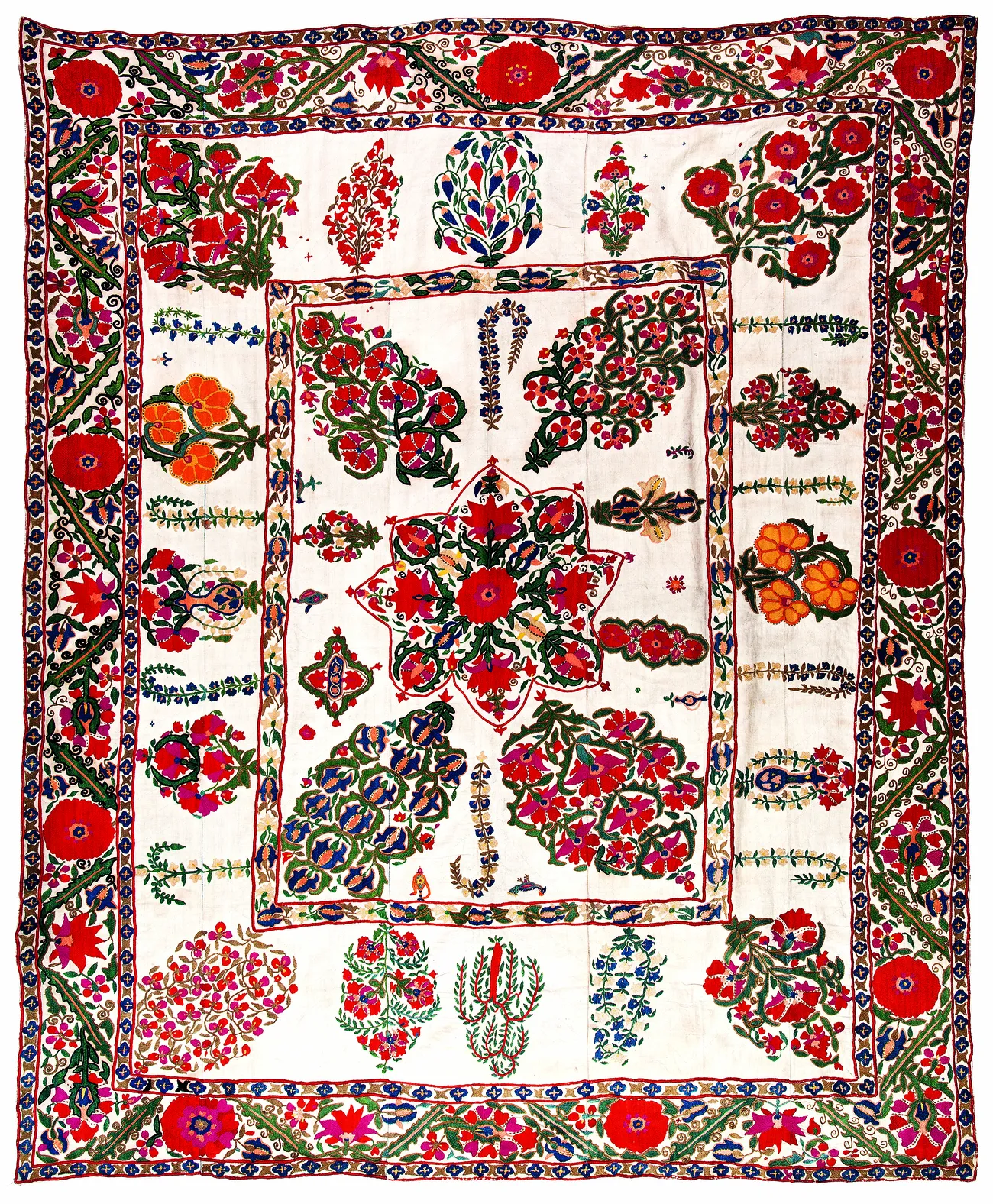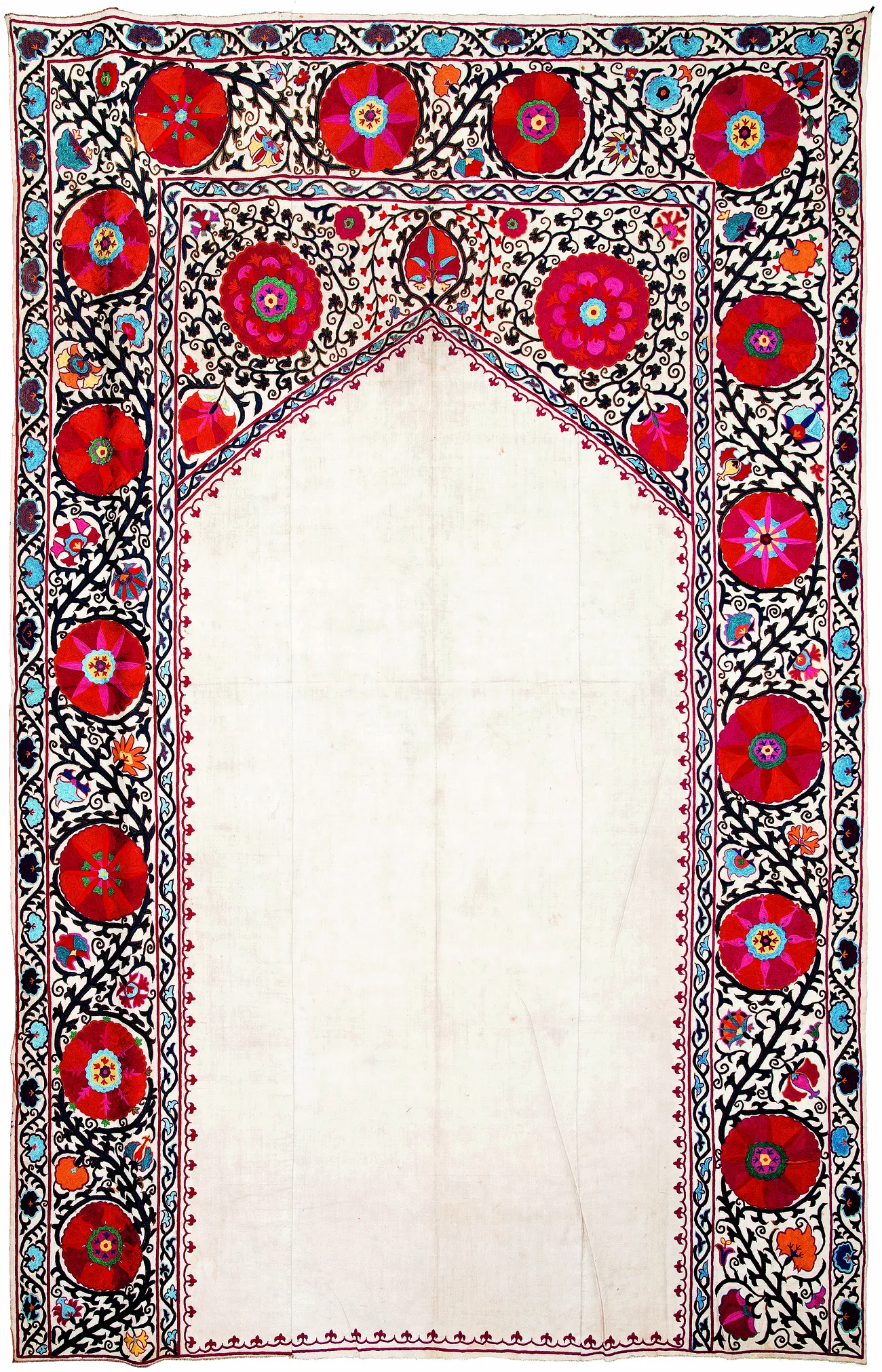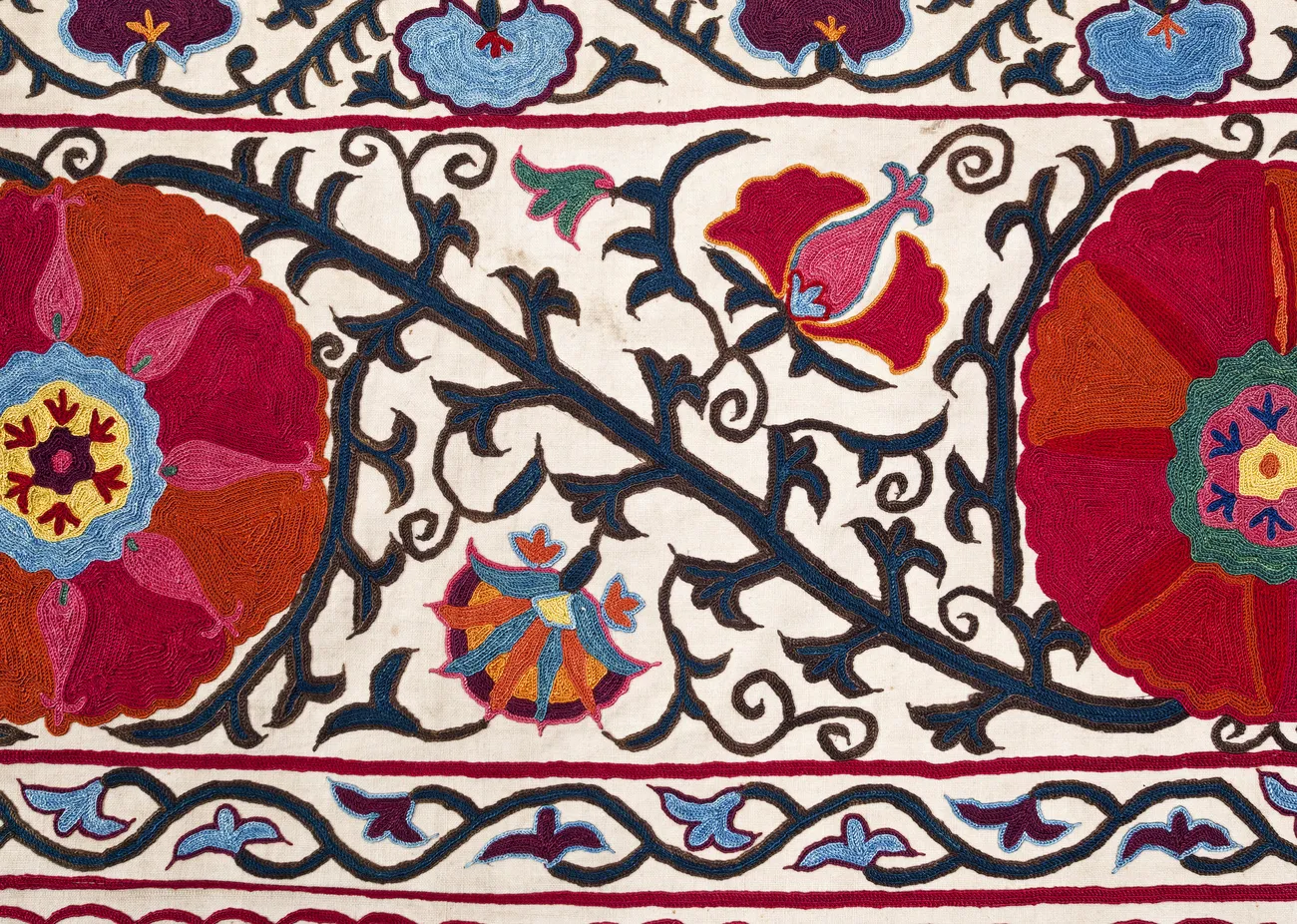
Inhabitants of the oases embroidered large-size interior panels to decorate homes, while the population of the steppes used this type of needlework to decorate clothing and its details, as well as various kinds of bags.
Embroidery was an essential element in each girl’s dowry and played an important role in wedding ceremonies: each type had its own ritual meaning. A large embroidery could take up to 2 years to finish. If it was an all-over embroidery (covering the entire surface of a fabric or item of clothing), then it took even more time. Among the most famous and widespread types of embroidery were large-size embroidered textiles used to decorate interiors and known collectively as suzani. This type was created in the villages and cities of oases inhabited by settled population (Emirate of Bukhara, Khanate of Kokand), who used embroidered wall panels, curtains and bedspreads in the decoration of the interiors of traditional dwellings, where they performed practical, aesthetic and even magical functions. At wedding celebrations, newlyweds’ room was typically decorated with suzani.
In the 1850 – 70s, traditional fabrics and threads were used as materials for embroidery. Fabrics were home-made, or ordered from artisans in weaving workshops. The embroidery was made in various stitches with a needle and hook. Fabrics that were to be embroidered were often stretched on a rectangular or round wooden frame. First it was important to draw a draft pattern on separate narrow panels, and then to embroider them. The draft was made by experienced pattern-drawers called kalamkash (chizmakash). They used a thin pointed reed stem called a kalam, ink, or soot diluted with water. Besides reed stems, pointed sticks were also used and later – ordinary pens.
On dark-colored fabrics the pattern was drawn with yellow dye mixed with sugar. Ceramic bowls of different sizes were used to reach an ideal form of circles. They were placed on the fabric upside down and their contours were traced. Pattern-drawers knew many traditional motifs and their variants; this allowed for the creation of new variations of compositions.
The types of stitches used in embroidery vary from place to place. In most regions of Uzbekistan the bosma stitch and its variants (kanda khayol) were used. Reversible items (for example, towels) were embroidered with the chinda khayol (duruya) stitch. On smaller items another type of double two-sided stitch was used – khomduzi, which was common primarily in the Fergana Valley. The cross stitch iroki embroidery was used for decorating duppi hats and large decorative embroideries made in Shahrisabz and Kitab.
The collection of embroidery in the Náprstek Museum is represented by suzani items. The most valuable among them are a Nurata suzani and a prayer rug joynamaz from Tashkent, received by the Museum in 1899. The Tashkent school of embroidery is also represented by palaks dated around 1900, and Bukhara – by a ruijo wedding veil dated back to the second half of the 19th century.
You can learn more about the topic in the book-album "The Collection of the Czech Republic" (Volume XVI) in the series "Cultural Legacy of Uzbekistan in the World Collections".
The main sponsor of the project is the oilfield services company Eriell-Group.