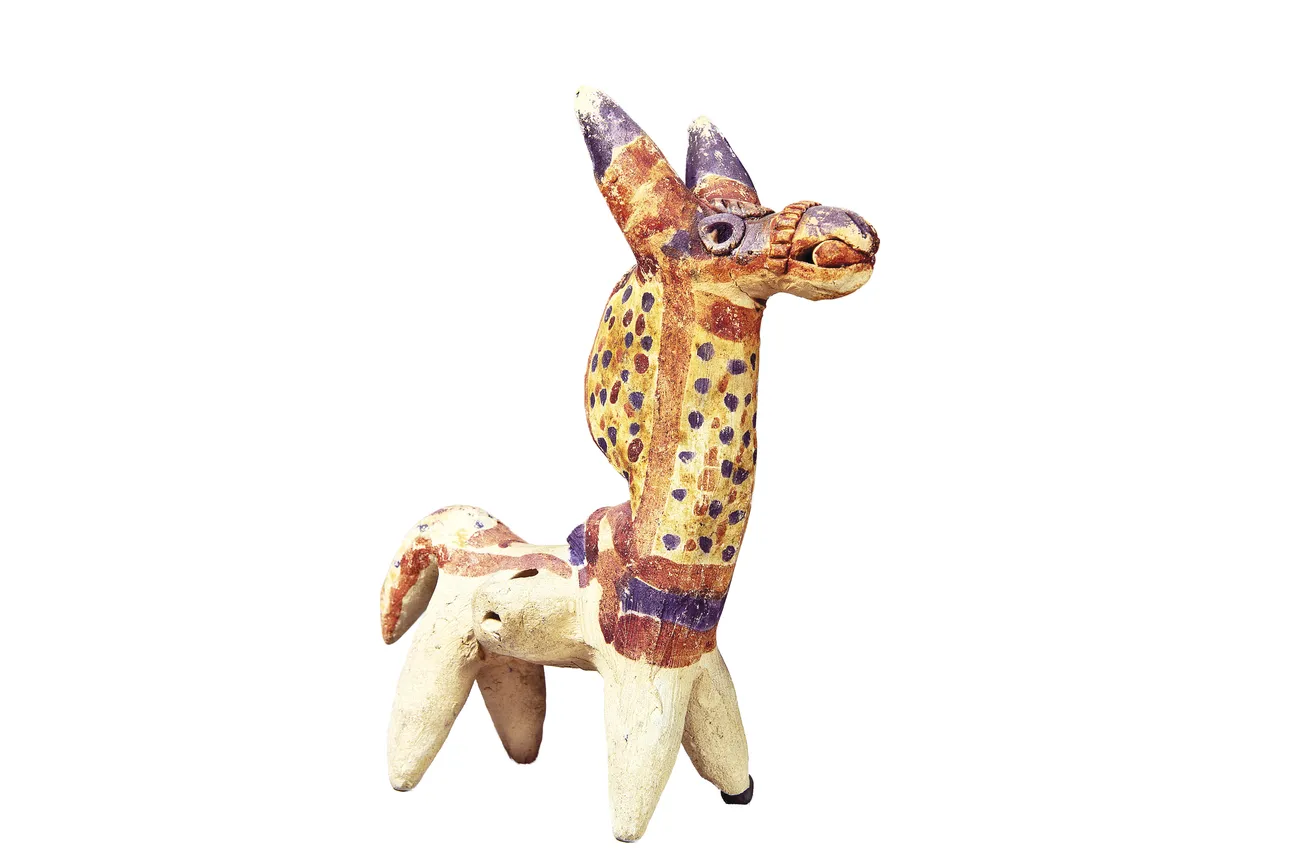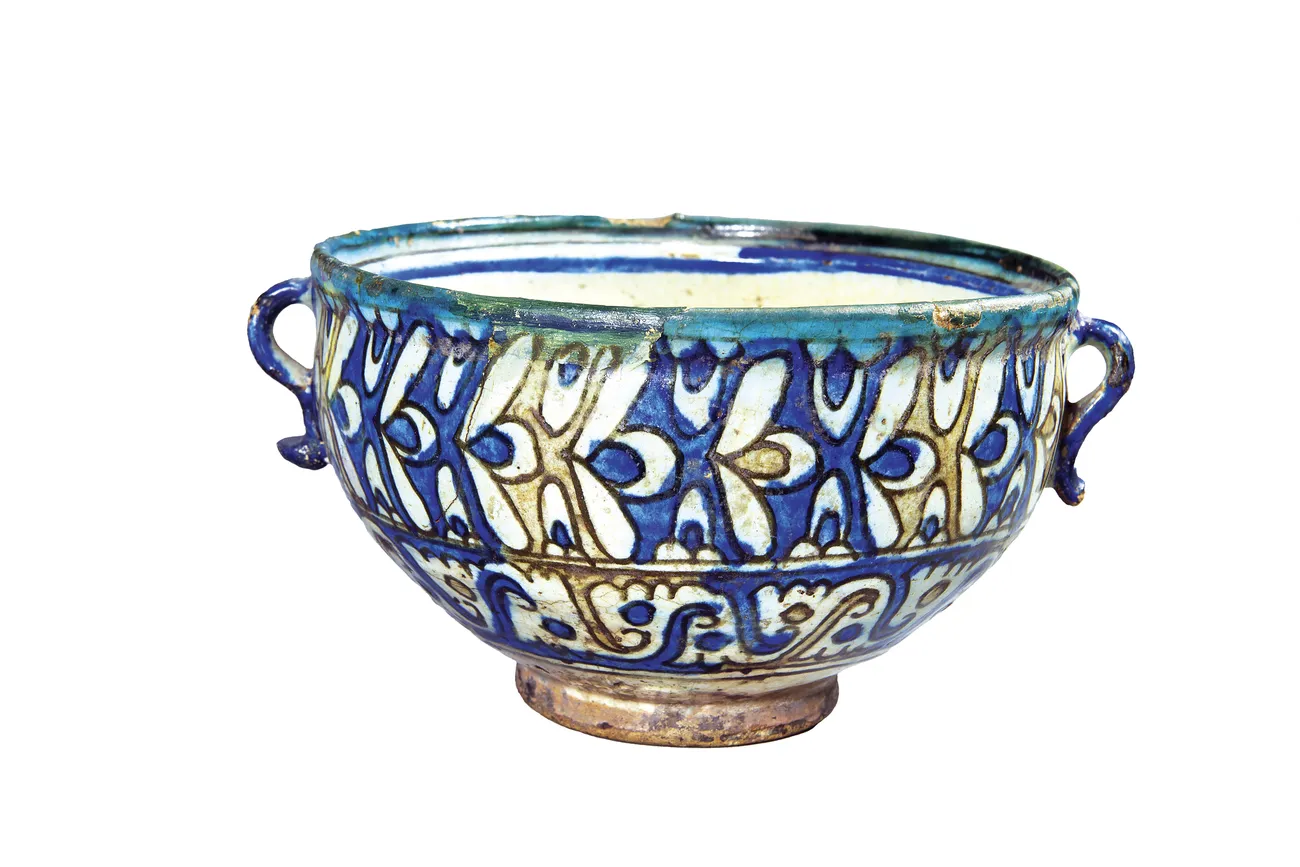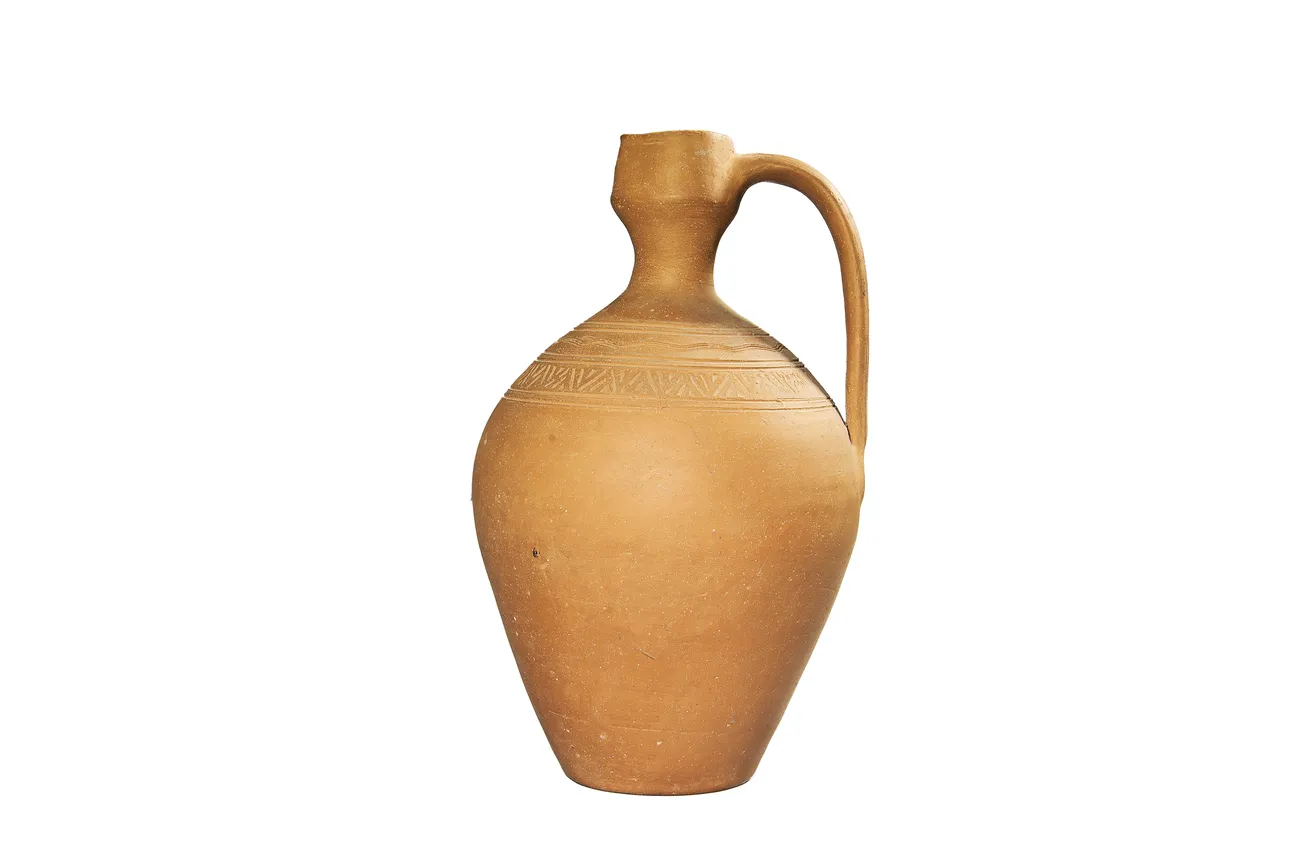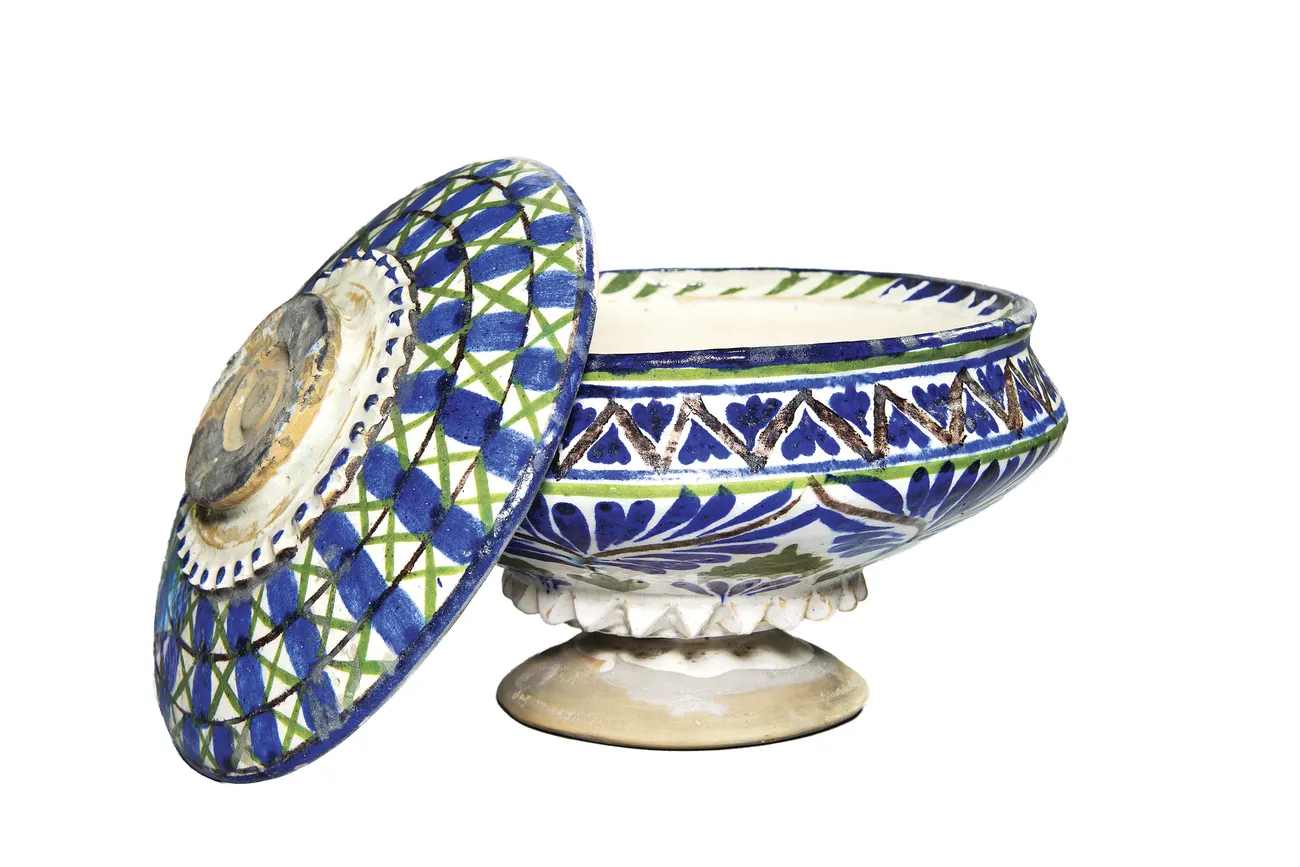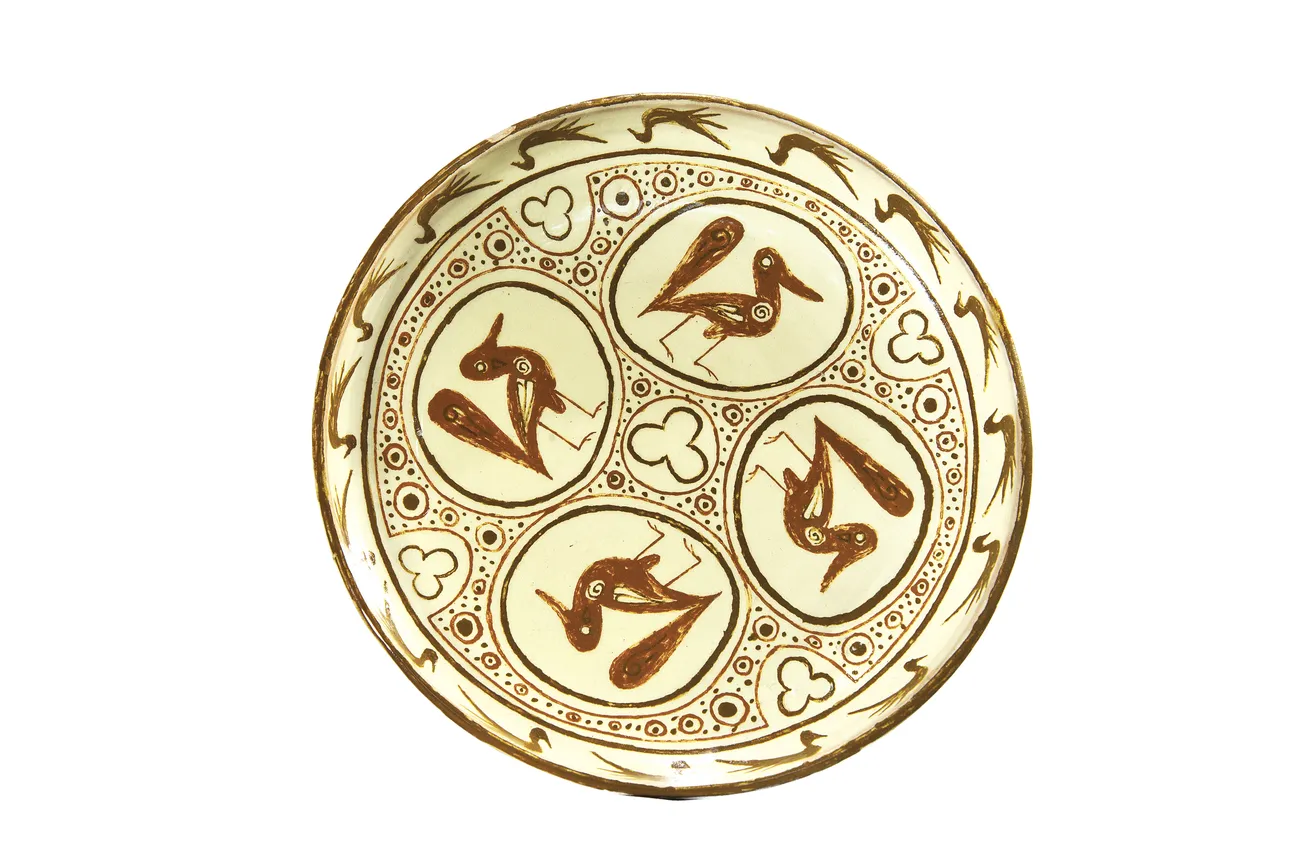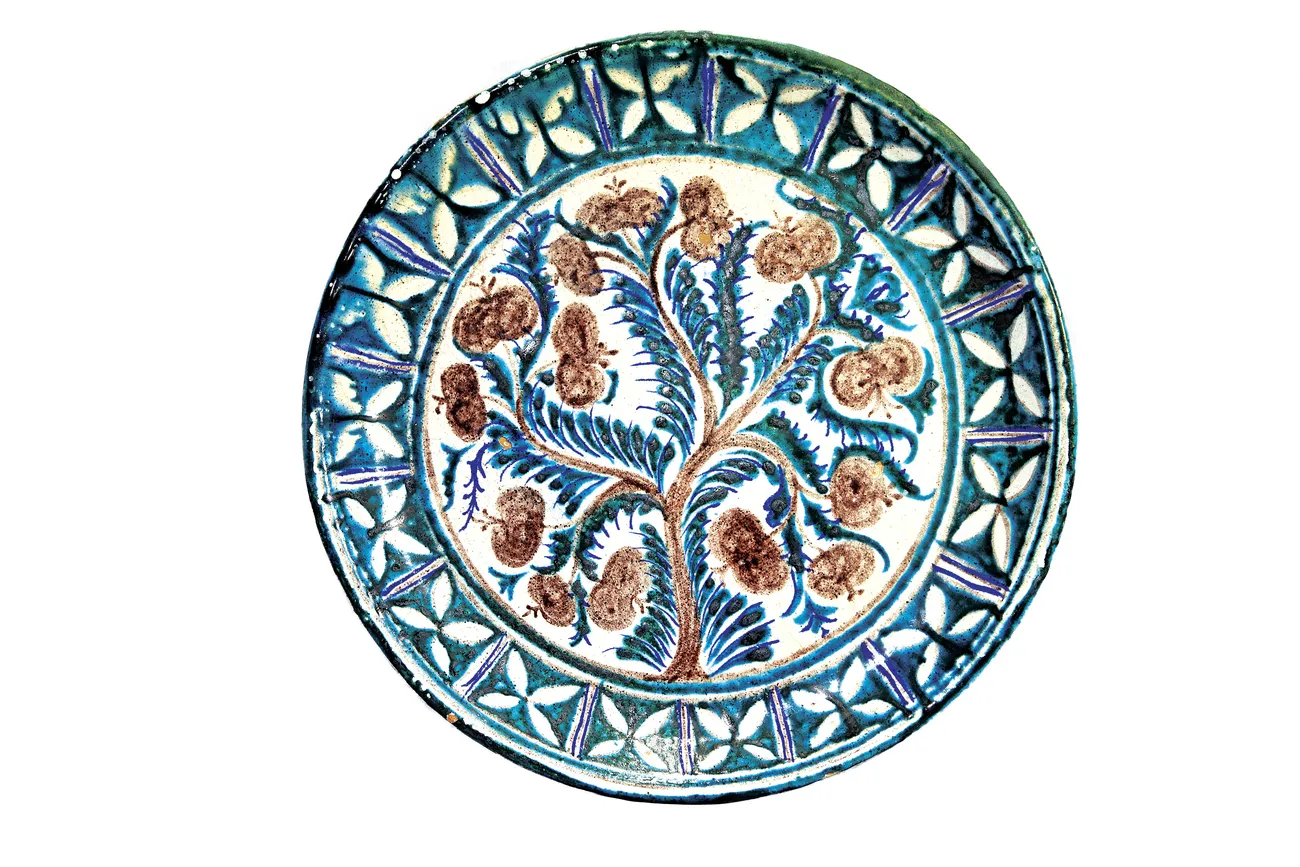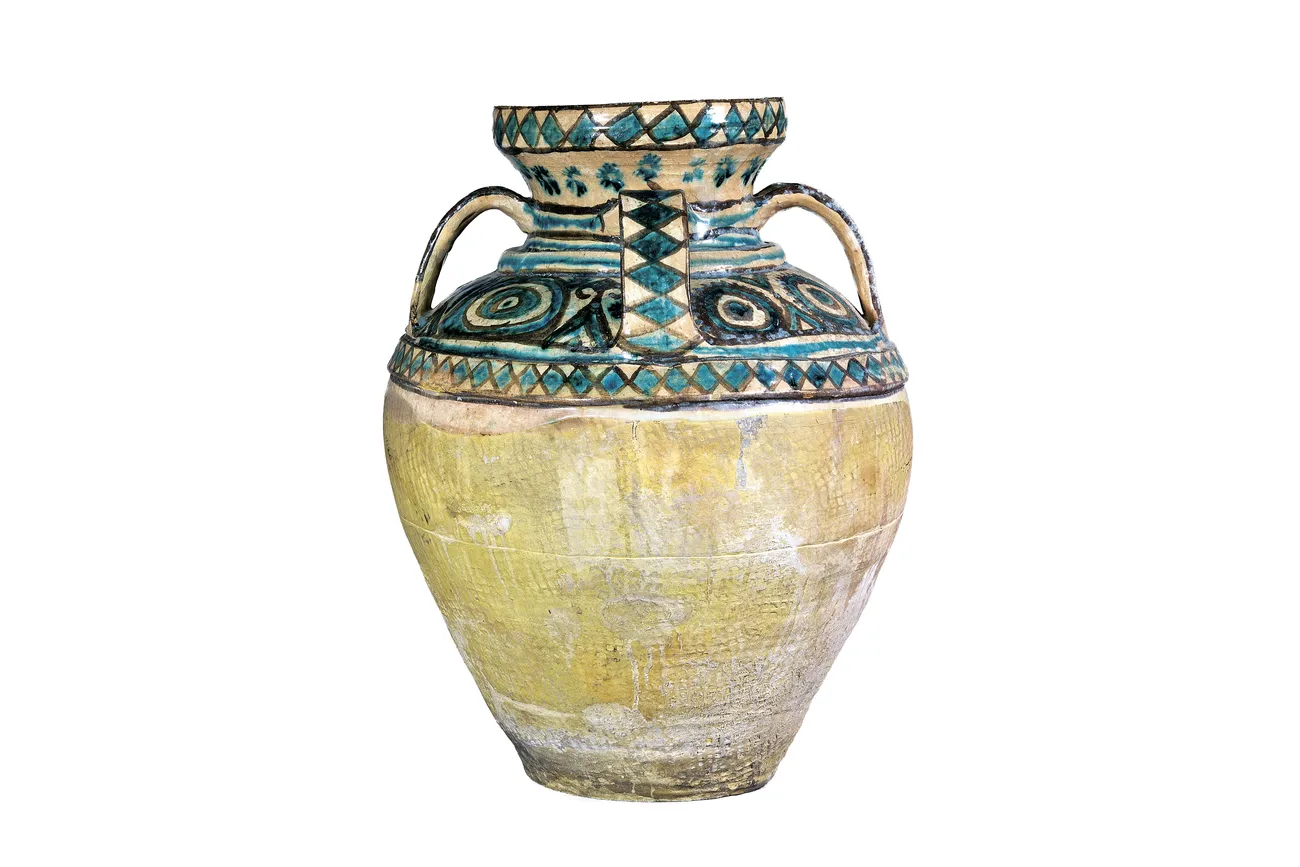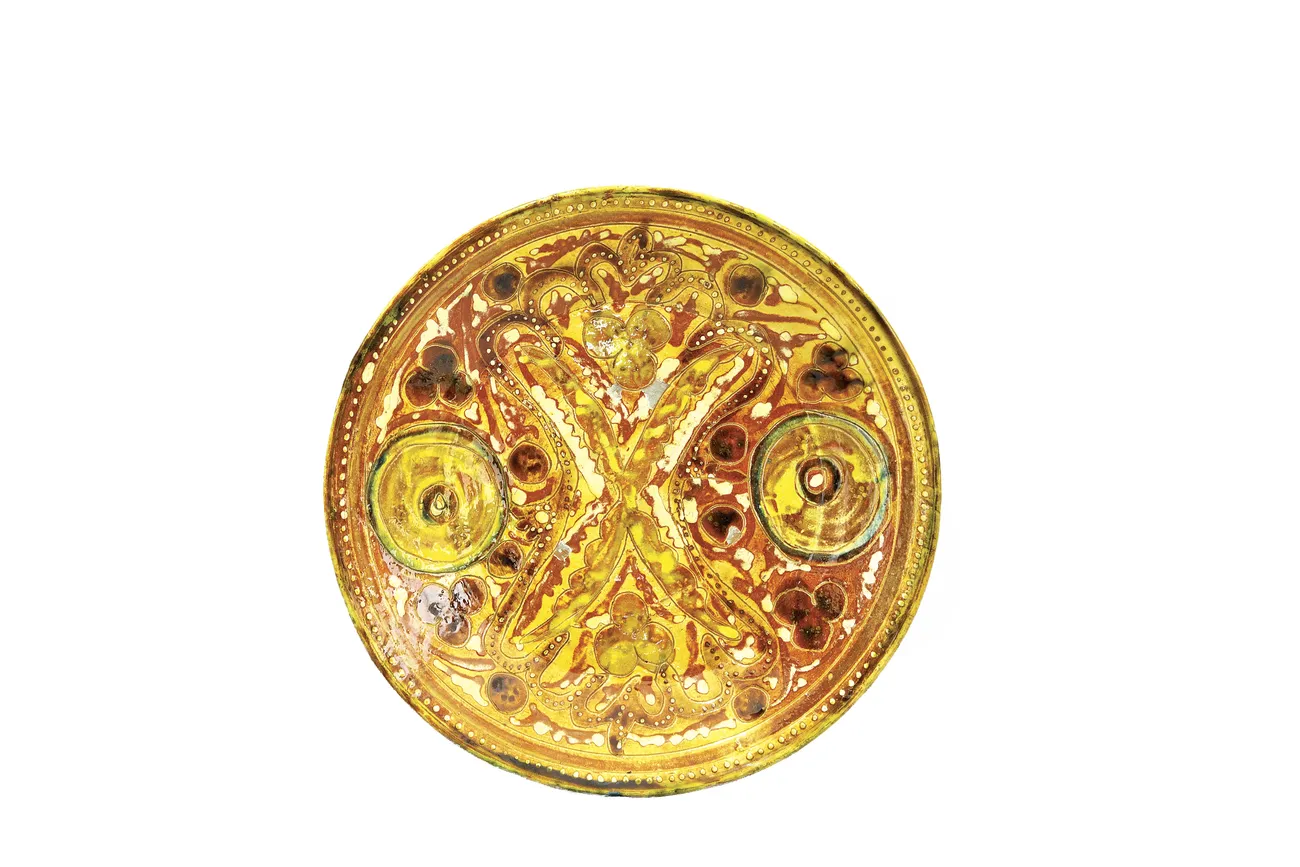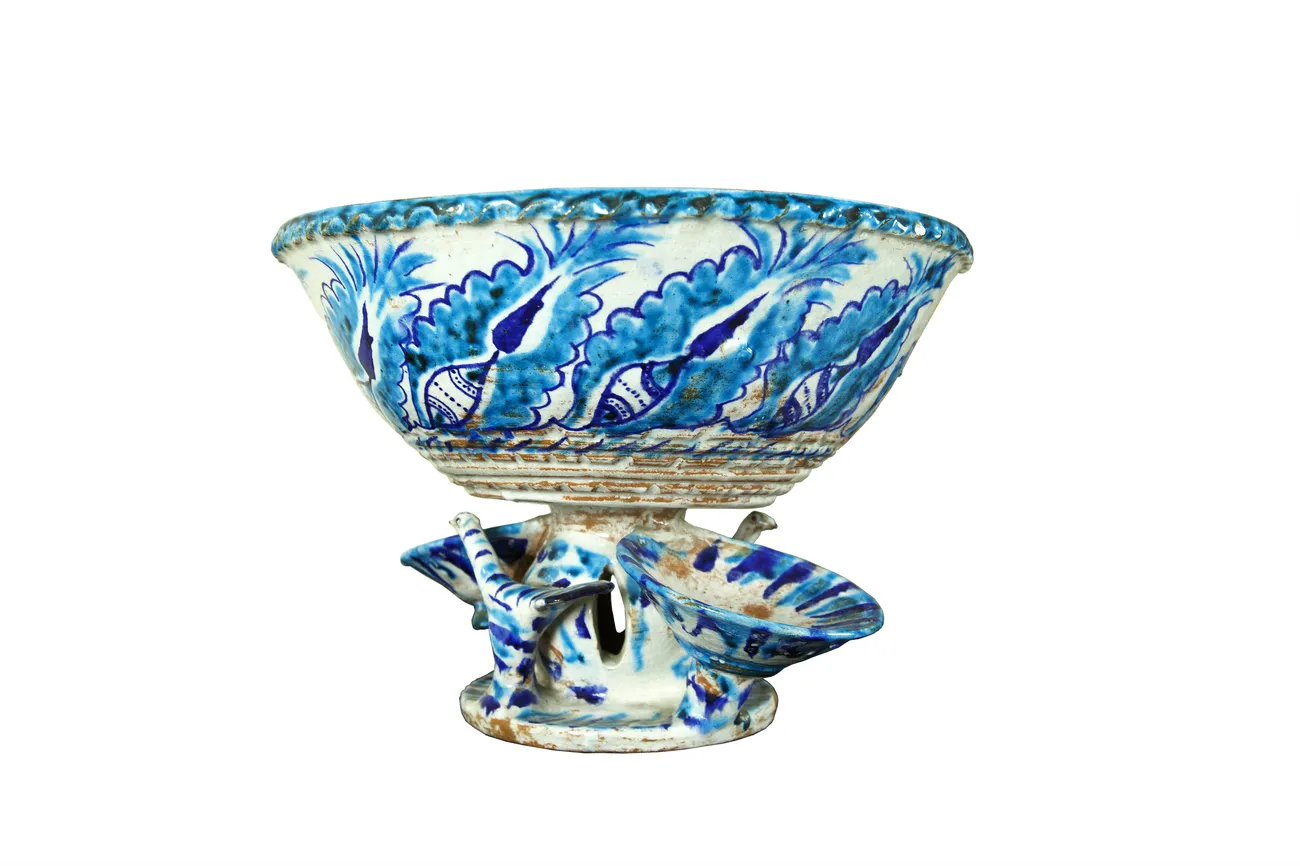
During the period of the Uzbek khanates, there were three schools of this craft: northeastern (Fergana), Bukhara-Samarkand and southwestern (Khorezmian). With a certain degree of similarity, each of them differed in some specific local features. Thus, the ceramics of the Fergana Valley and Khorezm were dominated by a medium blue colour, and alkaline (ishkori) glazing was used. Bukhara-Samarkand centres are known, in turn, for ceramics in a yellow-brown range, covered mainly with lead glaze.
The Rishtan pottery centre dominated this art. In the exposition of the State Museum of Arts, there are several Rishtan works from the end of the 19th century, with elegant painting. The most common motifs in Rishtan ceramics are chorbarg (quatrefoil), anorgul (pomegranate flowers and fruit), bodomgul (stylized almond blossom), barg (leaf), and islimi (plant shoots). These images are frequently introduced in ornamentation – from choydishes, jugs and musical instruments to guns and knives. Another famous centre of the Fergana school of ceramics is Gurumsaray, where the famous masters T. Shermatov, H. Satimov, M. Rakhimov, M. Turapov and others worked. The Gurumsaray ceramics are distinguished by the more archaic character of the painting. The main motifs are a jug, quatrefoil, a large cross-shaped pattern, and star-shaped figures.
You can learn more about this topic in the book-album “The Collection of the State Museum of Arts of Uzbekistan” (Volume XIII) from the series “Cultural legacy of Uzbekistan in the world collections”.
The general sponsor of the project is the oilfield services company Eriell-Group.