An opportunity to visit the famous Savitsky Museum of Arts became a real blessing for him. It was that visit that inspired the researcher to begin collecting things.
What truly impressed Adam Albion was how Igor Savitsky (1915–1984), the museum’s founder and first director, who was engaged in collecting equally works by Soviet dissident artists accused of formalist approaches and pieces of traditional Karakalpak arts, had an eye for valuable things, which became even more valuable years later.
Albion was astounded by Savitsky’s compact floor-to-ceiling arrangement of canvases on the walls and most interesting avant-garde pictures and drawings displayed at the museum. He was equally pleased by works of Karakalpak decorative and applied art.
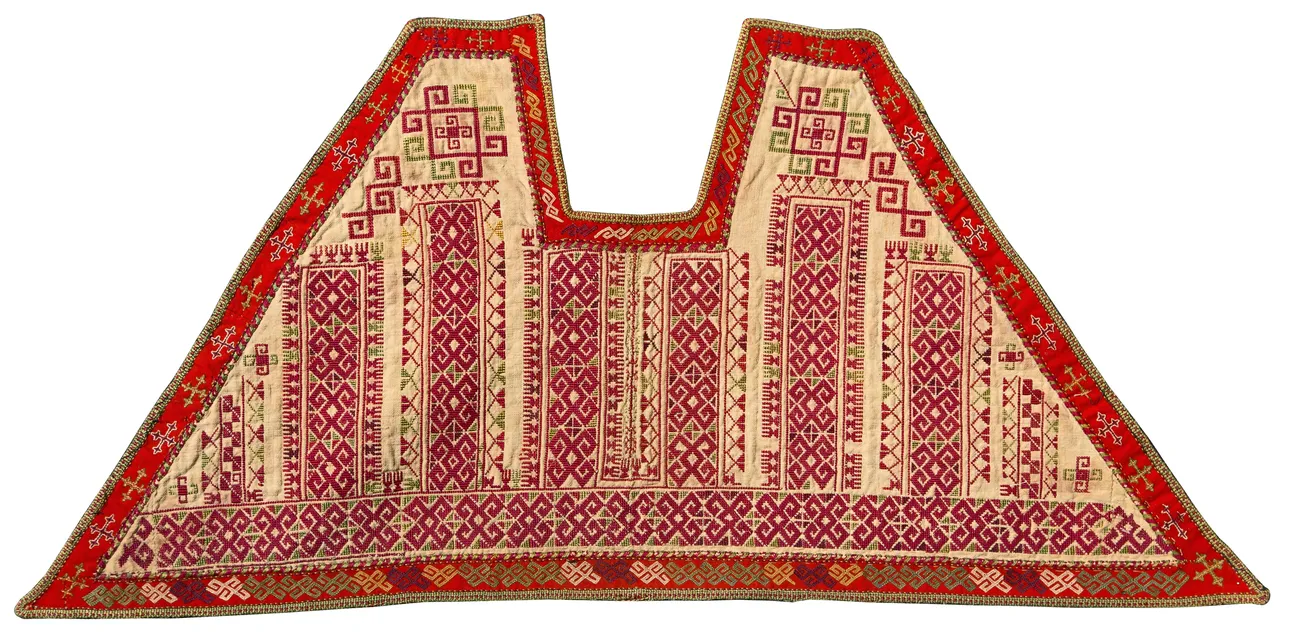
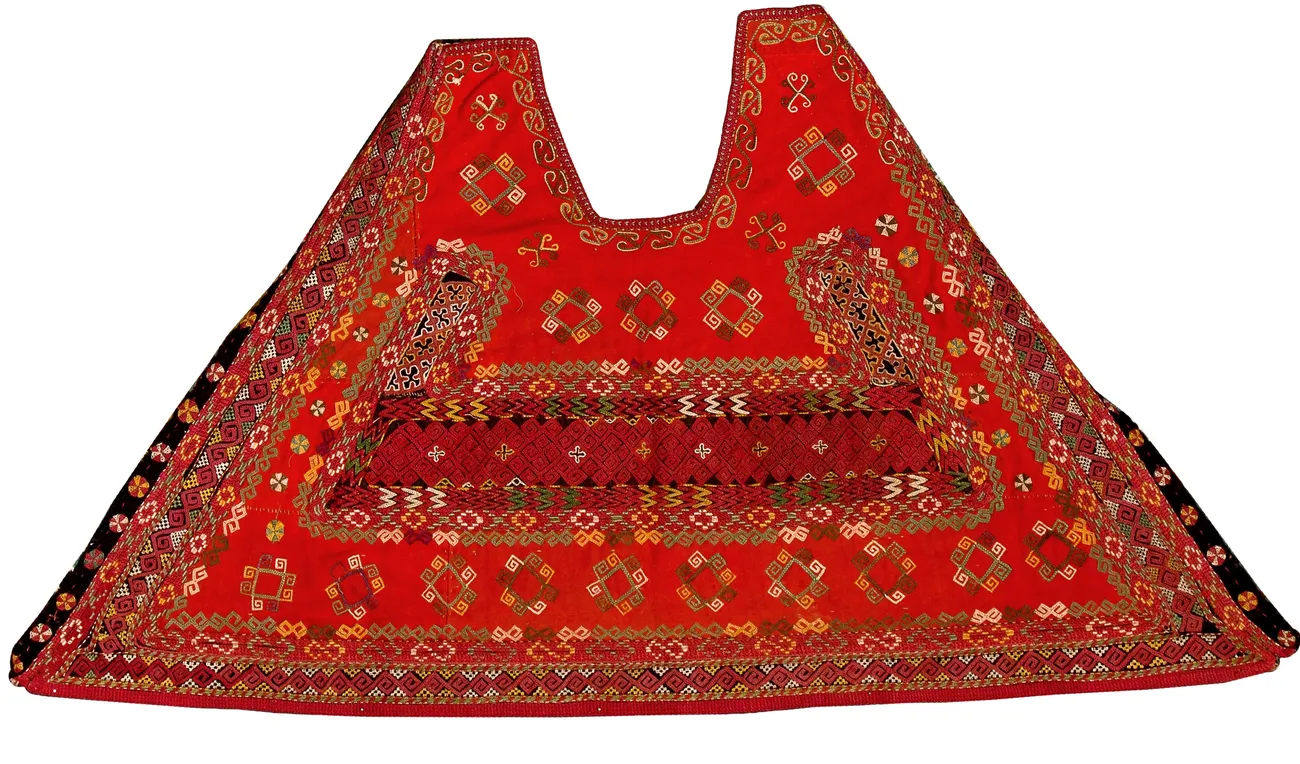
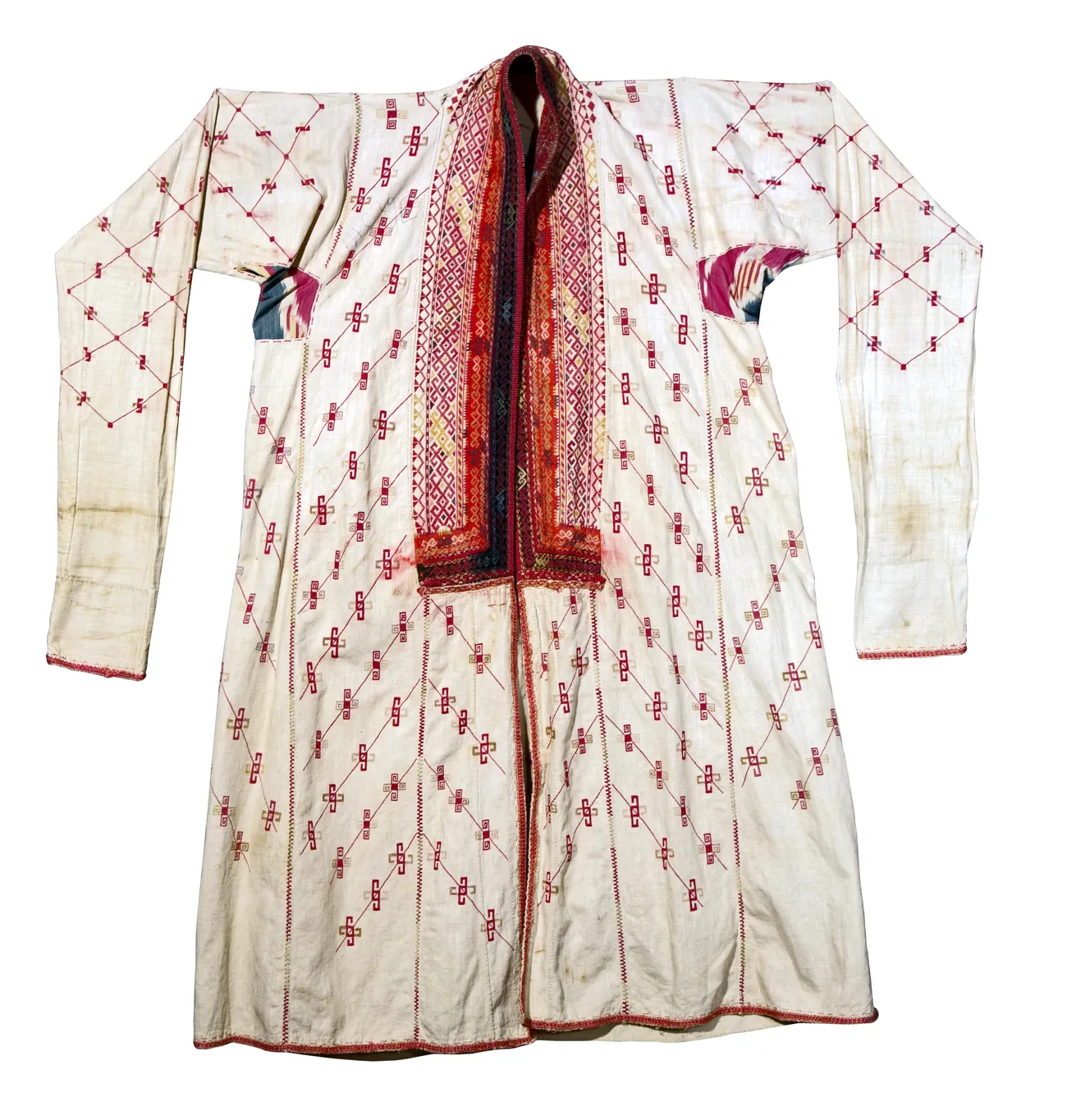
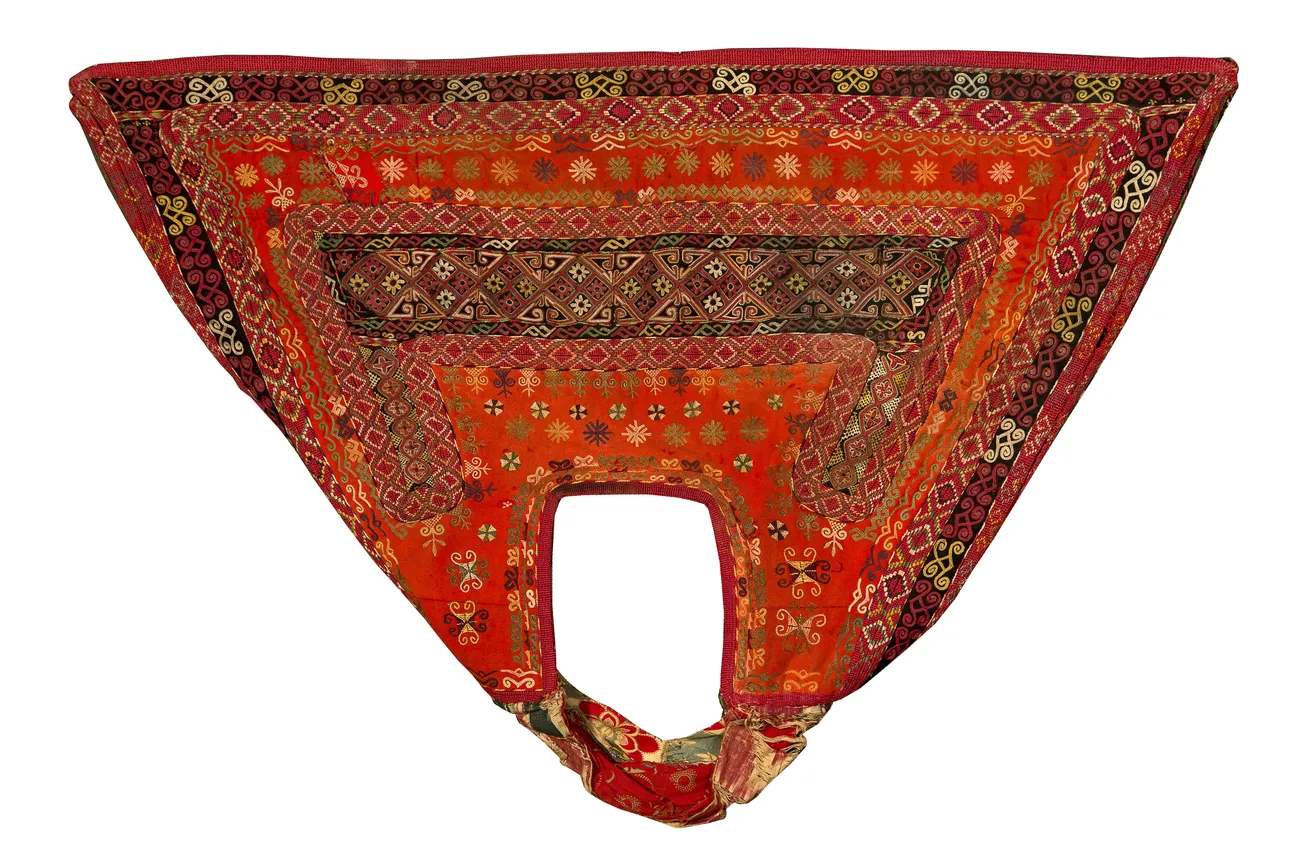
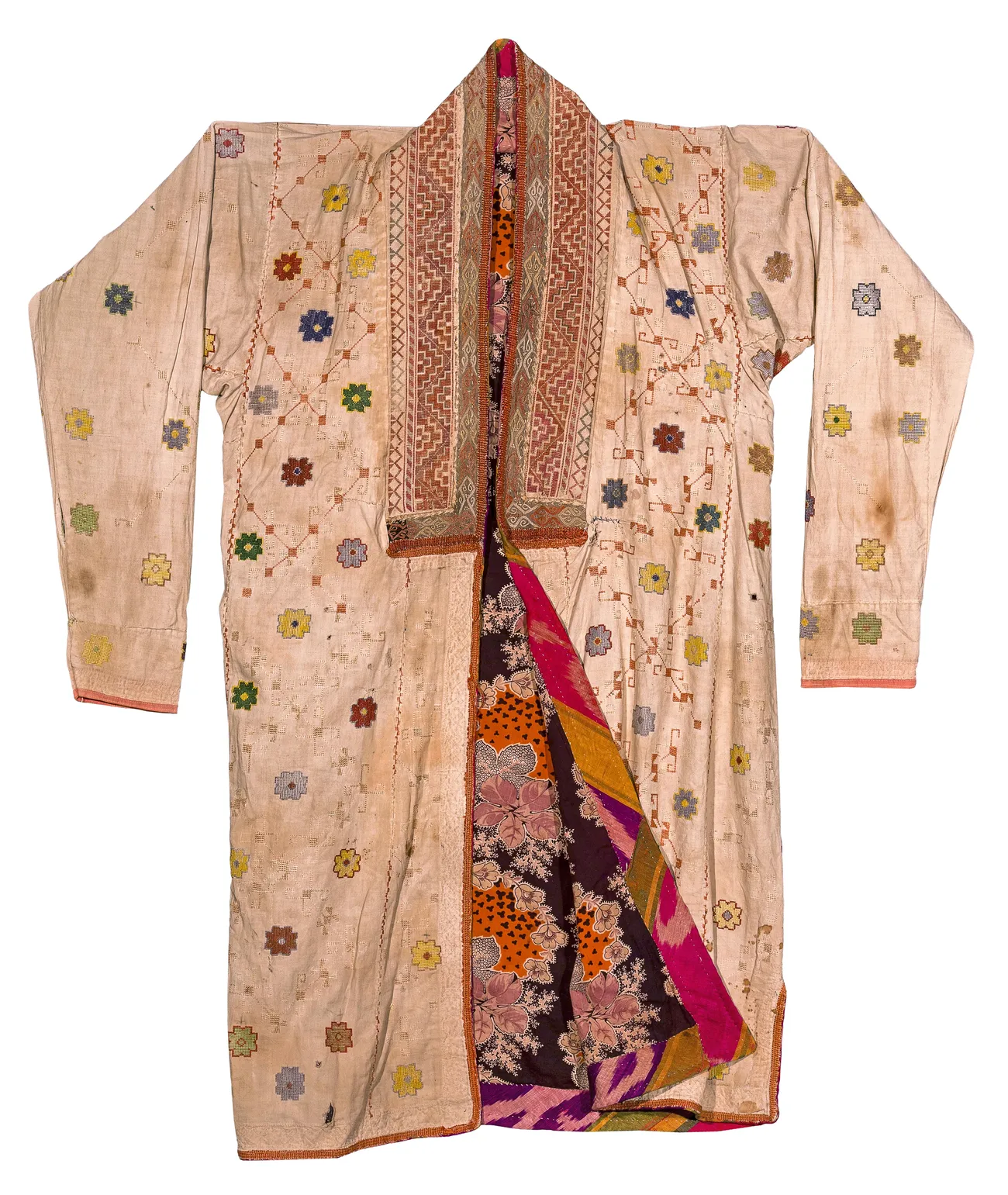
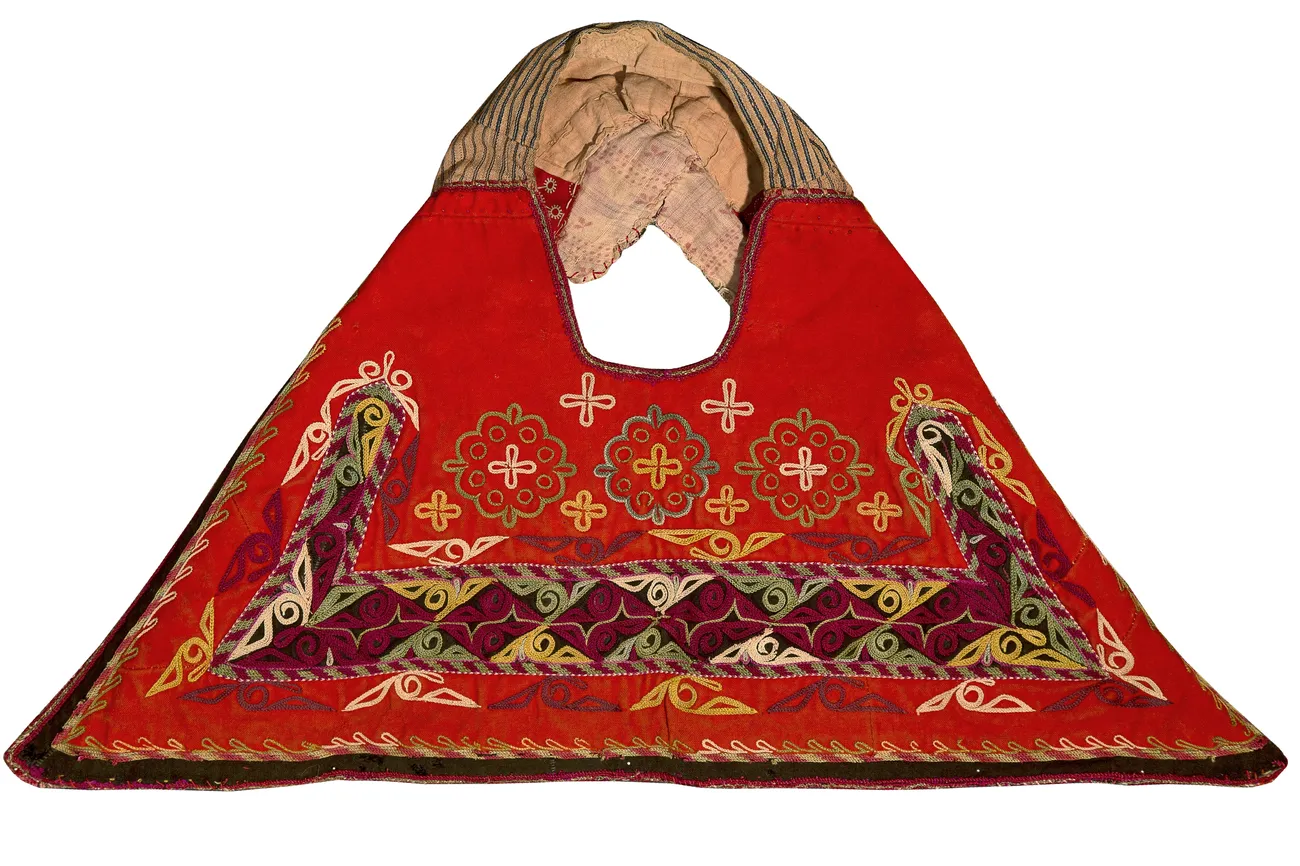
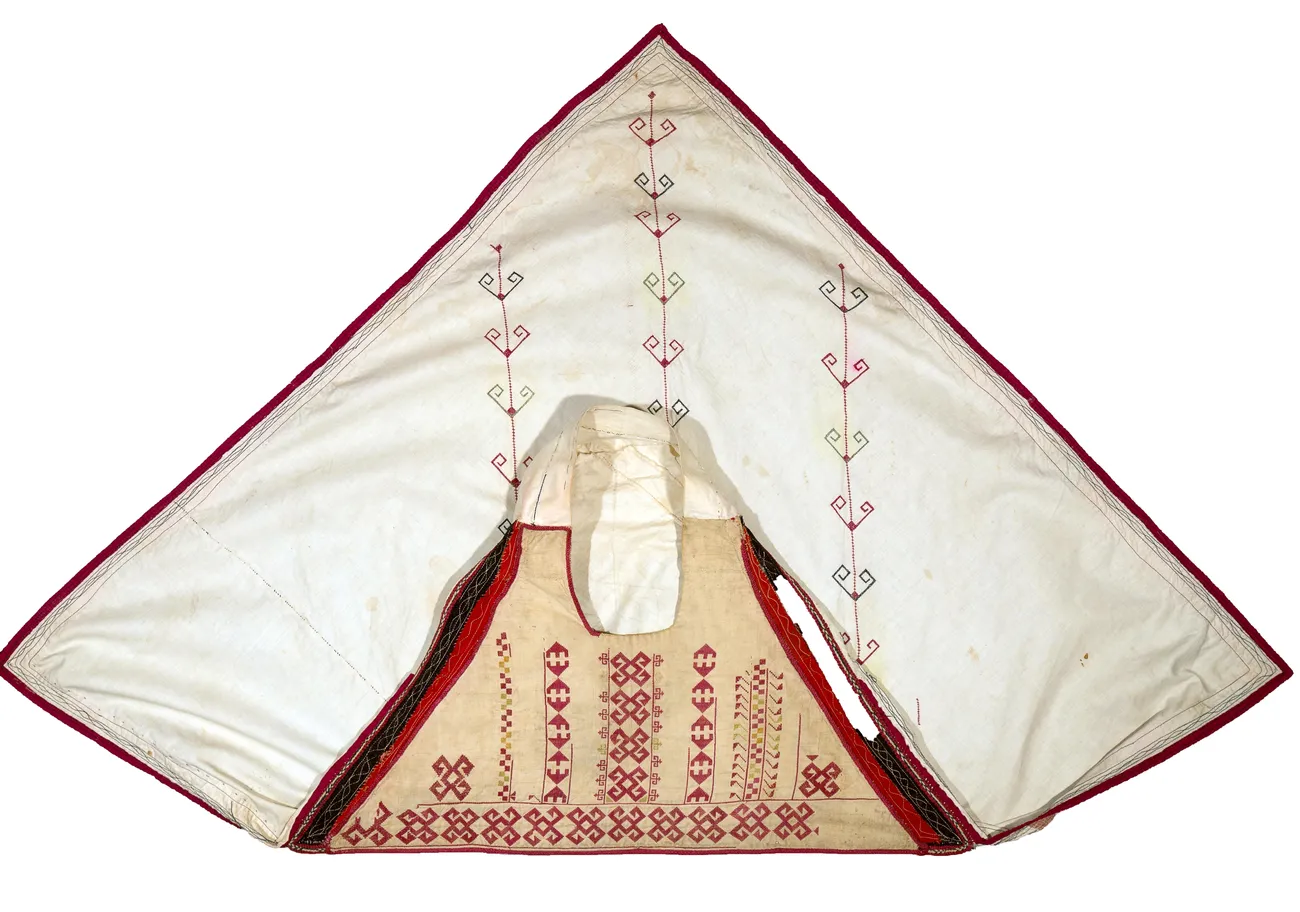
Examples of traditional clothes (mostly women’s) in the Albion Collection are highly diverse: kyzyl kiymeshek (a red textile mantle for covering the head and chest worn by younger Karakalpak women), ak kiymeshek (a white textile mantle for covering the head and chest worn by aged Karakalpak women), kyzyl zhegde (a mantle-robe of red homemade fabric for young women), zheng ush (embroidered cuffs on the sleeves of a dress), as well as oversleeves zhengse, front cover ongirshe, embroidered handbags for tea (chay khalta) and money (pul khalta) and other things.
A kiymeshek consists of three parts: the head with a facial opening, the front in the form of a truncated triangle (kiymeshek aldy) and the back (kuyryksha). The kuyryksha consists of a square piece of Bukharan silk (or semi-silk) ikat attached with its corner to the top of the kiymeshek. Black strips on the shoulders connect on both sides the first and second parts of the mantle.
Since that day, the future collector had a strong dream to obtain at least one item of this type. This dream finally came true. For the next 20 years the researcher was deeply engrossed in collecting things, which has resulted in an extensive collection currently representing all basic types of Karakalpak art and including carpets, clothes and footwear, embroidered household items, horse’s gear, jewellery and other objects.
You can learn more about the topic in the book-album "The Cultural legacy of Uzbekistan in private collections of the USA and Canada" (volume XXXI) in the series "Cultural Legacy of Uzbekistan in the World Collections".
The main sponsor of the project is the oilfield services company Eriell-Group.