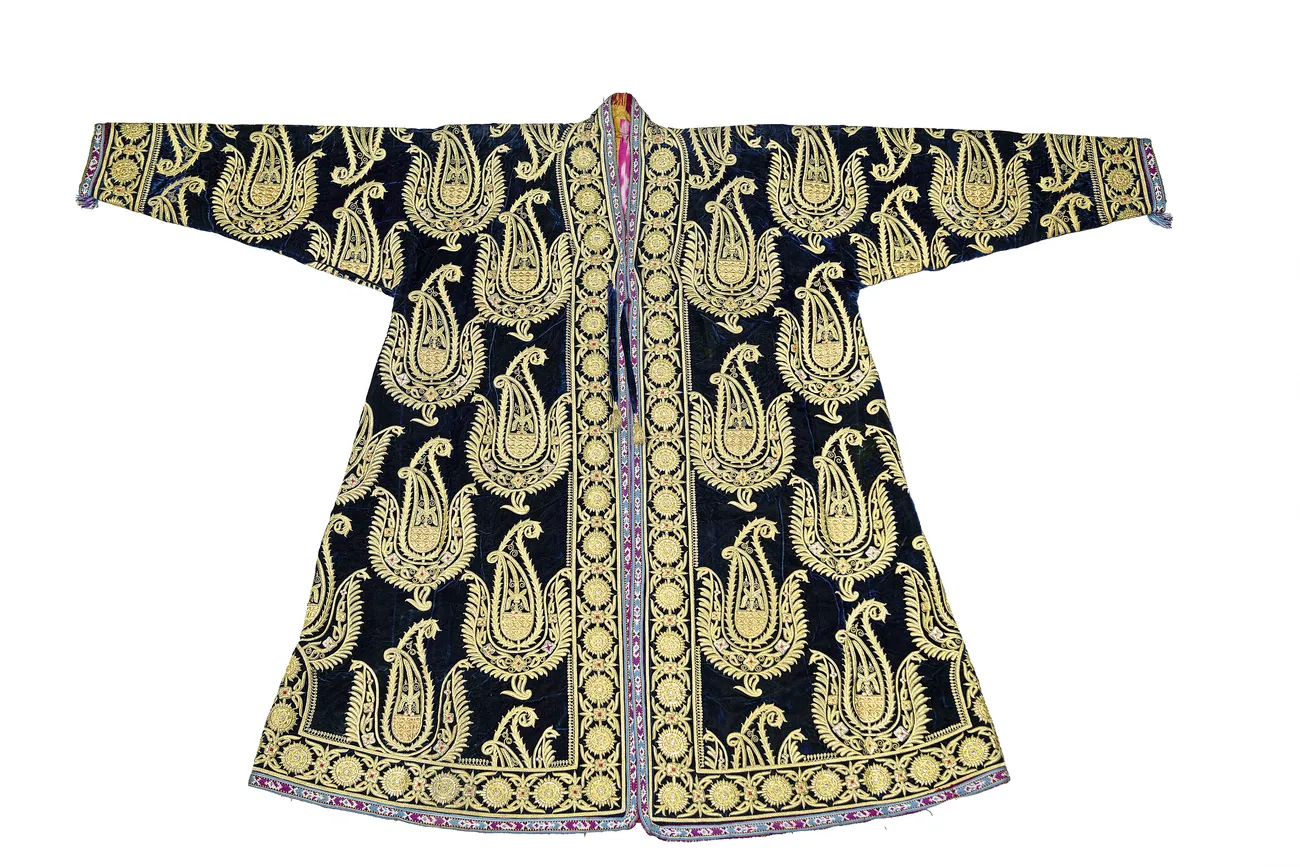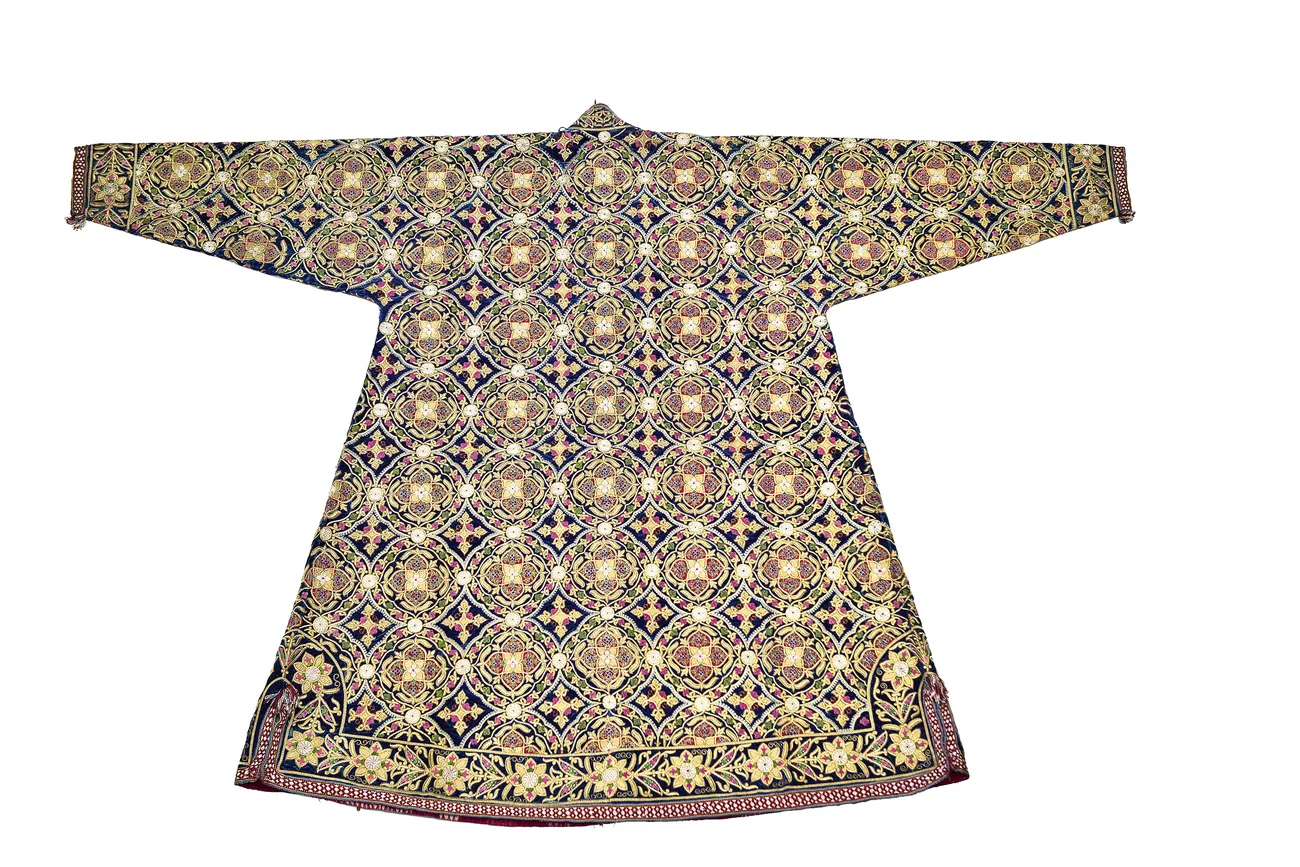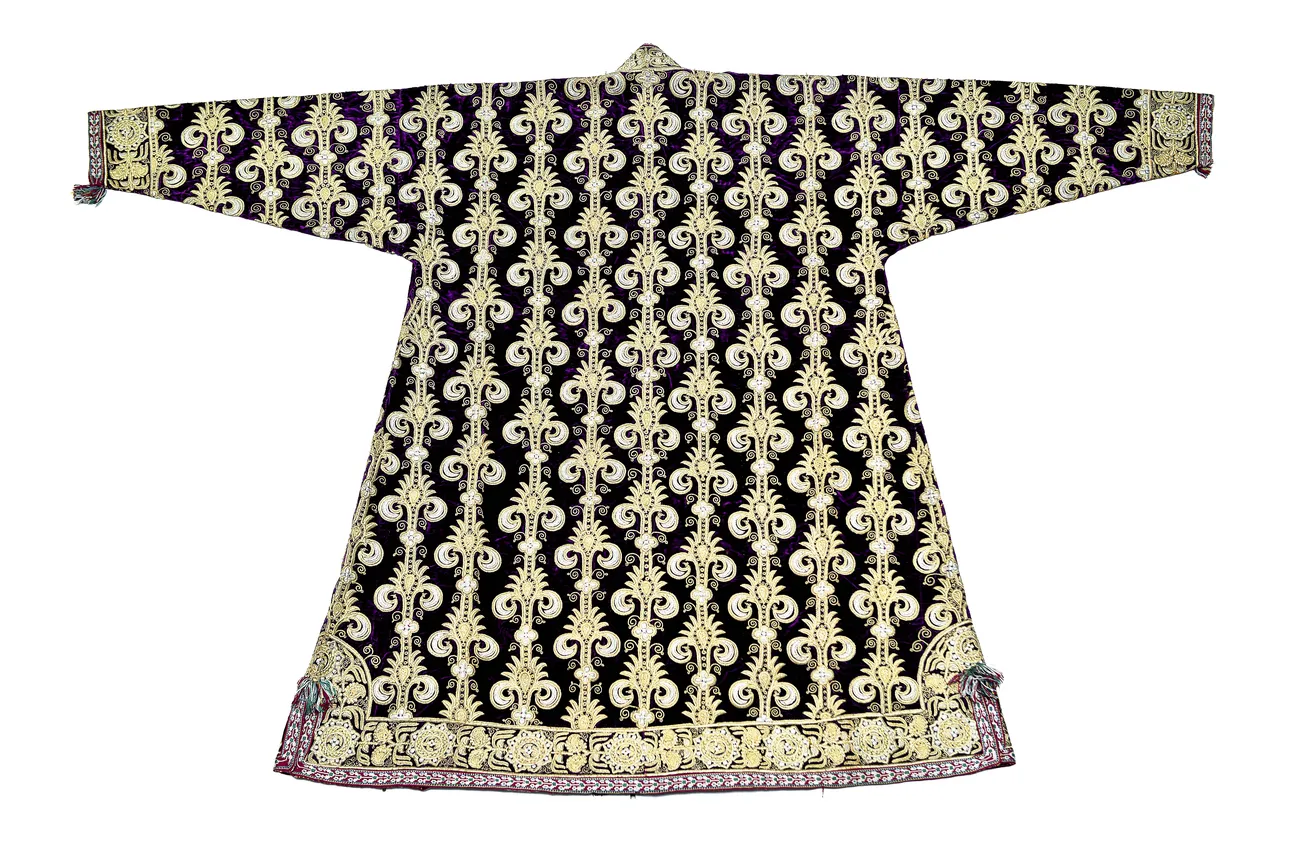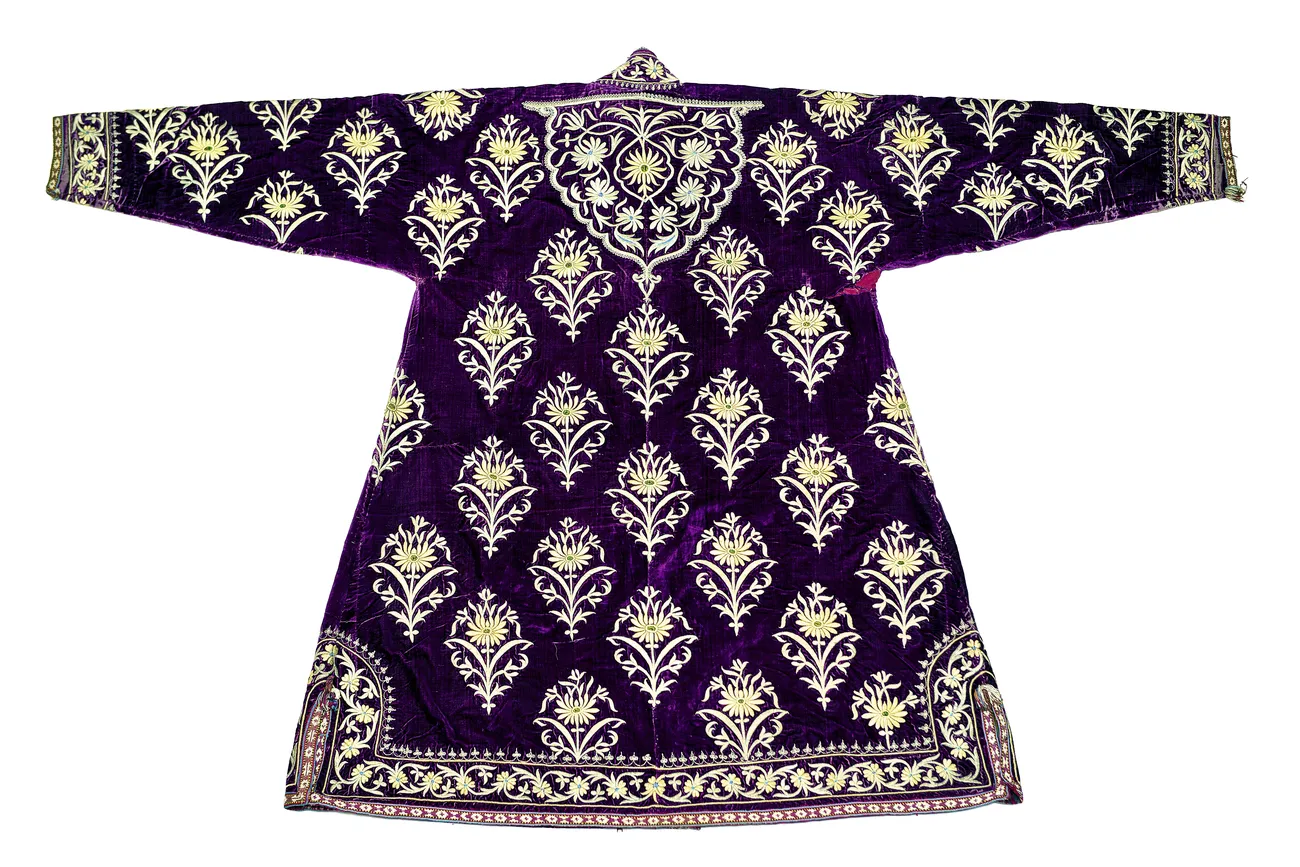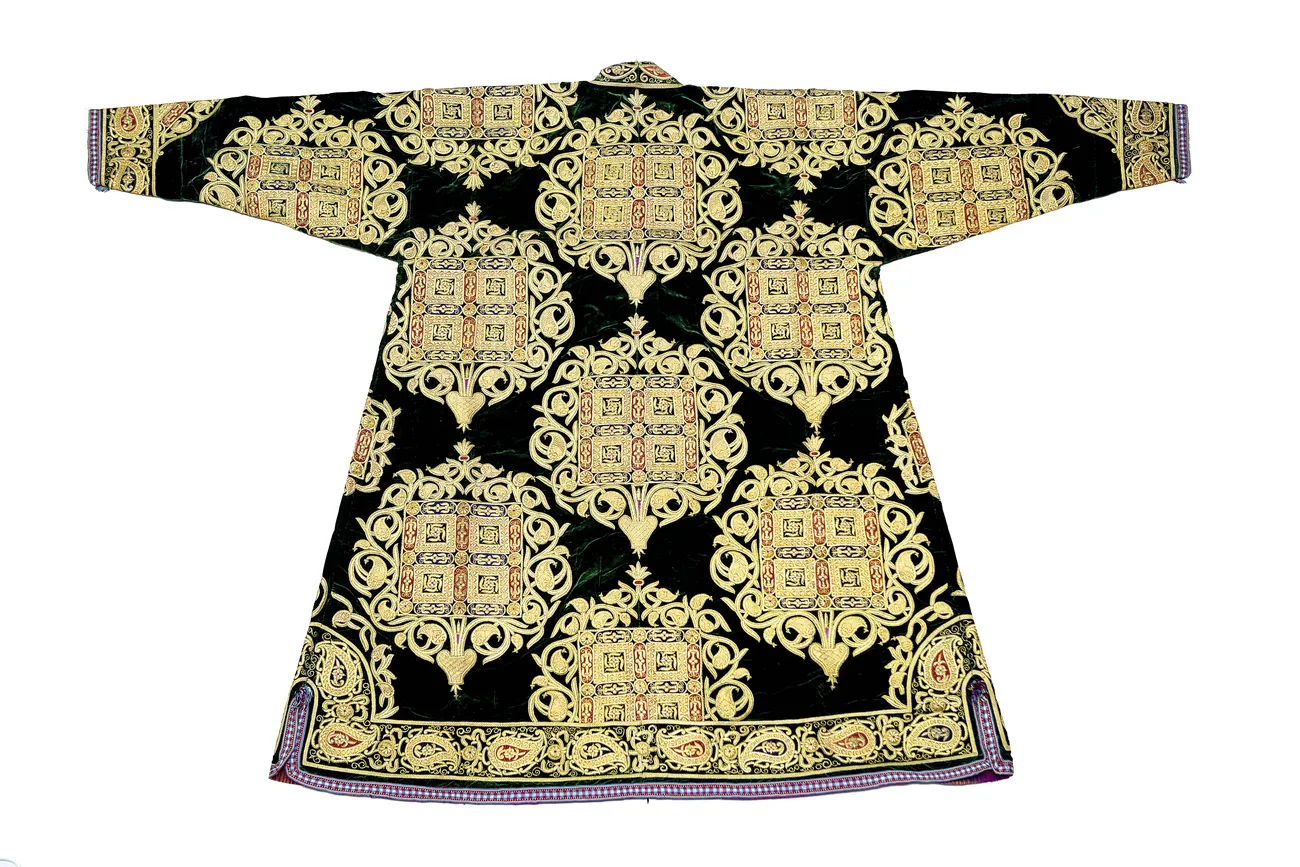
Adras, alotchu, and satin could also be used. First, the future product was cut out, then the painter created the approved patterns, and only then did the gold embroidery begin. The compositions were divided into several types: zarduzi-zaminduzi – continuous sewing of background patterns, zarduzi-gulduzi – embroidering of disparate patterns, using patterns cut from paper, zarduzi-gulduzi-zaminduzi – combined sewing technique, zarduzi-pulyakchaduzi – embroidery with gold or silver threads in combination with sequins. In the art of gold embroidery, plant patterns prevailed, and, more rarely, geometric patterns. The main motifs were rosettes, palmettes, bushes, trees, branches, flowerpots, almonds, and pomegranates.
You can learn more about this topic in the book-album “The Collection of the State Museum of Arts of Uzbekistan” (Volume XIII) from the series “Cultural legacy of Uzbekistan in the world collections”.
The general sponsor of the project is the oilfield services company Eriell-Group.