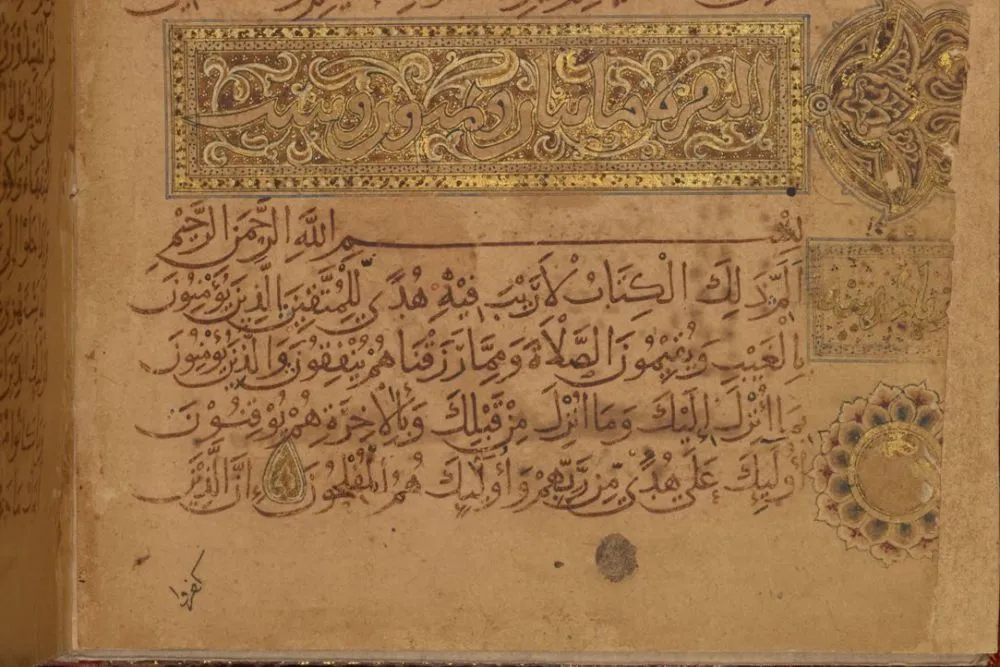
After the Arab conquest of Central Asia, the local peoples became familiar with the Arabic script which gradually replaced the local written languages (Sogdian, Khorezmian, Uyghur, etc.). Over many centuries, the Arabic script served for the development of spiritual culture of multilingual Muslim world as one of the main means of preserving information linked to different areas of social life. Despite the stable base of the Arabic script, different script styles were forming in the alphabet itself. As a result, the Arabic calligraphy became for various peoples not only the written language but also the important type of fine art which still enjoys worldwide popularity.
A calligrapher was not just a copyist. The transcription of books was considered the art. The skill to write in different refined scripts was criterion of literacy and spiritual maturity. A calligrapher’s profession was highly valued in society and considered responsible and reputable. Many scholars, poets and enlighteners perfected their skill of calligraphy and left the heritage of books written with their own hand. The mental outlook and enlightenment of calligraphers increased with every manuscript proportionally to the number of books they transcribed as well due to communication with authors and the rich content of the books. In the Middle Ages in Central Asia the literacy and broad world outlook of a calligrapher made him the representative of educated and cultural environment.
You can learn more about the development of calligraphy in the book-album “The Collection of the Al-Biruni Institute of Oriental, the Academy of Sciences of the Republic of Uzbekistan” (part five, “Miniature and Calligraphy”) (Volume XXV) from the series from the series "Cultural Legacy of Uzbekistan in the World Collections".
The main sponsor of the project is the oilfield services company Eriell-Group.