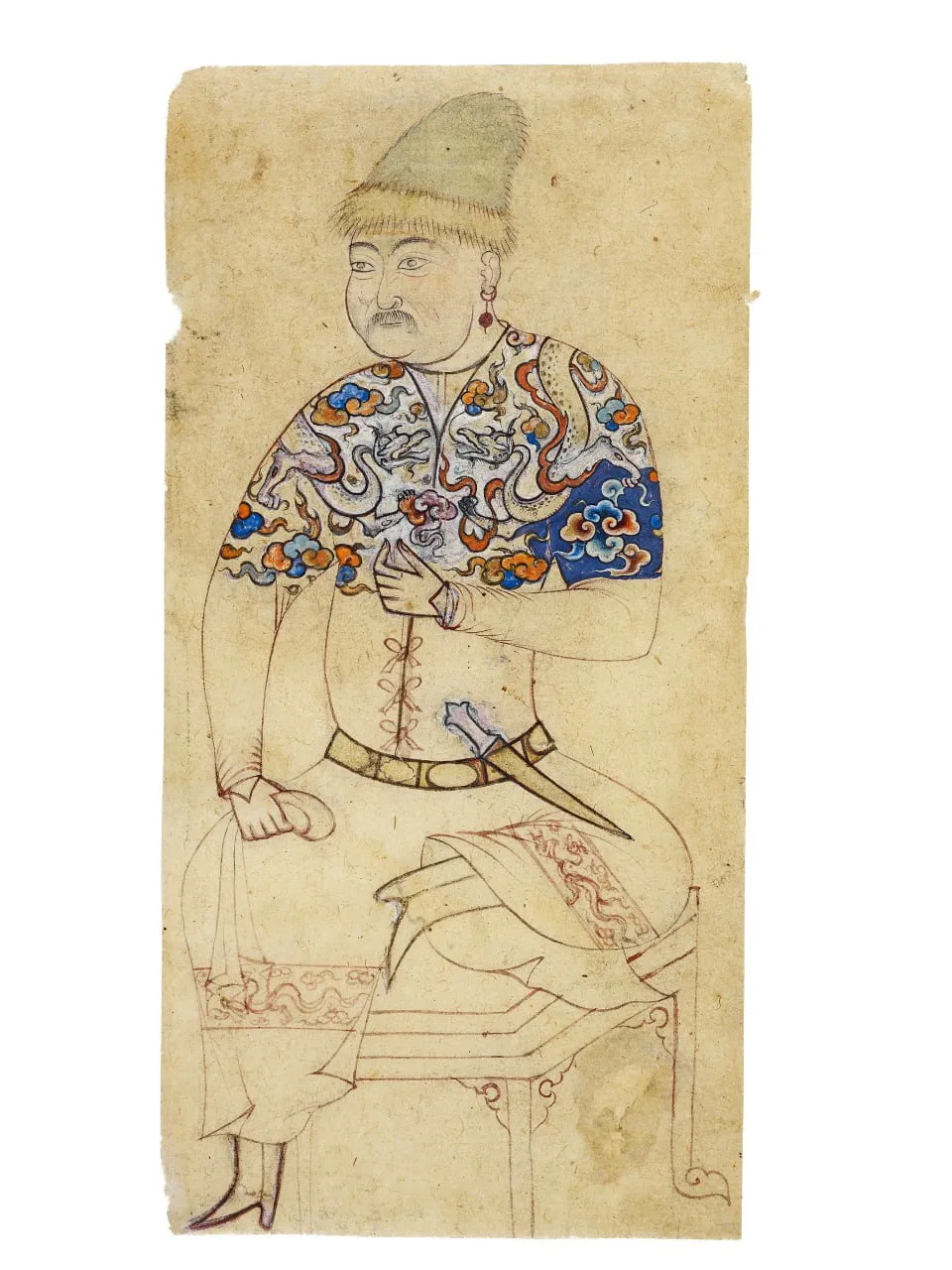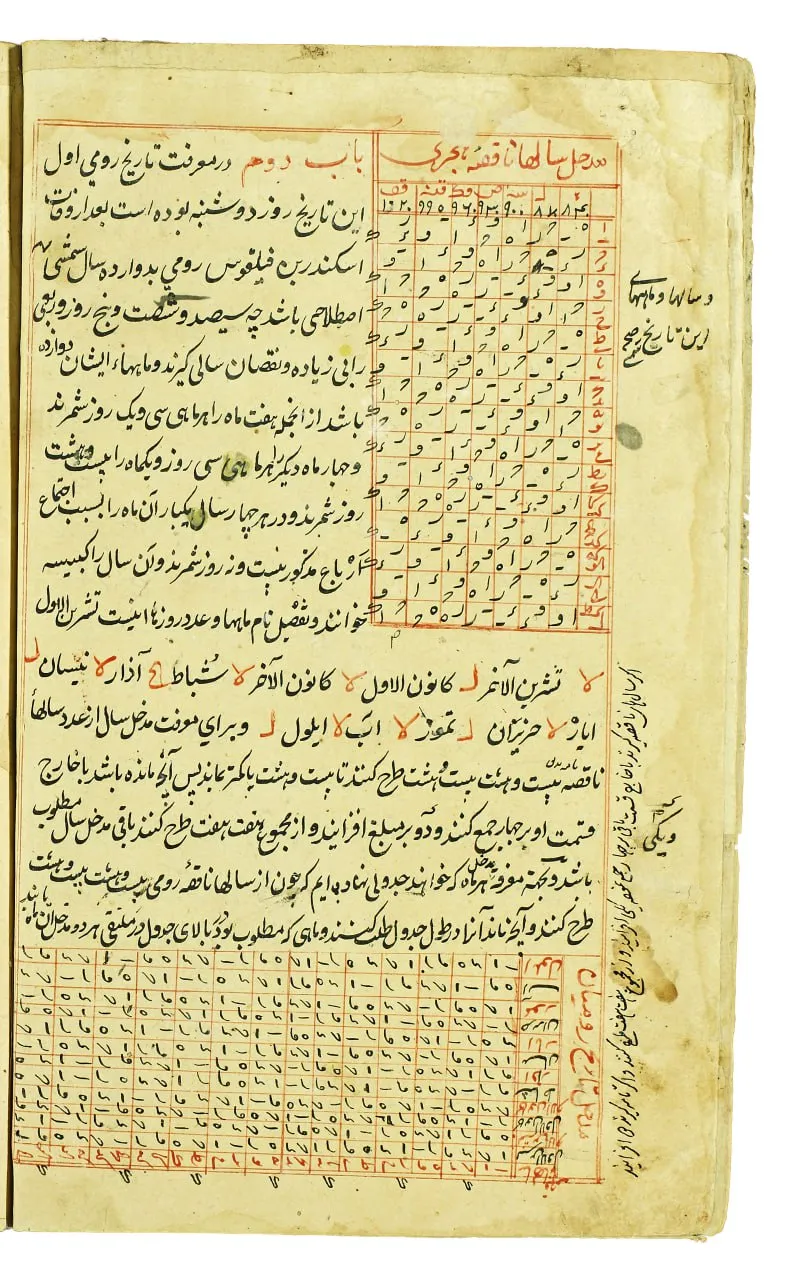
Diez was Prussian Consul in Constantinople during the years 1784 – 1790. Much of the material contained in the albums was presumably acquired by him via personal connections from the Topkapı Palace in Constantinople, where comparable pieces are preserved to this day. The albums consist of some 450 items. Besides paintings and drawings they include also some calligraphies, woodcuts and engravings.
Some of the miniatures are taken from illustrated manuscripts at an earlier date. A large number of preparatory drawings intended for transfer to textiles can be attributed to the Mongol or Ilkhanid period in Persia. Other pictures, and the drawings in particular, originate from the time of the Temurids. The Berlin Diez Albums, commonly also known as the Saray Albums on account of their provenance from Istanbul, came to the Berlin library as a legacy from Diez together with a collection of books and manuscripts. He was one of the early scholars in Germany who possessed in-depth knowledge of Turkish. Diez was particularly interested in Turkish literature. He made a German translation of a Turkish version of a Persian mirror of princes, the Qabus-nama. Furthermore he worked on an edition of the Hümayun-nama, a Turkish version of the Arabic work Kalila wa-Dimna. At the same time his horizons stretched far beyond Ottoman Turkish, as he also sought the roots of Turkish in the Turkic languages of Turkestan. The numerous Chagatai and Oguz manuscripts in his collection attest to this interest.
You can learn more about the topic in the book-album "Collections of the Federal Republic of Germany" (volume XI) from the series "Cultural Legacy of Uzbekistan in the World Collections".
The main sponsor of the project is the oilfield services company Eriell-Group.