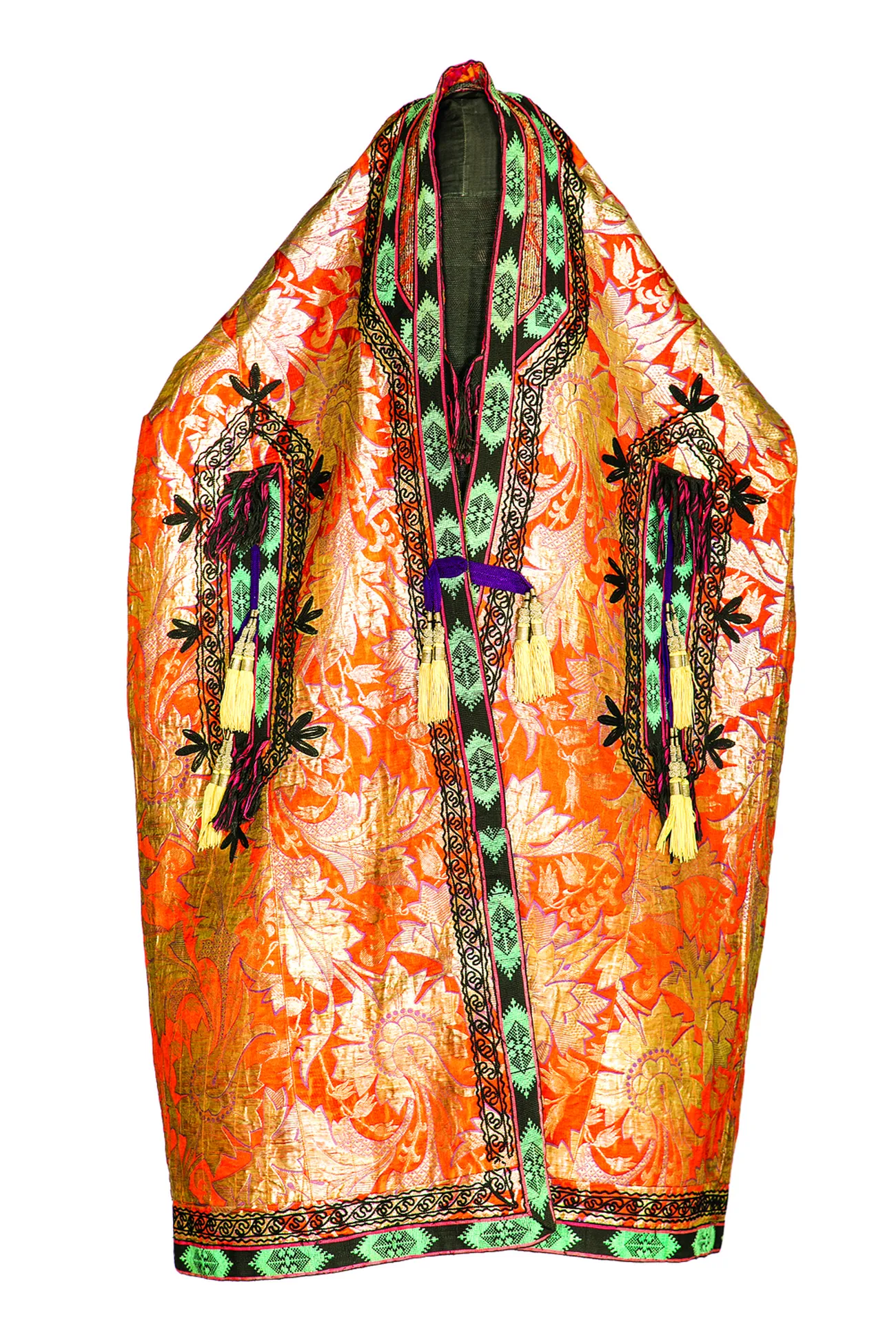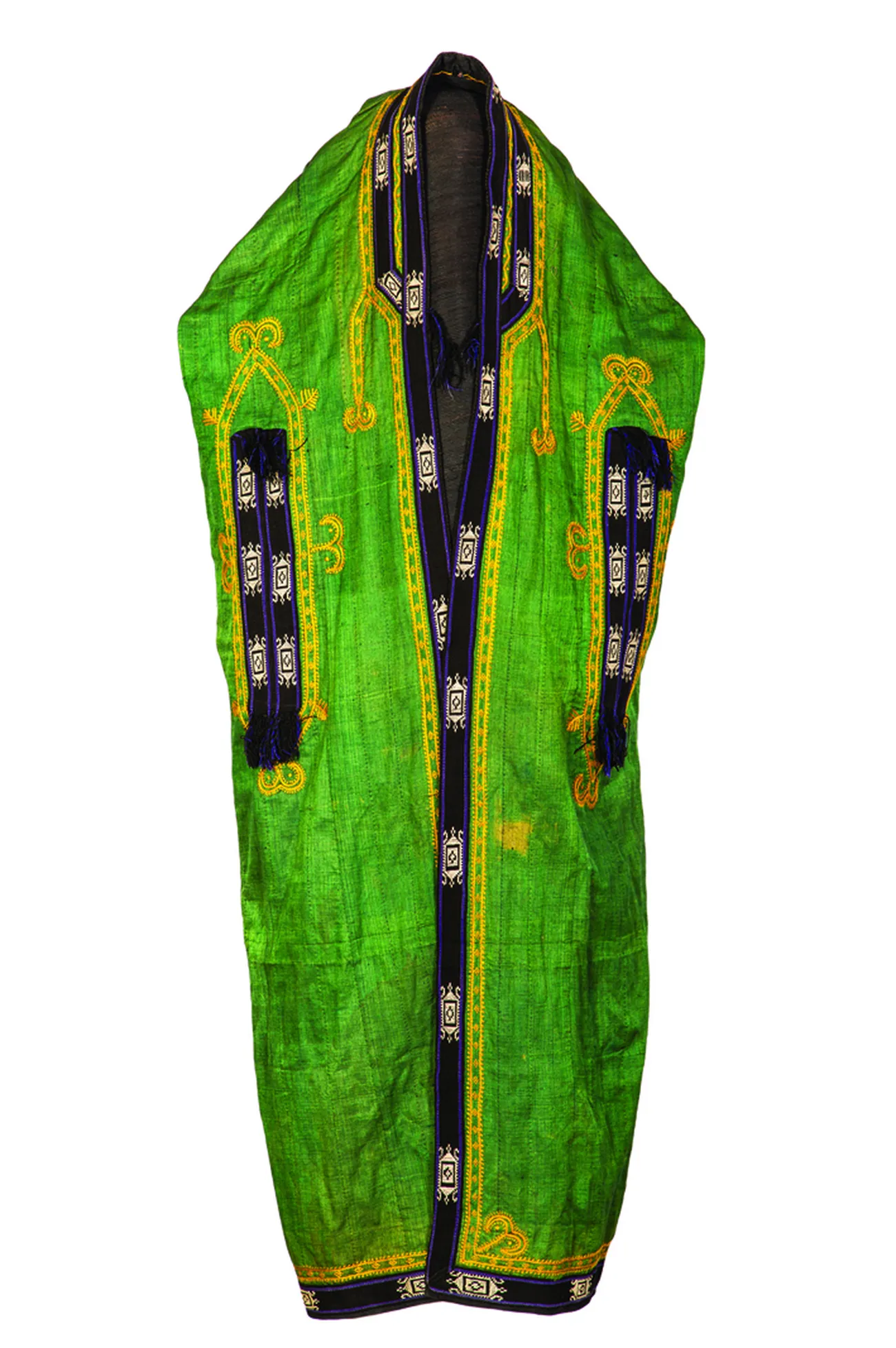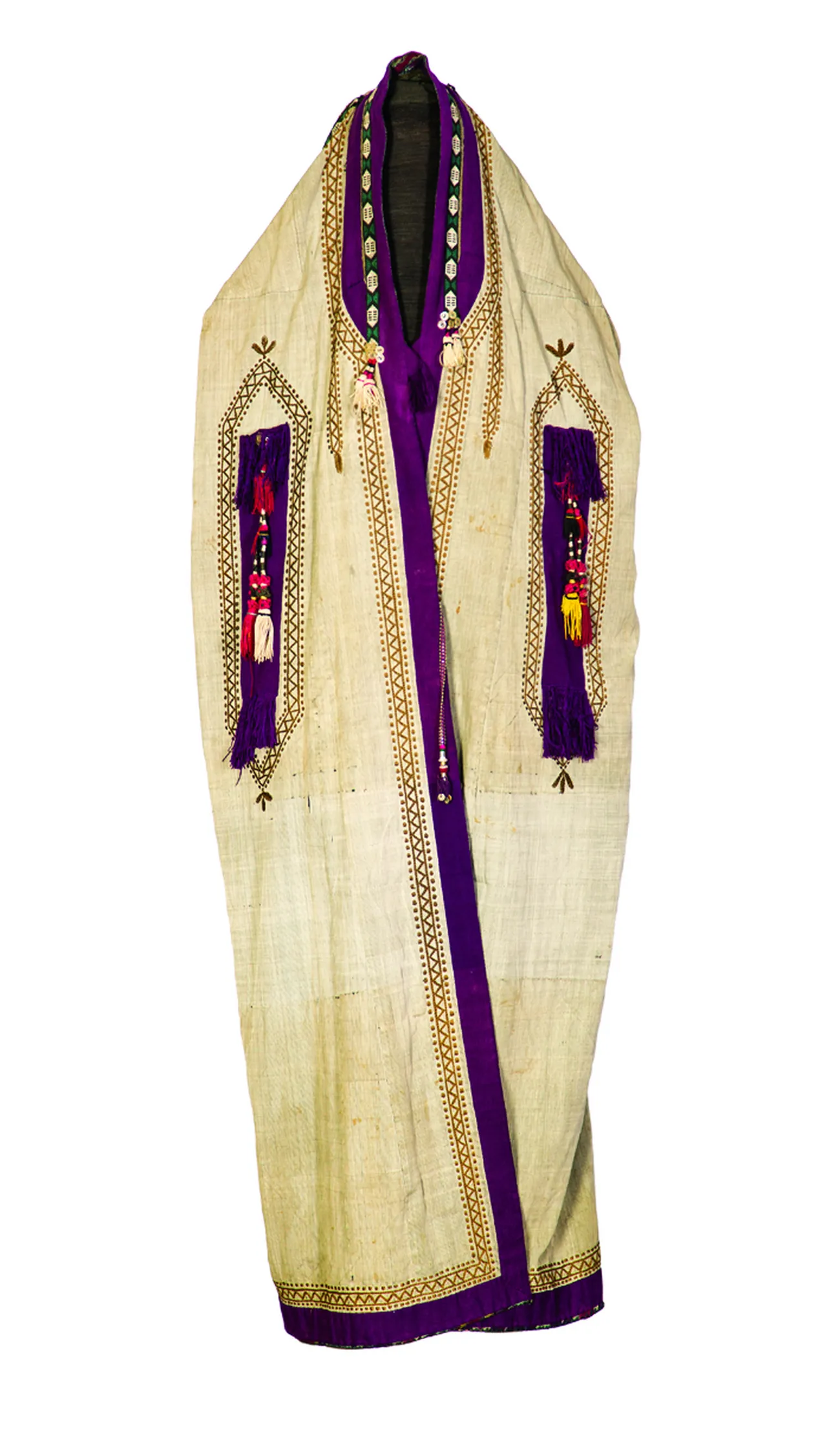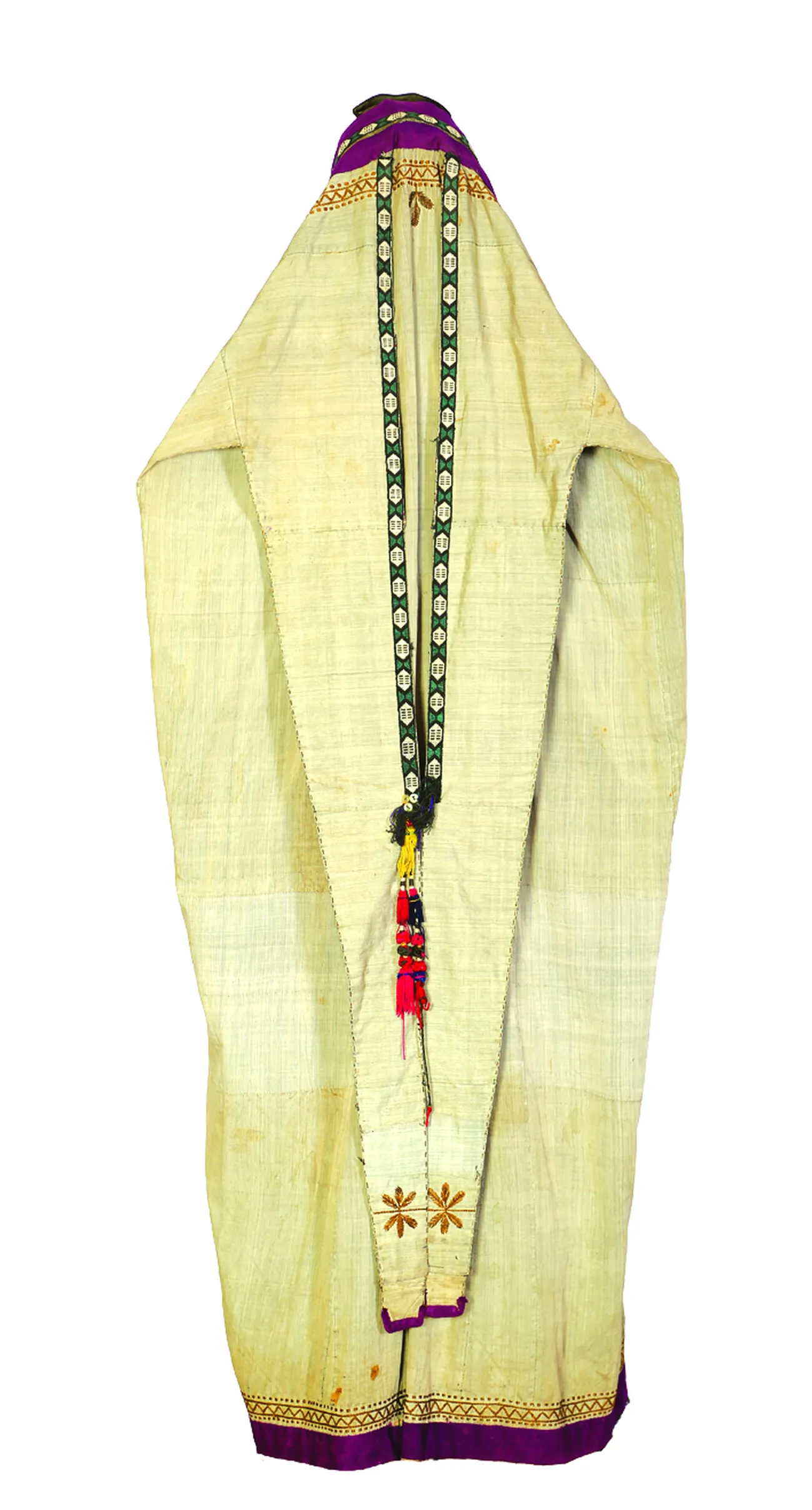
A distinctive feature of the paranja was jiyak edging in two rows on the collar.
It was fancier and embroidered while dresses and upper robes remained rather modest and had no embroidery. The front flaps of a paranja embroidered with embroideries (around openings for hands) have tassels from colored threads, which symbolizes a desire for large posterity. The hair net, chachvan, had a rectangular shape and was very long. It was made of black horsehair and fringed with black sateen or velvet.
Sometimes, the bottom of the chachvan was decorated with ornamental silk embroidery in iroqi style and later with machine-made popop chain stitches. The upper part of the chachvan had a button and a loop that were used to cover the face and attach the veil to the nape.
The paranja was worn over the net.
You will find these and other original items of the national wardrobe in the book-album “Traditional Uzbek Costume on Materials of Museum and Private Collections of Uzbekistan” (Part 1)" (Volume XLVIII) from the series "Cultural legacy of Uzbekistan in the world collections"
The general sponsor of the project is the oilfield service company Eriell-Group.