
One of the commonests presents from the bridegroom's parents to the bride was a certain type of robe called mursak.
This is a loose-fitting women's robe, which is very similar to a modern tunic.
Mursak could be worn in summer and winter, depending on the design and material. The models of women's robes differed from men's in looser sleeves.
Until the late 19th century mursak was sewn from local textiles, such as adras, bekasab and shoi (shohi).
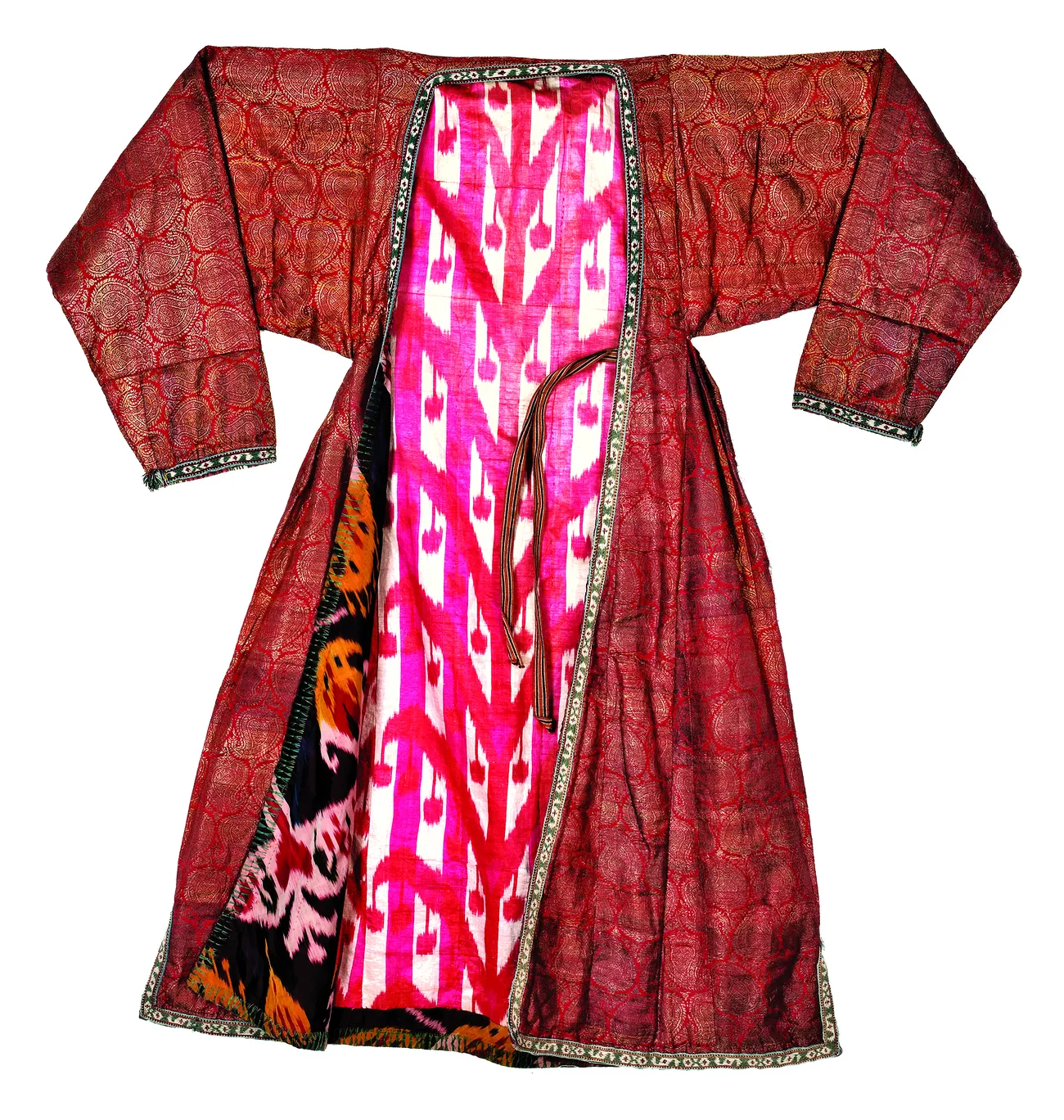
Subsequently, one-color factory-made fabrics were used in it. In Tashkent, mursak had shorter sleeves compared to other types of robes, in Samarkand the sleeves were long and narrowing towards the ends, the Bukharan mursak, on the contrary, had loose and short sleeves demonstrating embroidery on them.
The dowry of a bride from a wealthy family could contain from two to 18 mursaks sewn from expensive fabrics. This type of clothing was not only supposed to be given to the bride as a dowry. Elderly women necessarily reserved them for their burial – two mursaks used to be put on a female funeral stretcher.
Even more interesting facts about traditional clothing in Uzbekistan in the 19th century can be learnt from in the book-album Collections of the Czech Republic from the Cultural Legacy of Uzbekistan in the World Collections series.
The general sponsor of the project "Cultural legacy of Uzbekistan in the world collections" is the oilfield services company Eriell Group.