
A handwritten book is an absolute gem in the art of the Muslim Middle Ages. Everything that was connected with the creation and design of the book – whether it is a religious text, a scientific treatise or a collection of poems - was not just an act of art, but a sacred ceremony.
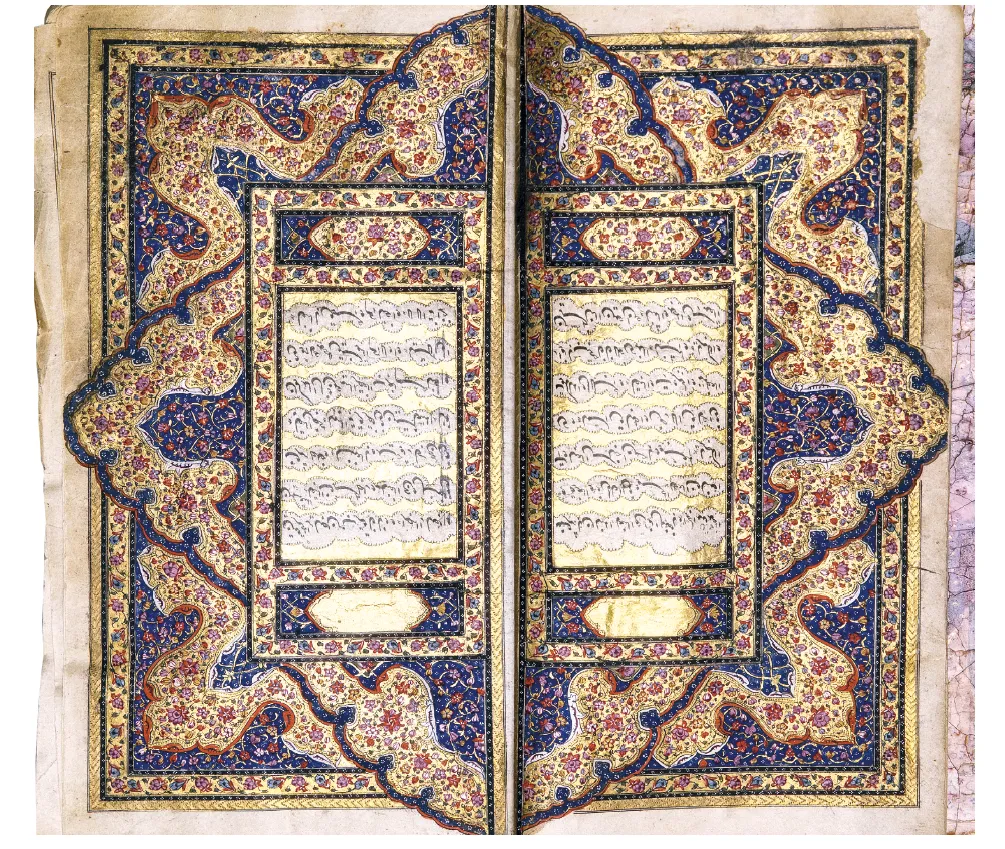
It was necessary to start each process of work - making paper, binding and calligrapher’s tools, illuminating pages, and applying text with kalam - it was necessary with reverence and words of prayer, having renounced worldly worries. Khattots or kotibs (lit. clerk, secretary) – calligraphers played the fi rst role in this well-coordinated orchestra.
Their work was like a sacrament. A carefully copied text was not only a carrier of information - it acquired the highest artistic value in itself. Then the manuscript went to an illuminator who conjured up painting the pages with elegant patterns. This profession is known under diff erent names - lavvakh (designer in the broad sense of the word), muzahhib (gilder, who specialized in patterns using gold leaf) and nakkosh (ornamentalist). Craftsmen making patterns themselves prepared brushes and paints for their work and they could dissolve gold and silver.
However, the arrangement of patterns on the book pages was thought out even before the calligrapher started work. First, a sketch of the future pattern was made on tracing paper. Then the outline of the drawing was pierced with a needle and transferred to the page of the manuscript using the powder method with charcoal. The lines outlined in this way were outlined with a brush and painted with liquid gold and paints obtained from minerals and semi-precious stones. Sometimes, the patterns were so subtle that special brushes with one hair were created to embody them. After drying, the gold painting was polished with agate.
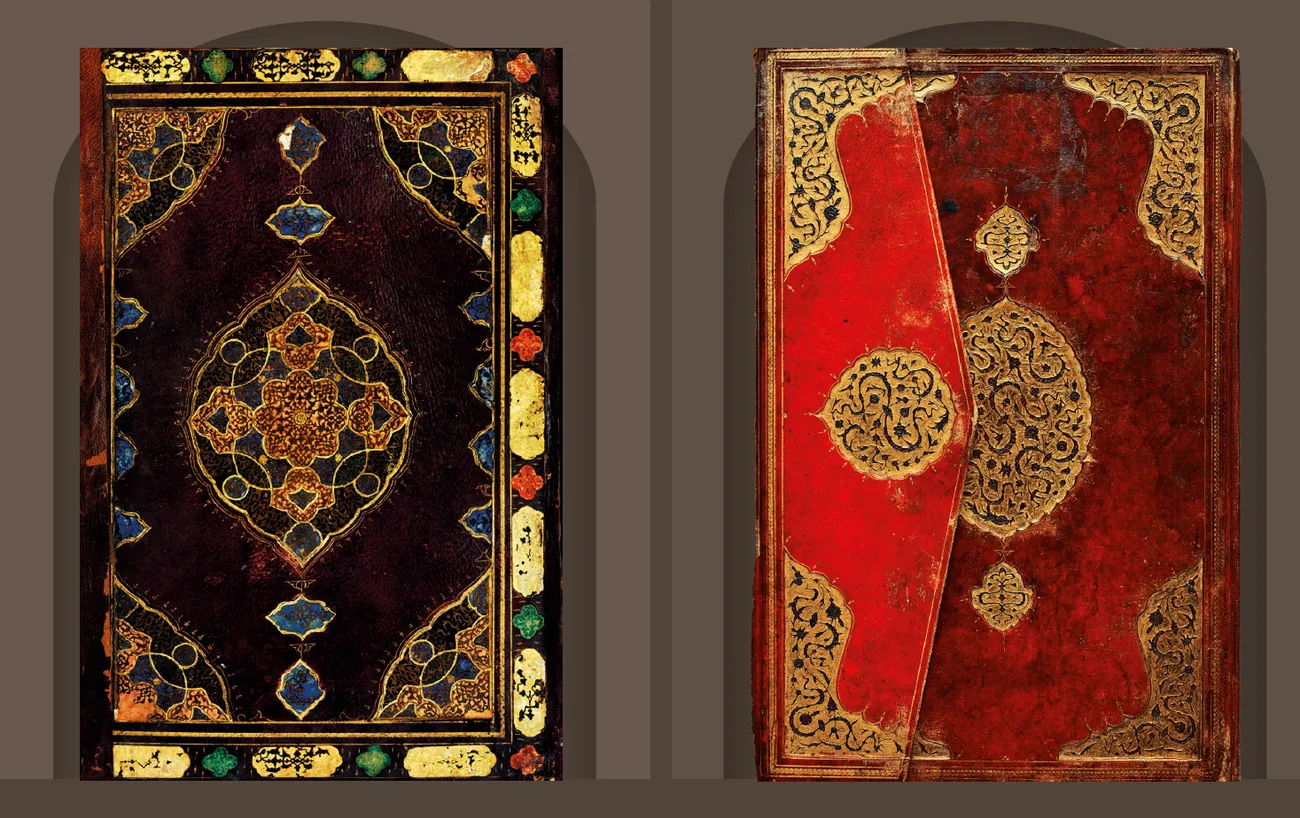
Finally, the master sakhkhof or mukavvasoz collected the sheets and wrapped the book in a binder. It was usually made from papier-mâché or leather. It was not customary to indicate the title of the book on the cover - instead, it was decorated with a rich embossed pattern, often with gilding. Under the infl uence of the Chinese tradition, they also began to make painted bindings with papier-mâché folds, covering them with varnish.