
Specialists from the World Society for the Study, Preservation, and Popularization of the Cultural Heritage of Uzbekistan (WOSCU) have compiled the pages of the Katta Langar Quran in accordance with the order of the suras. As a result, the first complete facsimile edition of the manuscript was created. This is the result of eight years of research and studies by scientists.
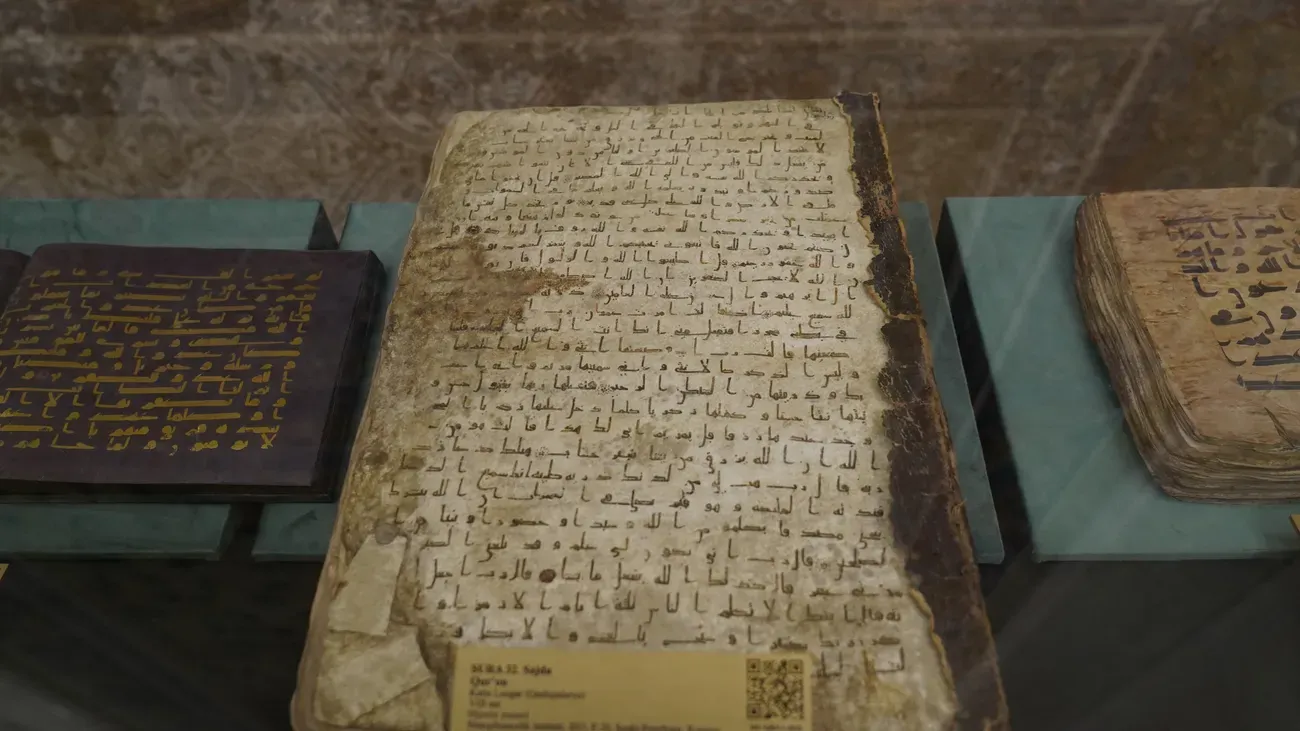
In the facsimile edition, the color, style, flaws, and even historical corrections of each page are restored as close as possible to the original. Along with this, an Uzbek translation was also included.
The scattered pages of the Great Langar Quran, one of the ancient and unique written sources, are now being shown to the world community in the center of Islamic civilization.
For reference: The Great Langar Quran is considered a rare written source that has been formed over centuries and contains various historical events and destinies. This Quran, first created as a single manuscript, later spread to various countries and centers. For almost a thousand years, these pages have been passed down from generation to generation as a sacred trust. In some periods, it was lost, and in some cases, it was accidentally found again.
The manuscript is written on parchment made from calfskin in the style of hijoziy xat. This style is considered one of the most ancient and unique directions in the history of Islamic calligraphy. Radiocarbon analyses conducted in 2000 at Groningen University in the Netherlands scientifically confirmed the dating of the pages to 975-995 CE. These results undoubtedly substantiated the authenticity and historical value of the manuscript.
As a result of historical processes, most of the manuscript was exported from the Turkestan region by the Russian Empire at the end of the 19th - beginning of the 20th centuries. Today, 81 pages of the Great Langar Quran are kept in Saint Petersburg, and 17 pages are kept in Tashkent, Bukhara, and Samarkand.
It is no coincidence that the Quran is called "Katta Langar." The village of Katta Langar, located in the Kamashi district of Kashkadarya region, for centuries was an important spiritual center where the sheikhs of the Ishqiya tariqa worked. In this region, shrines, mosques, and mausoleums occupied a significant place in religious and educational life.
Experts note that this manuscript is an invaluable source for history, calligraphy, tafsir studies, book studies, archaeology, and cultural anthropology.