
In Islam, determining the direction of the qibla was of great practical importance. Therefore, for centuries, Islamic scholars, especially Central Asian thinkers, conducted serious scientific research in this direction, and the problem of determining the qibla gave impetus to the development of astronomy and geometry.
One such qibla compass was specially brought to Uzbekistan from the Netherlands and was placed in the exposition of the Center for Islamic Civilization Museum.
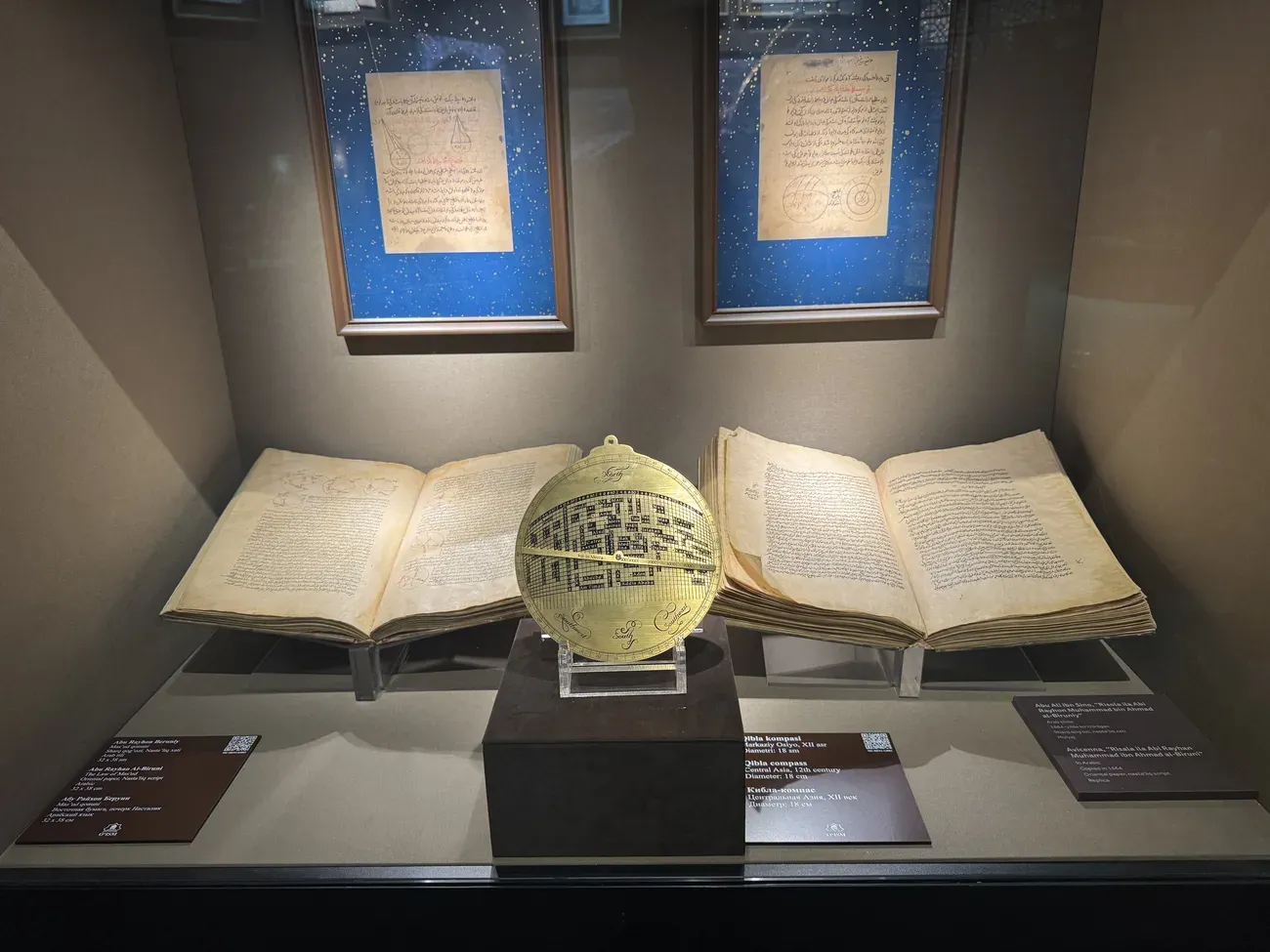
This compass was inspired by copies created in Isfahan in the 17th-18th centuries. The instrument is scientifically based on the retro-azimuthal projection developed by Beruni. This projection made it possible to determine the direction of the qibla with high accuracy. The instrument reflects the coordinates of more than 100 cities, most of which are taken from geographical sources compiled in Central Asia in the 15th century.
The aesthetics of the qibla indicator is also unique: straight and elliptical lines, decorations based on the laws of geometry, make it not only a practical tool, but also an example of art with high artistic value. The instrument's diameter is 18 cm, the cities are given in English, the distance indicator is calculated in kilometers.