
From the end of the 8th - beginning of the 9th centuries, glazed ceramics appeared and became widespread in the cities of Maverannahr. Later, leading centers of ceramic art were formed: Afrasiab, Shash, Fergana, Chaghaniyan, and others. Among them, the pottery of Afrasiab (Samarkand) spread to all regions of Central Asia. This is related to glazing, coloring, and creating images of dishes.
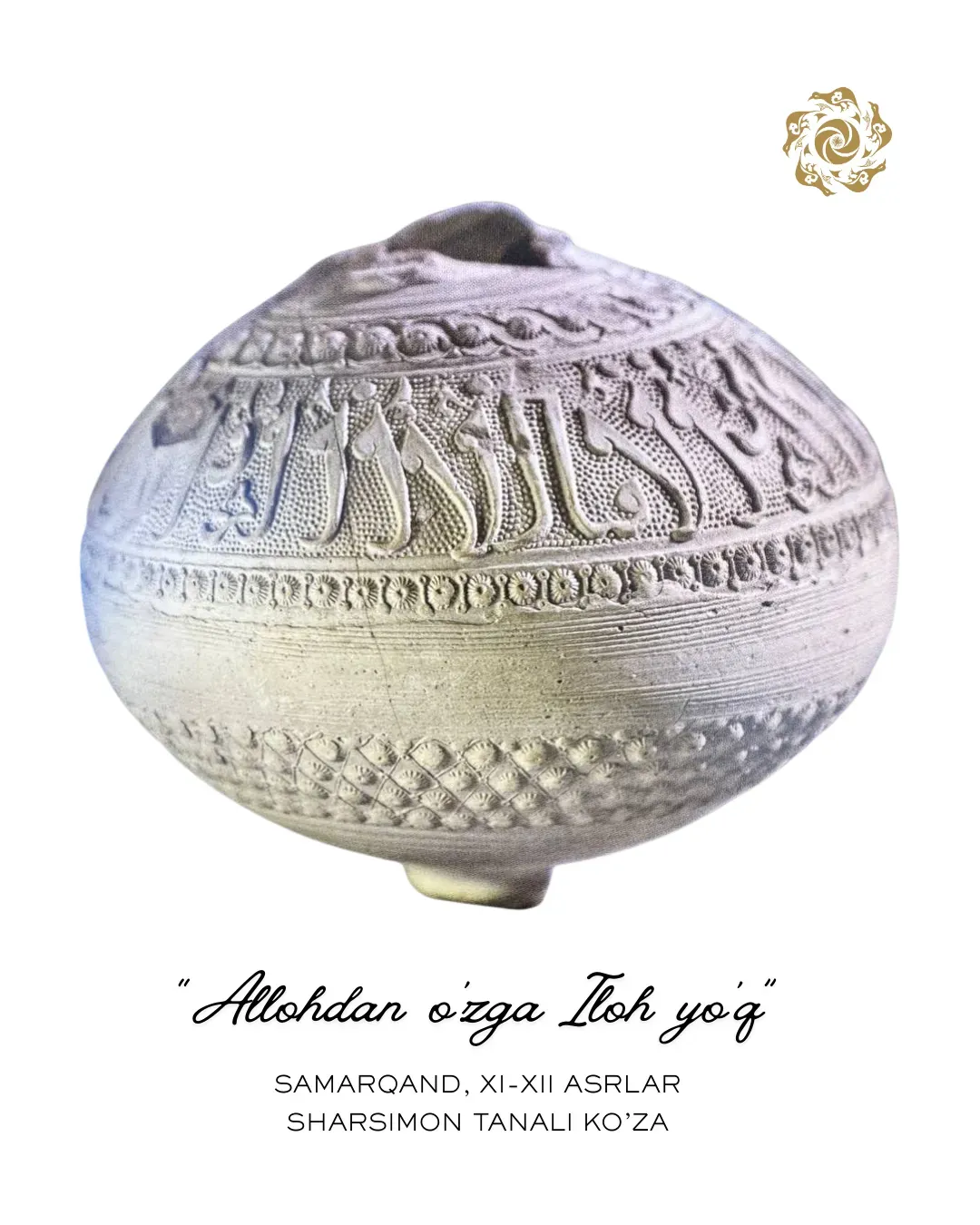
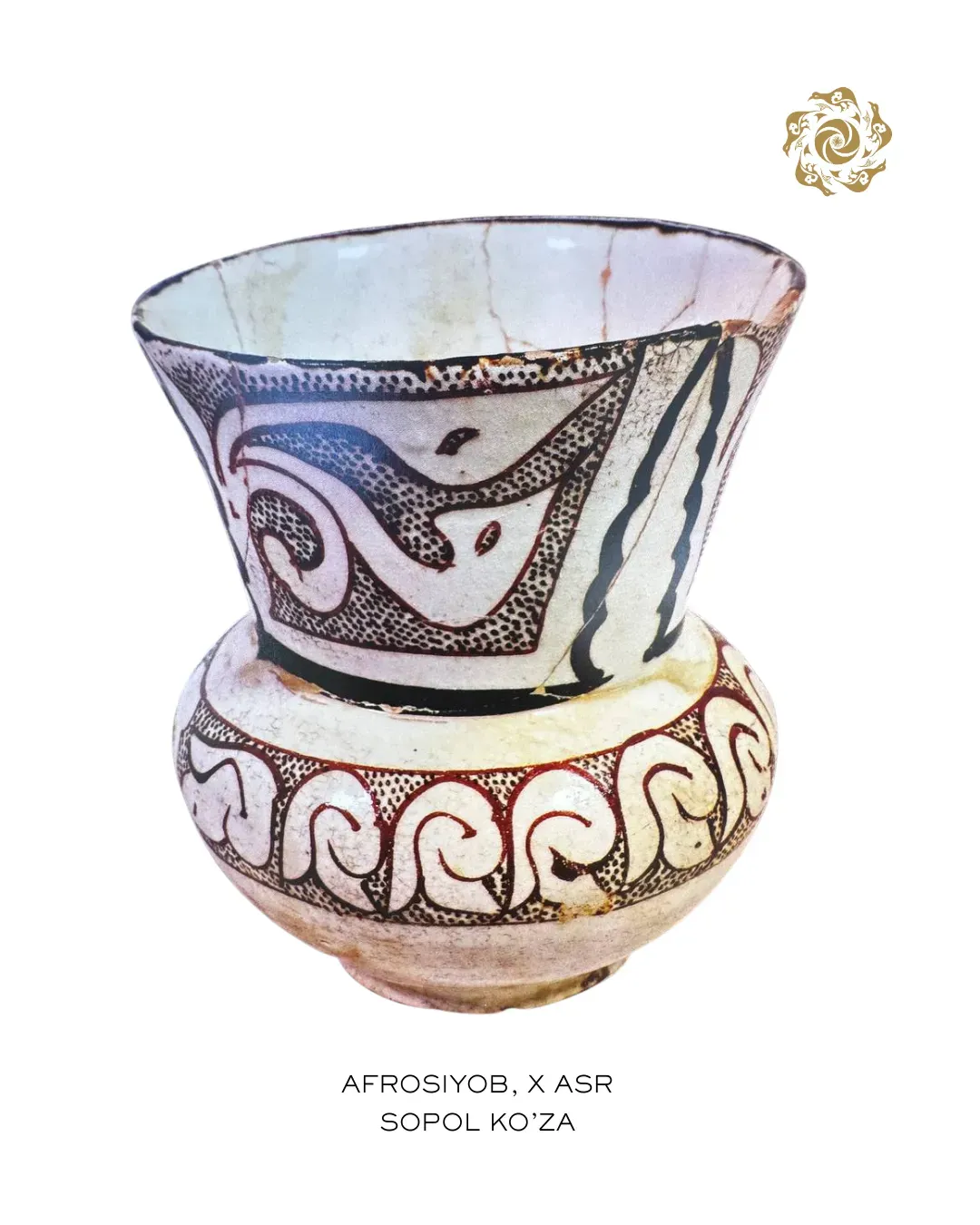
In the ceramics of Afrasiab, the most frequent islimi - floral patterns are found, in which images of flowers, branches, pomegranates, tulips, and roses predominate. Later, Islamic patterns were transformed into inscriptions. The surface of the ceramic items is covered with inscriptions expressing good wishes in the Kufic and Naskh styles.
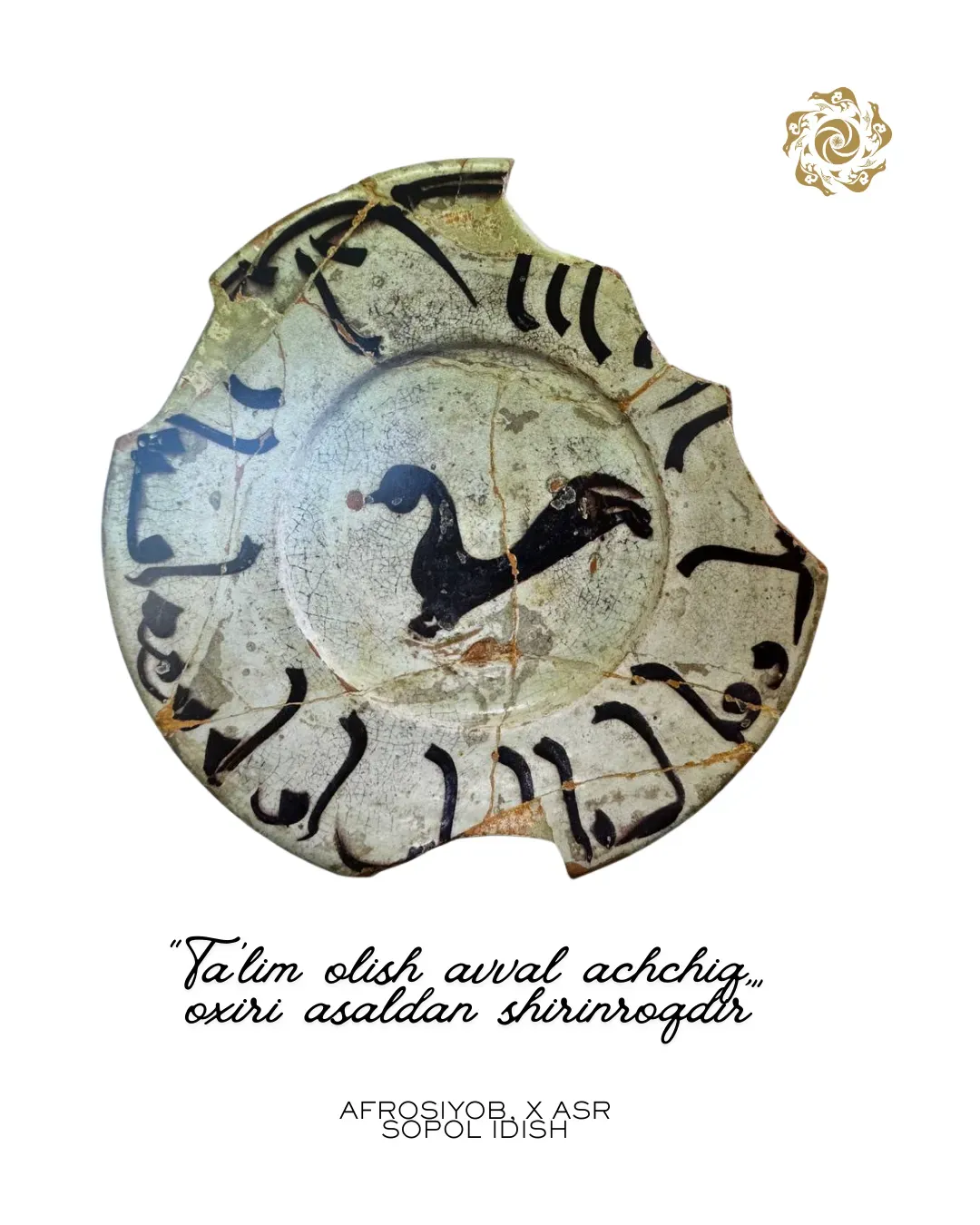
Some inscriptions had a didactic character, for example, in the center of a round plate was depicted a stylized horse shape, and along the circumference of the vessel, the following inscription was written in Arabic: "Learning is bitter at first, sweet at last".
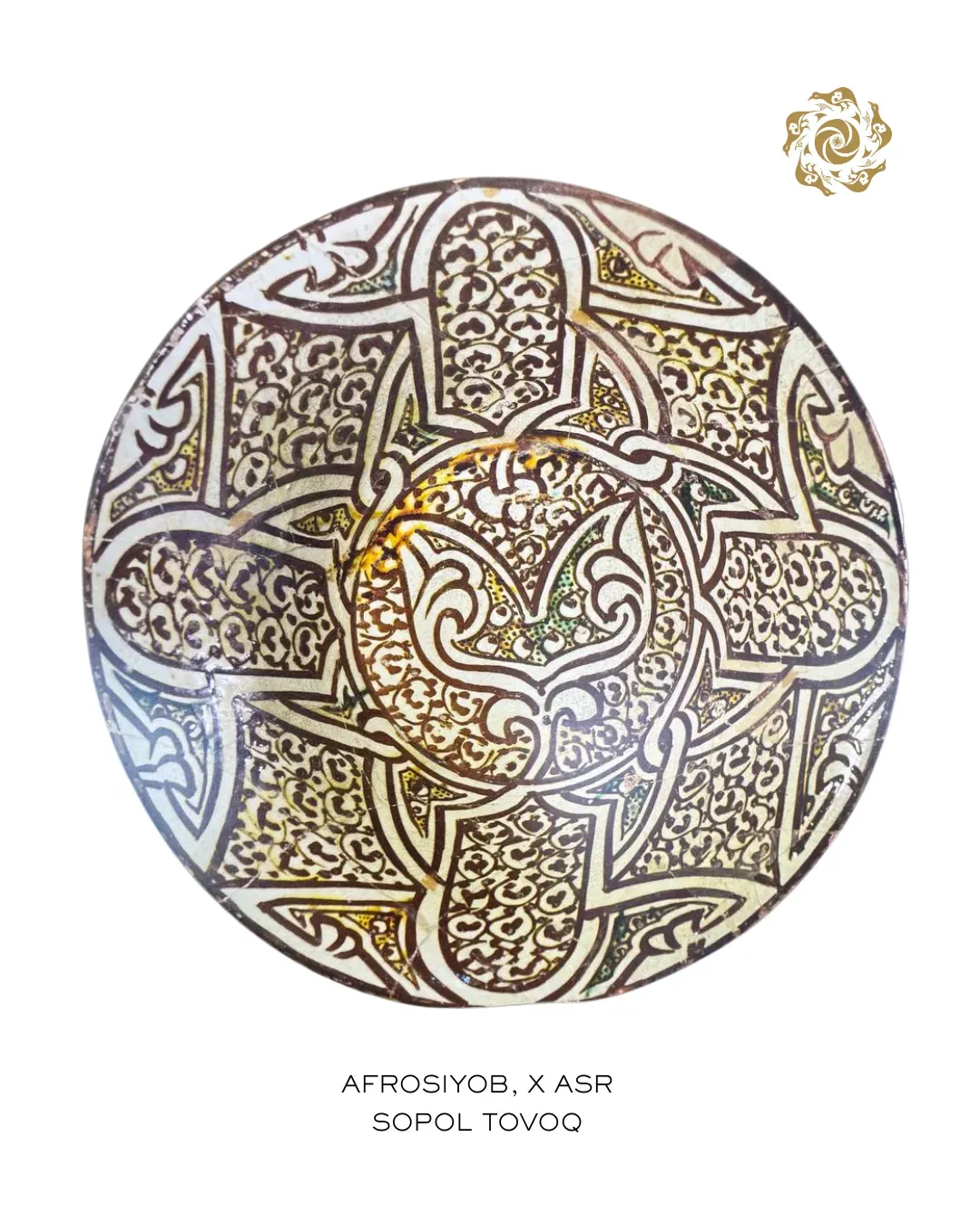
With the development of mathematics, geometric patterns in the form of rectangles, triangles, and weaves became dominant on objects.
By the 9th-15th centuries, Afrasiab glazed ceramics had reached artistic and technical perfection and were exported to many Muslim countries.
Currently, the richest collection of Afrasiab ceramics in the world is kept in the Samarkand Museum.
 |  |  |