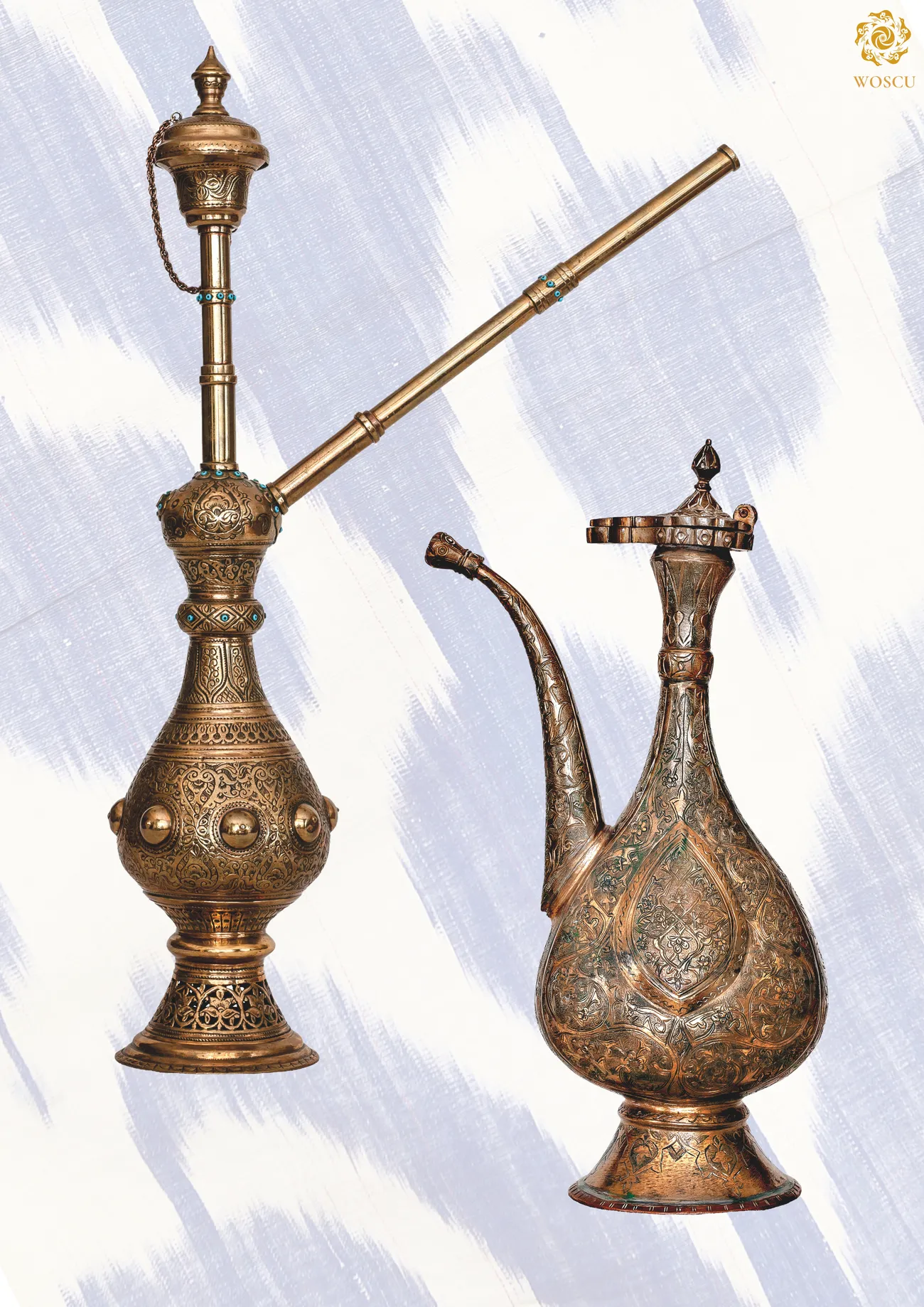
Most of the collection of metalwork at the Museum dates from the late 19th to the mid-20th centuries. During this period, Khiva, Bukhara, Tashkent, Samarkand, Karshi, Shahrisabz, Kokand, and Margilan were the major centers for the production of embossed and jewelry items. At the same time, there are also earlier examples - in particular, a rare antique bronze kettle stand made in Samarkand in the 14th century. It is decorated with a complex embossed pattern incorporating a mythological image of a bird-woman accompanied by a Kufic inscription with well-wishes.
You can learn more about the topic in the book-album "The Collection of the State Museum of Applied Art and Handicraft’s History of Uzbekistan" (XXXIX volume) from the series "The Cultural Legacy of Uzbekistan".
The main sponsor of the project is the oilfield services company Eriell-Group.