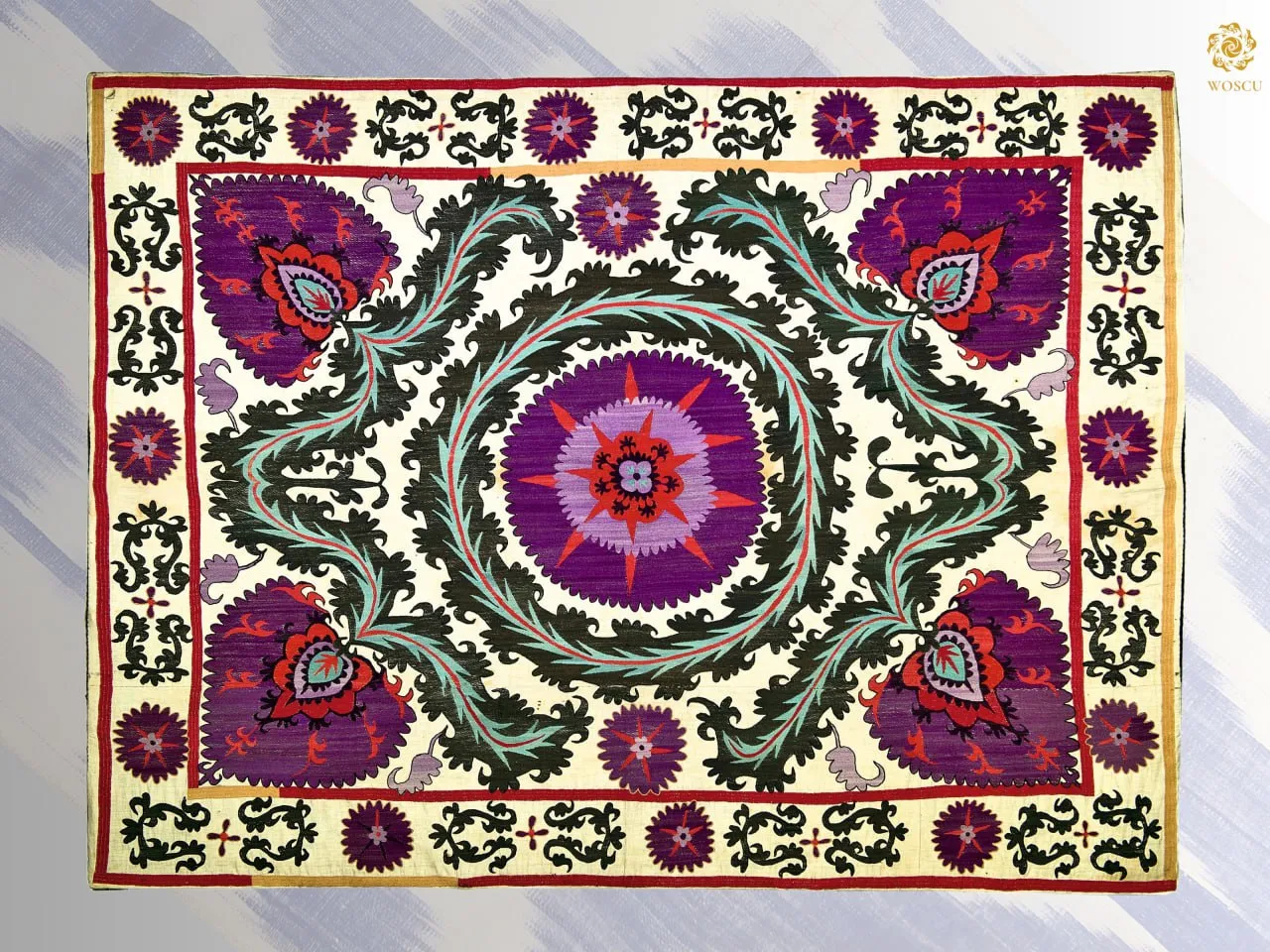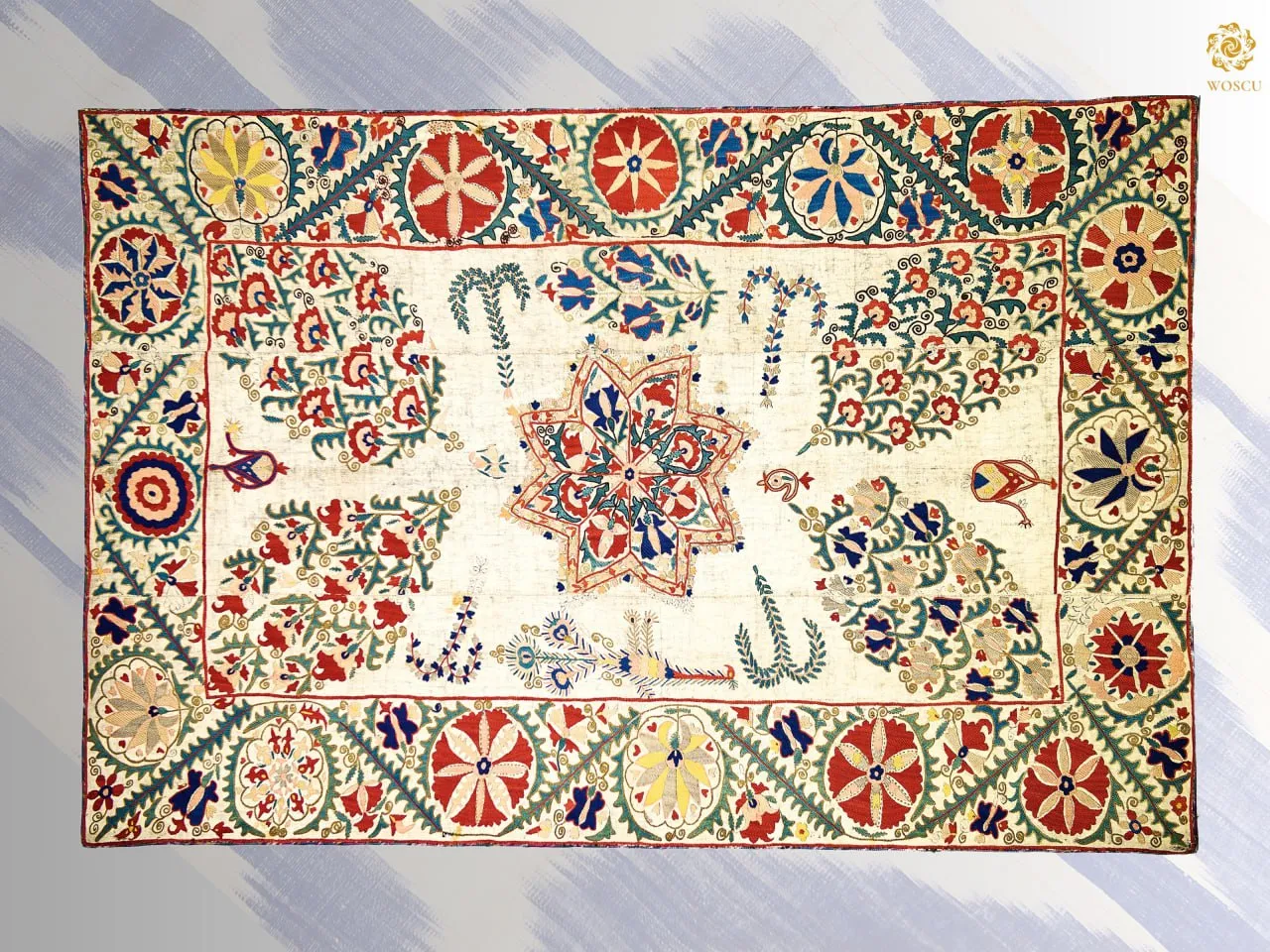
The works of each centre were primarily distinguished by their decor. So, the Nurata suzani is distinguished by compositions with a large medallion in the centre and flower bushes known as chor – shohu – yak mokh (four branches and one moon). Bukhara patterns were arranged in several rows of flower rosettes, rhythmically alternating between each other, or grid compositions of tobodoni. The embroidery of the Bukhara school often fills plant patterns with islimi.
In general, plant and floral motifs prevail in the patterns of embroidered products, often close to the real image – large rosettes, profile images of flowers, bushes, shoots of branches, pomegranates and almonds. They fill the central place of the suzani, creating an image of a flowering garden and symbolizing the wishes of happiness, fertility and the continuation of the family.
You can learn more about this topic in the book-album “The Collection of the State Museum of Arts of Uzbekistan” (Volume XIII) from the series “Cultural legacy of Uzbekistan in the world collections”.
The general sponsor of the project is the oilfield services company Eriell-Group.