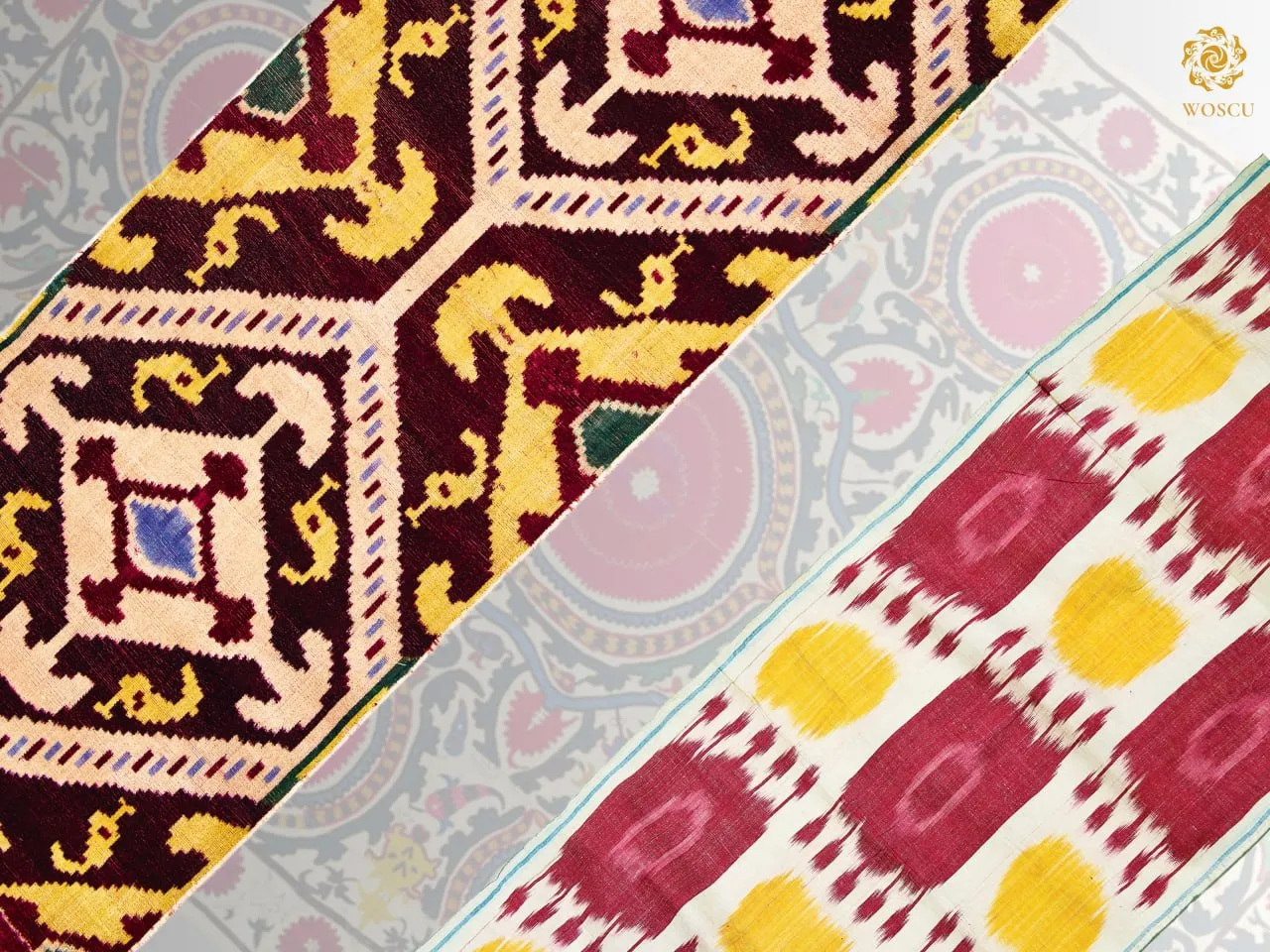
Silk-weaving as a handicraft appeared in China in the 2nd millennium BC. Eventually it became known throughout the Great Silk Road, including in Central Asia.
The earliest surviving examples of local silk fabrics originate from the 5th – 7th centuries. They are known as zandanechi, that is, they were produced in the village of Zandana near Bukhara.
From the late 18th to the early 20th centuries, weaving experiences one of its brightest periods. Masters of Uzbek khanates produced paper fabrics: kalami, alocha, chit; half-silk: bekasab, banoras, adras, duruya, yakruya, satin, bahmal; and silk: shoi, satin, khan-atlas.
You can learn more about this topic in the book-album “The Collection of the State Museum of Arts of Uzbekistan” (Volume XIII) from the series “Cultural legacy of Uzbekistan in the world collections”.
The general sponsor of the project is the oilfield services company Eriell-Group.
_1_1.webp)