
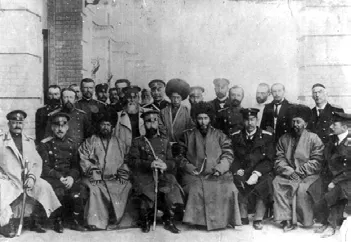
Thus, the Khiva campaign of 1873 was attended by the Orientalist A. L. Kun (1840–1888) who was entrusted with a thorough study and collection of everything that was of scientific importance for the libraries and museums of St. Petersburg. E. Zhelyabuzhsky and M. Alikhanov-Avarsky who participated in this campaign wrote:
«On May 29, at 2 pm, the troops of Turkestan, Orenburg and the Caucasus under the general command of Major General Golovachev solemnly entered the capital of the Khanate with music.“ After that, Kaufmann entered the palace, which had already been occupied by one of our troops and where the representatives from the city and the surrounding communities were waiting for him, and, ascending one of its galleries – where there was something like a throne, sitting on which the Khan usually conducted trials – turned to the natives present with the following words: ”Behold and spread my words to everyone that now our enmity is over and that from now on we will act only as your patrons”.
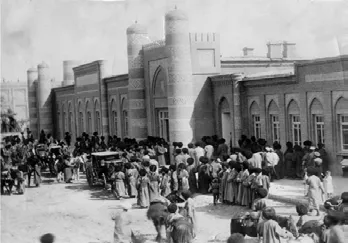
Kaufman also ordered General Golovachev to deploy soldiers to guard the palace. Kun, in turn, made an inventory list of all property. Most of the treasure chests were empty, and only one was full of coins. Among them were 20 gold and 5 silver seals, 172 gold coins of the times of Genghis Khan and the Timurids, many gold coins minted by the Khorezm Khans, hunting rifles, pistols, swords decorated with gold and emeralds, daggers, helmets, armor, 200 forms for minting coins, documents of the royal chancellery, 300 handwritten books. The books from the library of the Khorezm Khans were confiscated and transferred to the capital of the empire.
You can learn more about the topic in the book-album "The Collection of the Ichan-Kala State Museum-Reserve" (Volume XLVII) in the series "Сultural legacy of Uzbekistan in the world collections".
The main sponsor of the project is the oilfield services company Eriell-Group.