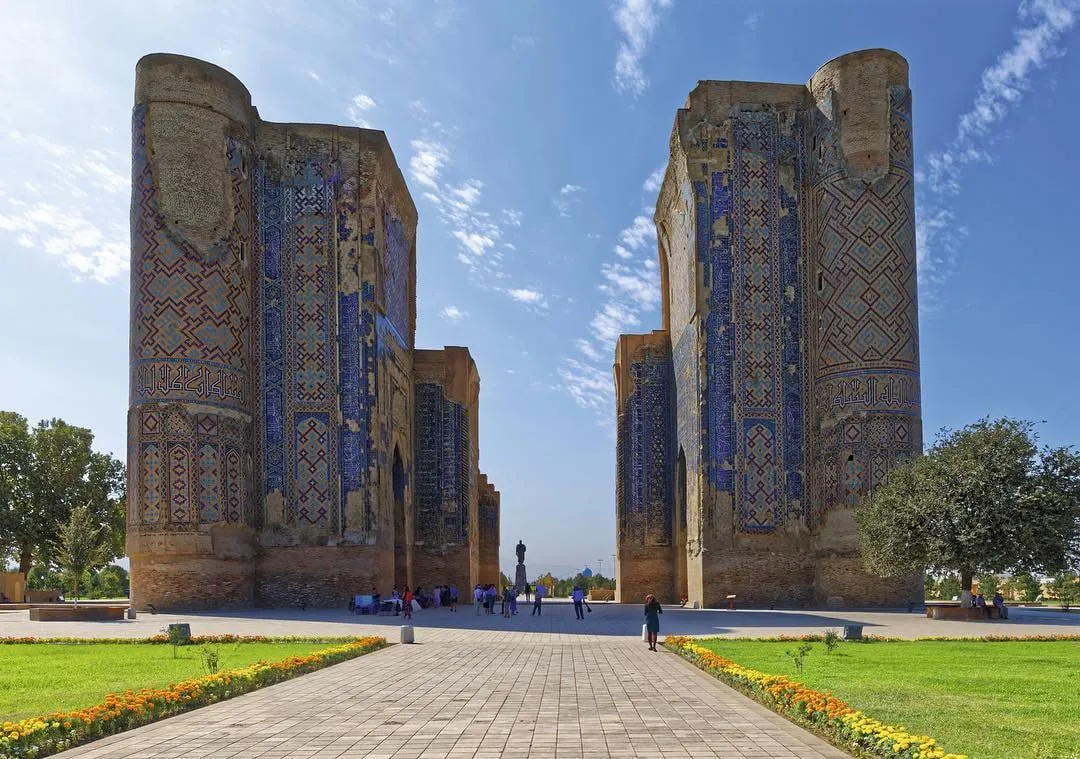
Quite peculiar are the inscriptions of the 14th–15th and 16th centuries, as an indicator of economic and cultural upsurge in the society, evidencing also the level of literacy among the middle and upper layers of the population. The texts of inscriptions on architectural monuments are diverse in their meaning and content. Apart from regular texts or citations from Quran and hadiths, their essence includes, so to say, a political credo, manifesting, for example, the ruler’s power and authority and, at the same time, his justice.
For example, we find such maxims among inscriptions of the «Oqsaroy» palace, which prove the aforesaid statement,
«Justice is the foundation of the state and the motto of rulers», «Sultan is the shadow of Allah on earth», «Lords' speech are the lords of pronounced words», «Let the sun of your happiness shine brightly over your country!».
It should be noted that these maxims are inscribed in various styles and scripts (including easily readable ones) and located in the most visible and accessible parts of monuments, while the large size of the prints provide an opportunity to see them well from afar.
Thus, this type of inscriptions functionally effected the role of official proclamations and could be assessed as Amir Temur’s political and ideological credo. Inscriptions have also been found at different worshiping sites located in different settlements and urban centers of Qashqadaryo region. These include cemeteries (mazars), mausoleums, large and medium-sized old burial-grounds and architectural-memorial complexes. Former Sufi centers, which had been turned into places for worshiping saints after burial of mentors, play a significant role.
You can learn more about the topic in the book-album "Architectural epigraphy of Uzbekistan. Qashqadaryo, Shahrisabz" of the series "Architectural epigraphy of Uzbekistan".
The main sponsor of the project is the oilfield services company Eriell-Group.