
Media Event "Cultural Heritage as a Bridge Between Uzbekistan and France"
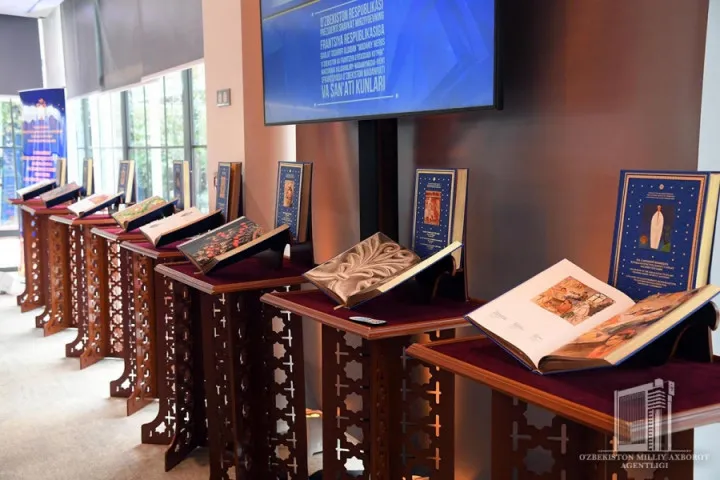
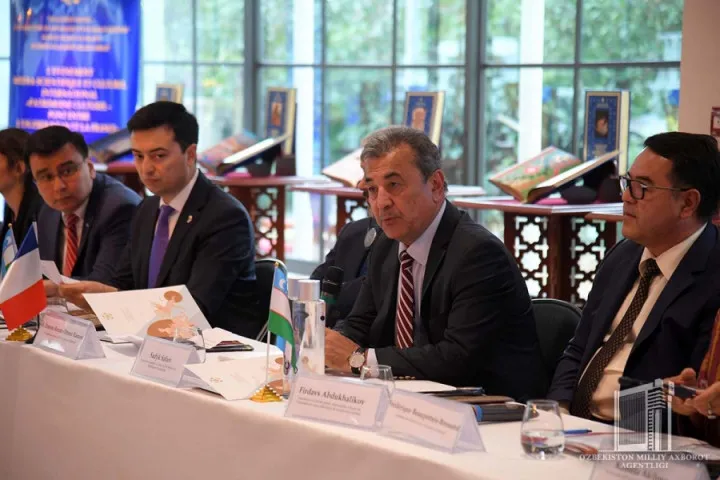
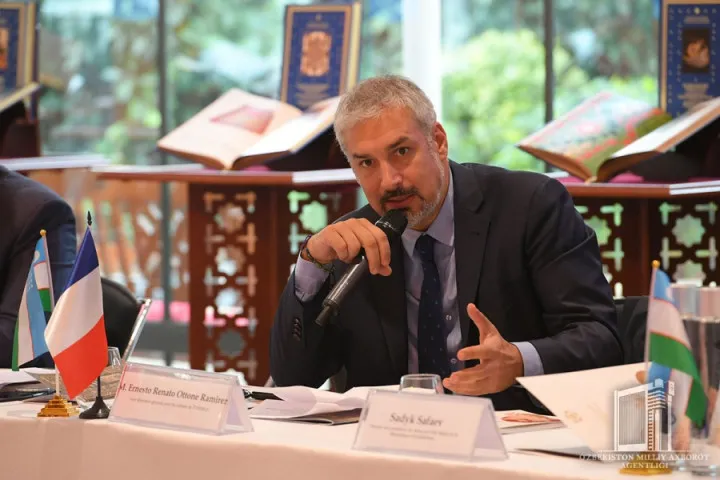
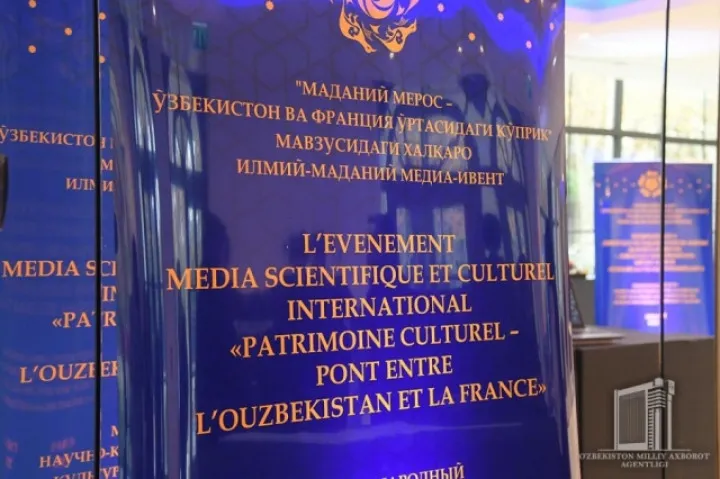
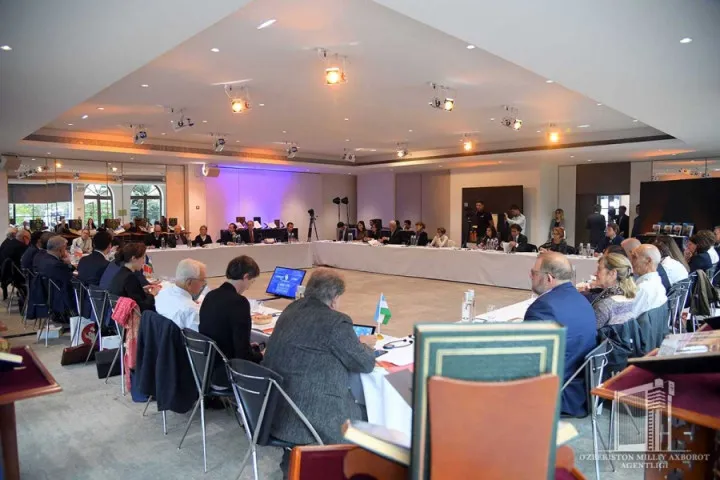
From September 25 to October 5, 2018, documentary films about Uzbekistan's cultural heritage in French collections were filmed in Paris. On October 5, ahead of President Shavkat Mirziyoyev's official visit to France, the media event "Cultural Heritage as a Bridge Between Uzbekistan and France" was held, attended by over 60 prominent scholars and orientalists. Ernesto Renato Ottone Ramirez, UNESCO's Assistant Director-General for Culture, participated in the event.
"You are working to show the world that Uzbekistan's rich cultural heritage is preserved not only within the country but also in major museums across Europe, the USA, and other countries. I believe that Uzbekistan's serious approach to this issue—through research, exhibitions, and the creation of new scientific structures and projects—sets an example for many nations. Research is a way to pass on not only academic knowledge but also insights for our children and future generations. We are very pleased that UNESCO is actively collaborating with Uzbekistan" - praised Ramirez.
The book-album "Illustrated Manuscripts of Mavarannahr in French Collections" was presented. Authored by Dr. Francis Richard, a leading expert in manuscript heritage, this book was created for Ulugh Beg's personal library around 1430-1440 in Samarkand during the construction of his famous observatory. The book was copied in elegant Arabic script around 1435. An inscription on one of the pages states that "these images (suvar) were made for the library of the great sultan and exalted khan, the ruler of the kings of the Turks and Persians, the sultan, son of the sultan - Ulugh Beg Guragan. May Almighty God make his kingdom eternal (...)."
On the first page of the manuscript, there is a calligraphic ex-libris of Ulugh Beg, written in his own hand. The 74 miniatures adorning the book are of the highest artistic quality, filled with intricate details. Each drawing represents a constellation, including one where Ulugh Beg himself is depicted as Cepheus, named after the mythological king of Ethiopia. This practice of attributing the ruler's features to historical figures was common in past manuscripts.
The manuscript, once in Ulugh Beg's possession, captivated the Uzbek delegation. During the media event, plans to create an Atlas of Historical Maps of Uzbekistan were announced. The main objective is to reconstruct the region's cartographic history, considering both cartographic terminology and evolving cartographic schemes, intertwined with the history of travel, geographical discoveries, and geopolitical context.
"The scientific reconstruction involves a significant amount of illustrative material—maps, some of which will be analyzed in detail within the text, while others will only include information about the author, date of creation, and location," noted Svetlana Gorshenina, Ph.D., Associate Researcher at the Center for Archaeological Research, ENS-CNRS (France), and author of the upcoming album.
The book will be published in Uzbek, English, and Russian. Its working title is "History of Cartographic Representations of Central Asia." During the media event, presentations on Uzbekistan's cultural heritage in French collections were delivered. Additionally, there was a ceremony for the free distribution of albums from the projects "Cultural Heritage of Uzbekistan in World Collections," "Architectural Epigraphy of Uzbekistan," and a series of facsimile manuscript copies to UNESCO, leading museums and libraries in France, and the Embassy of Uzbekistan in France.