
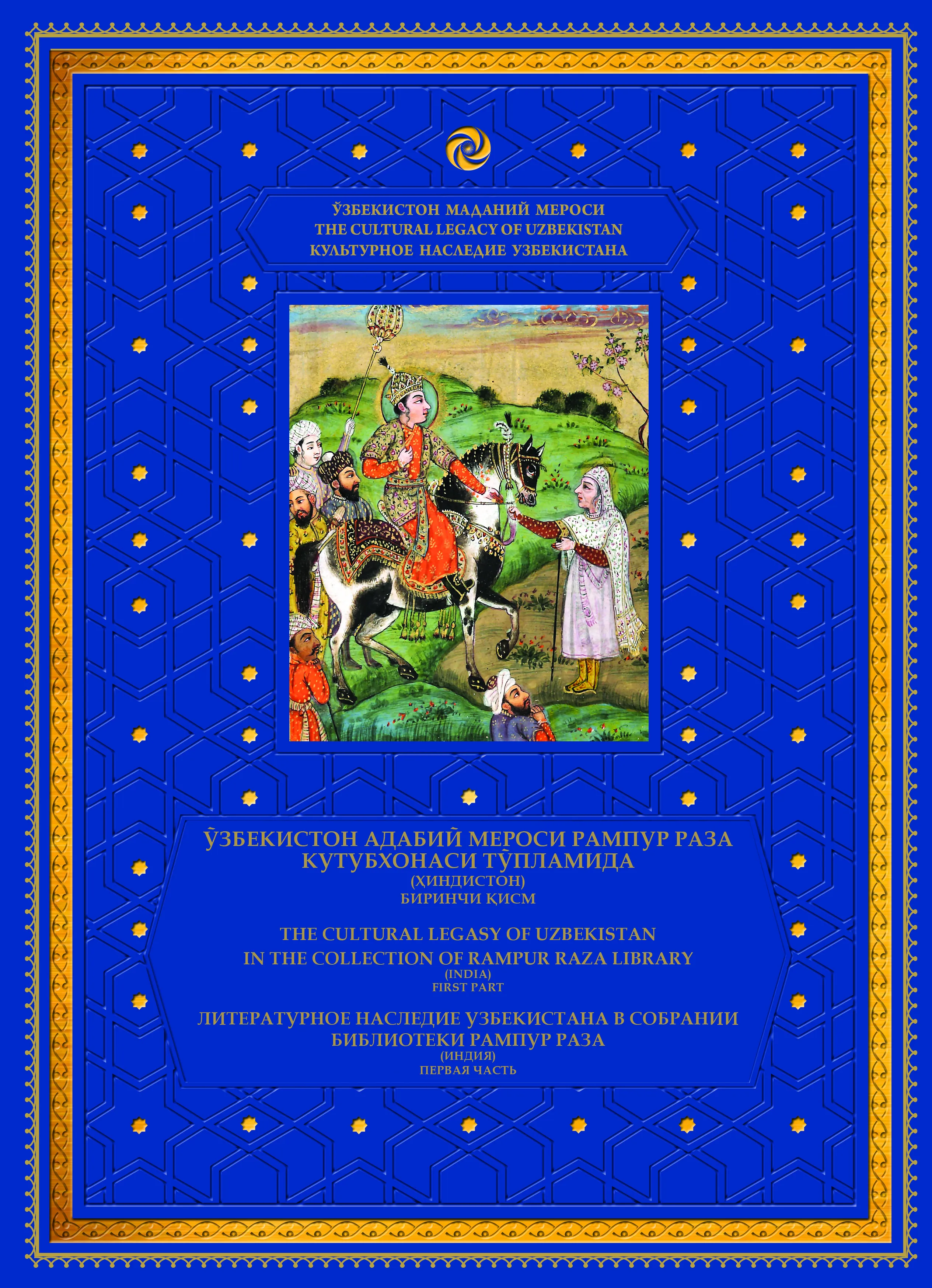
THE LITERARY LEGACY OF UZBEKISTAN IN THE RAMPUR RAZA LIBRARY COLLECTION (INDIA) (PART 2)
Description
Part II of the volume Literary Legacy of Uzbekistan in the Collection of the Rampur Raza Library (India) presents works on jurisprudence, philosophy, rhetoric, poetry, medicine and other subjects that reveal the genre diversity of medieval literature. Particularly interesting is the Book on Falconry, written in 990 AH/1582 by Muhib 'Ali b. Nizam ad-Din 'Ali Khalifa-i Margilani, better known as Khan-i Khas (died in 989 AH /1581–1582), who was a minister at the court of the emperor Babur. It tells in detail about the ways of taming hunting birds and their species, gives recommendations how to care about birds, information about their diseases, treatment methods and so on. The book is dedicated to the famous emperor from the Baburid dynasty, Akbar the Great (1556-1605). No less interesting is the section dedicated to fairy tales, fables about animals, anecdotes and legends. The last in the list include the famous Tutinameh – a series of fairy tales told by a parrot to entertain a young bride in the absence of her husband, written by a native of the city of Karshi, Diya ad-din Nakhshabi (died in 751 AH /1350 – 1351).
THE LITERARY LEGACY OF UZBEKISTAN IN THE RAMPUR RAZA LIBRARY COLLECTION (INDIA) (PART 2)
Description
Part II of the volume Literary Legacy of Uzbekistan in the Collection of the Rampur Raza Library (India) presents works on jurisprudence, philosophy, rhetoric, poetry, medicine and other subjects that reveal the genre diversity of medieval literature. Particularly interesting is the Book on Falconry, written in 990 AH/1582 by Muhib 'Ali b. Nizam ad-Din 'Ali Khalifa-i Margilani, better known as Khan-i Khas (died in 989 AH /1581–1582), who was a minister at the court of the emperor Babur. It tells in detail about the ways of taming hunting birds and their species, gives recommendations how to care about birds, information about their diseases, treatment methods and so on. The book is dedicated to the famous emperor from the Baburid dynasty, Akbar the Great (1556-1605). No less interesting is the section dedicated to fairy tales, fables about animals, anecdotes and legends. The last in the list include the famous Tutinameh – a series of fairy tales told by a parrot to entertain a young bride in the absence of her husband, written by a native of the city of Karshi, Diya ad-din Nakhshabi (died in 751 AH /1350 – 1351).