
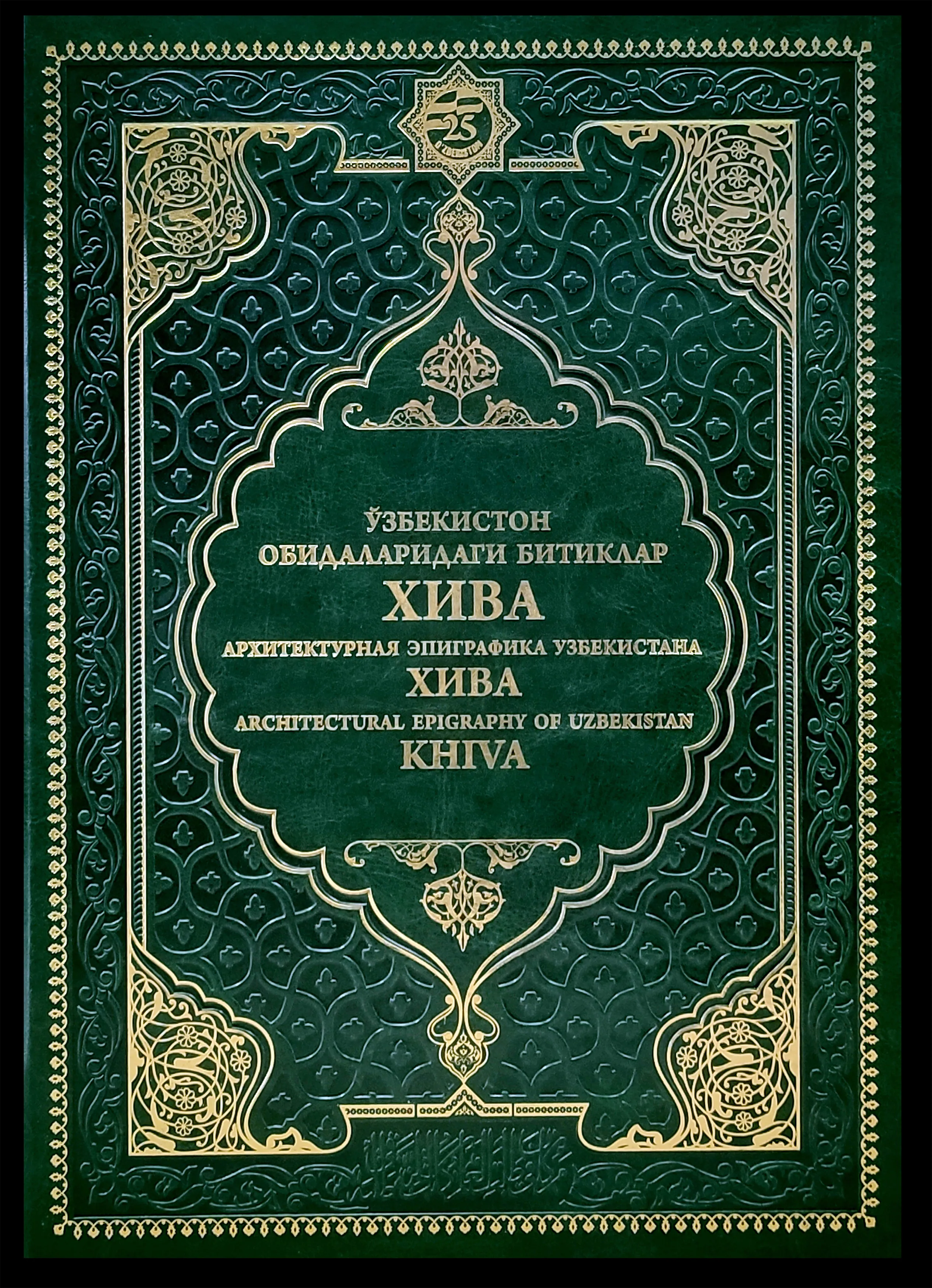
ARCHITECTURAL EPIGRAPHY OF KHIVA
Description
People in Khorezm spoke their own language (most likely belonging to the Aramaic group), which neither Arabic nor Persian could ultimately displace. This language was used in correspondence and written works. Inscriptions in this language decorated the walls of palaces and houses.
Therefore, epigraphy in the art of ancient Khorezm is a very ancient tradition. The Arabs who came to Khorezm in the early 8th century destroyed local priests and their books written in ancient Khorezmian. Inscriptions in this language are also found on dishes and architectural monuments during archaeological excavations at monuments all across the territory of ancient Khorezm.
This study of epigraphy shows how words from the ancient Khorezm language remained in use until the early 20th century, and are sometimes used in the modern Khorezmian dialect, which belongs to the Oguz group of Turkic languages. Moreover, some words from the ancient Khorezmian language are preserved in modern colloquial speech in the region.
ARCHITECTURAL EPIGRAPHY OF KHIVA
Description
People in Khorezm spoke their own language (most likely belonging to the Aramaic group), which neither Arabic nor Persian could ultimately displace. This language was used in correspondence and written works. Inscriptions in this language decorated the walls of palaces and houses.
Therefore, epigraphy in the art of ancient Khorezm is a very ancient tradition. The Arabs who came to Khorezm in the early 8th century destroyed local priests and their books written in ancient Khorezmian. Inscriptions in this language are also found on dishes and architectural monuments during archaeological excavations at monuments all across the territory of ancient Khorezm.
This study of epigraphy shows how words from the ancient Khorezm language remained in use until the early 20th century, and are sometimes used in the modern Khorezmian dialect, which belongs to the Oguz group of Turkic languages. Moreover, some words from the ancient Khorezmian language are preserved in modern colloquial speech in the region.