
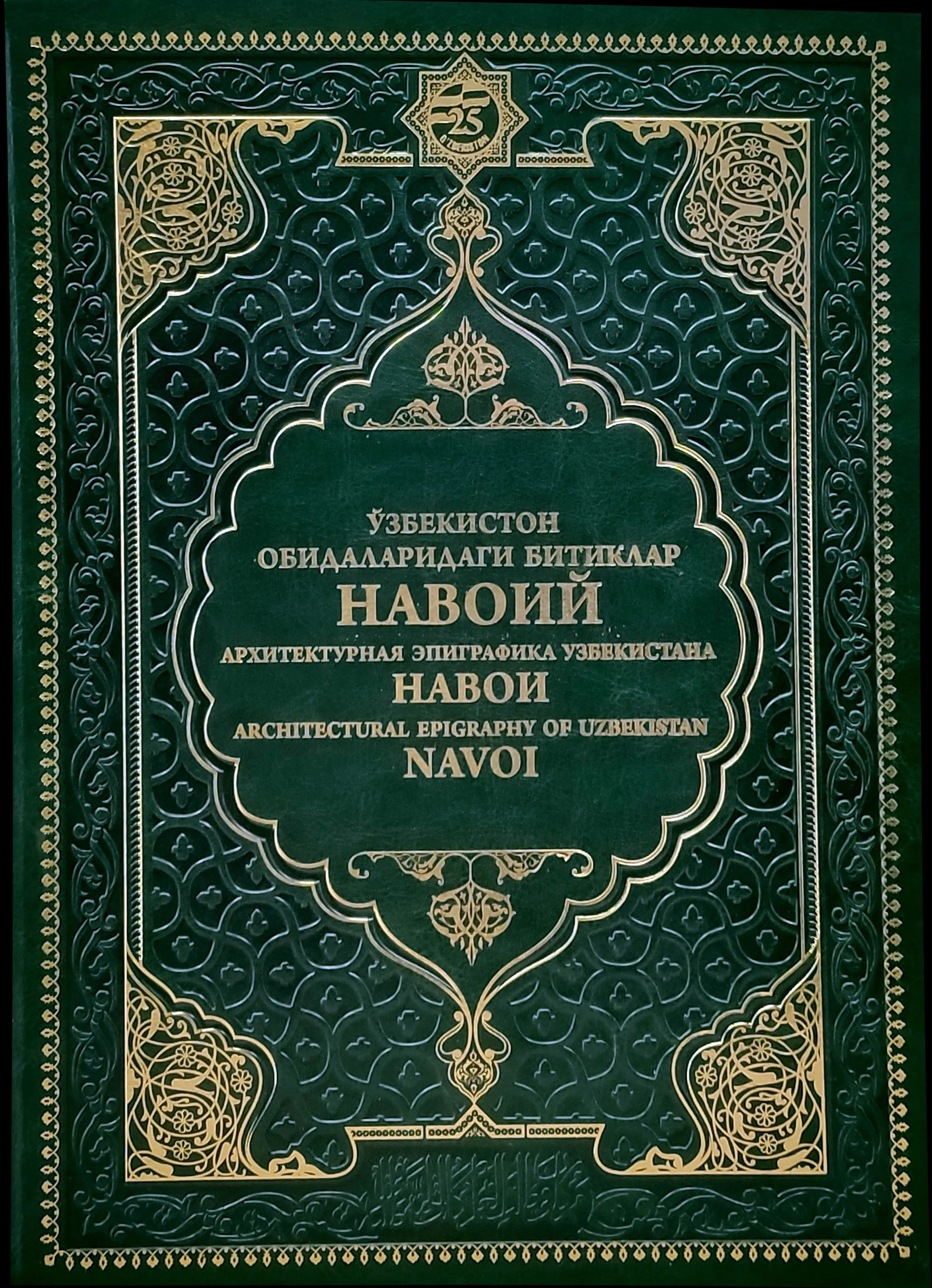
ARCHITECTURAL EPIGRAPHY OF UZBEKISTAN NAVOI
Description
Navoi region of Uzbekistan is culturally one of the oldest regions of the country. Its territory was developed in the Neolithic era, which is evidenced by a considerable number of extant petroglyphs. An important section of the Great Silk Road passed through the region. This part of the caravan route was called the Royal Road and connected Samarkand and Bukhara.
The content in the album is divided according to the geographical location of the monuments: Karmana, Nurata, Kiziltepa and Khatyrchi districts and the city of Navoi. The book-album presents inscriptions made in five different scripts (Kufi, Thuluth, Divani, Naskh and Nastalik) from 16 objects built in the 11th to the 20th centuries. Basically, these are poems, rules of conduct, epitaphs and the names of architects.
Among the architectural monuments included in the album are the complexes of Nurata, Kasym Sheikh, Imam Hassan and Imam Husayn, Shakhimardan, Tashmechet and Khojakula Imam, mosques Deggaron, Chelustin, Dekhi Baland, Sayid Ata, Barksuz, Akmechet, Badr Ata and Palvan Ata, Mirsaid Bahrom mausoleum, Rabat-i Malik caravanserai, as well as modern architectural structures, such as the Alisher Navoi mosque. Among other things, the album presents inscriptions from tombstones, as well as photographs of architectural monuments taken in the early 20th century.
ARCHITECTURAL EPIGRAPHY OF UZBEKISTAN NAVOI
Description
Navoi region of Uzbekistan is culturally one of the oldest regions of the country. Its territory was developed in the Neolithic era, which is evidenced by a considerable number of extant petroglyphs. An important section of the Great Silk Road passed through the region. This part of the caravan route was called the Royal Road and connected Samarkand and Bukhara.
The content in the album is divided according to the geographical location of the monuments: Karmana, Nurata, Kiziltepa and Khatyrchi districts and the city of Navoi. The book-album presents inscriptions made in five different scripts (Kufi, Thuluth, Divani, Naskh and Nastalik) from 16 objects built in the 11th to the 20th centuries. Basically, these are poems, rules of conduct, epitaphs and the names of architects.
Among the architectural monuments included in the album are the complexes of Nurata, Kasym Sheikh, Imam Hassan and Imam Husayn, Shakhimardan, Tashmechet and Khojakula Imam, mosques Deggaron, Chelustin, Dekhi Baland, Sayid Ata, Barksuz, Akmechet, Badr Ata and Palvan Ata, Mirsaid Bahrom mausoleum, Rabat-i Malik caravanserai, as well as modern architectural structures, such as the Alisher Navoi mosque. Among other things, the album presents inscriptions from tombstones, as well as photographs of architectural monuments taken in the early 20th century.