
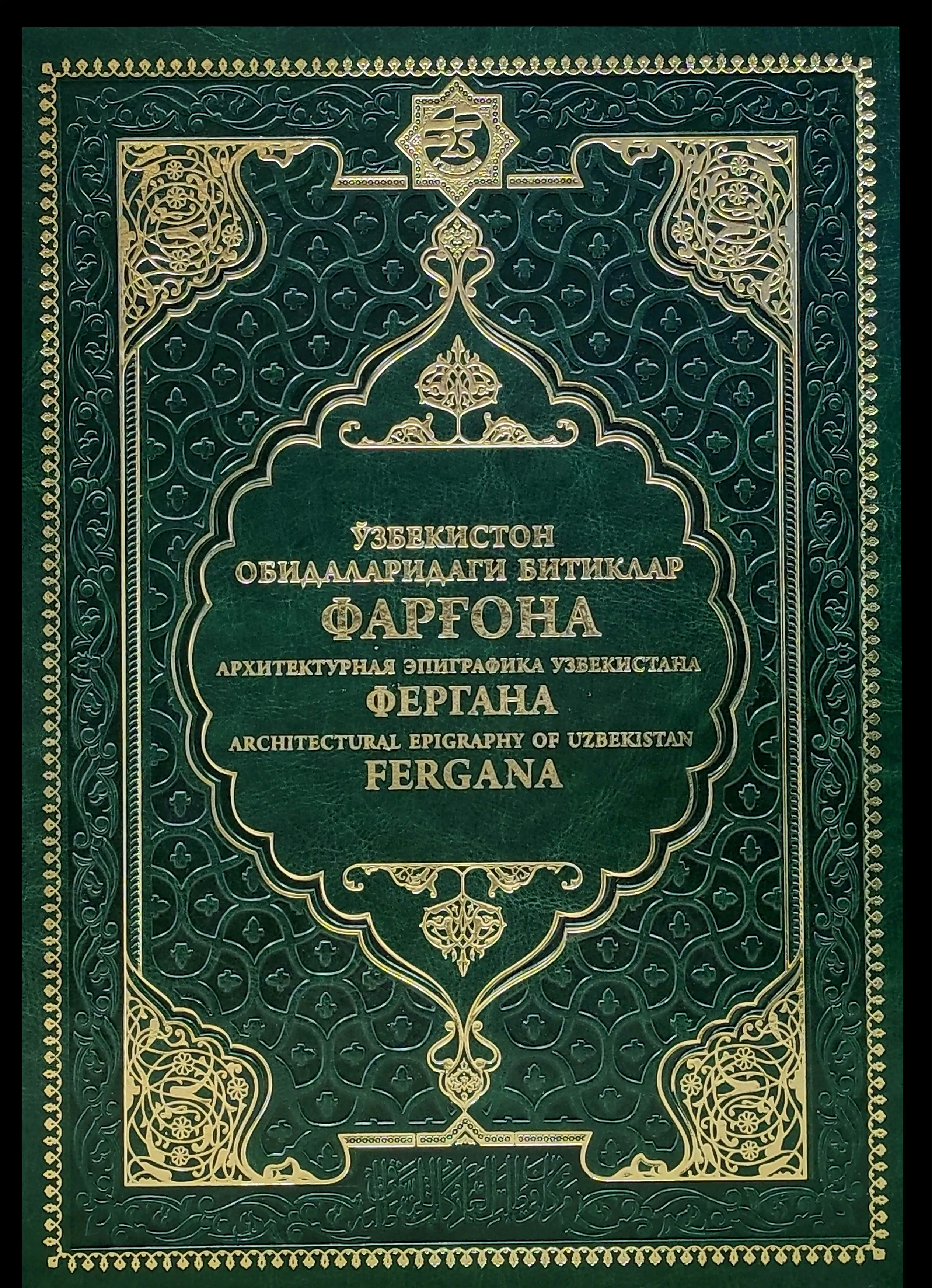
ARCHITECTURAL EPIGRAPHY OF UZBEKISTAN FERGANA
Description
Only single epigraphic monuments have been preserved in the Fergana Valley from the early (pre-Islamic) time. Moreover, most of them are small fragments of Turkic runic inscriptions on various objects.
The epigraphy from the Islamic period is also quite rare, with the exception of some archaeological finds (tombstones, fragments of architectural facing), which are stored in the museums of Kokand and Fergana. Natural disasters and violent demolishment of structures during atheistic campaigns have resulted in a very small number of monuments of this category. The epigraphic inscriptions that have survived to this day date back to the Ming dynasty (early 18th century to 1876). They are few, which makes them even more valuable.
A team of specialists tried to record and decipher as many preserved inscriptions as possible, including based on archival photographs and materials. As a result, a number of unique epigraphic compositions, the names of masters, calligraphers and builders have been identified.
ARCHITECTURAL EPIGRAPHY OF UZBEKISTAN FERGANA
Description
Only single epigraphic monuments have been preserved in the Fergana Valley from the early (pre-Islamic) time. Moreover, most of them are small fragments of Turkic runic inscriptions on various objects.
The epigraphy from the Islamic period is also quite rare, with the exception of some archaeological finds (tombstones, fragments of architectural facing), which are stored in the museums of Kokand and Fergana. Natural disasters and violent demolishment of structures during atheistic campaigns have resulted in a very small number of monuments of this category. The epigraphic inscriptions that have survived to this day date back to the Ming dynasty (early 18th century to 1876). They are few, which makes them even more valuable.
A team of specialists tried to record and decipher as many preserved inscriptions as possible, including based on archival photographs and materials. As a result, a number of unique epigraphic compositions, the names of masters, calligraphers and builders have been identified.