
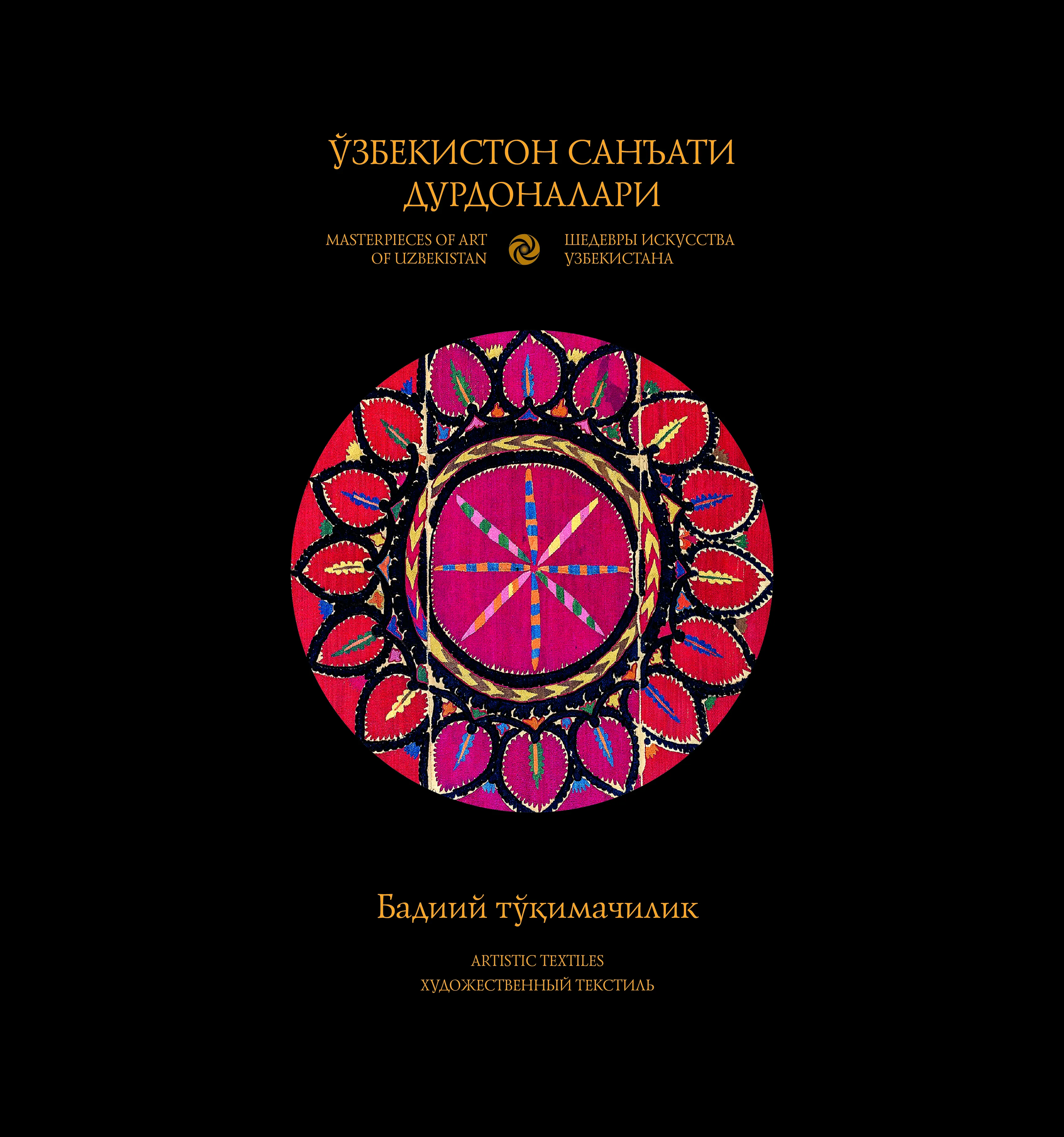
ХУДОЖЕСТВЕННЫЙ ТЕКСТИЛЬ
Описание
Серия «Шедевры искусства Узбекистана»
«Художественный текстиль»
Плодородные долины с возделанными полями, белоснежными от раскрывшихся коробочек хлопчатника, предгорья с мирно пасущимися стадами, величественная архитектура, восхищающая бирюзовыми изразцами и таинственно мерцающим золотом интерьеров…
Именно таким представляется Узбекистан, расположенный в самом сердце Азии. Благодаря его уникальному ландшафту, здесь развивалась культура земледельцев и скотоводов. Ландшафтная полифония стала причиной того, в Узбекистане сложились благоприятные условия для развития различных видов текстиля. Оазисы были местами культивации кенафа, хлопка и шелка, и, соответственно, виртуозных высот достигло искусство выделки абровых шелков, вышивки и набойки. За укрепленными стенами арков, в тиши придворных мастерских оттачивалось мастерство золотного шитья – элитного рукоделия, удовлетворявшего запросы высшего общества.
В свою очередь, степи и предгорья в изобилии поставляли на местные рынки шерсть и продукцию из нее – ковры, в том числе войлочные. Полифония «городских» шелков и ковров степняков, цветочных и звездных узоров сузани и палаков, украшавших стены мехмонхоны, и до сих пор загадочных по своим узорам илгичей, вывешиваемых в юртах, и составляет образ многоликого Узбекистана. Если вы хотите ближе познакомиться с историей и культурой нашей страны, достаточно посмотреть на ее текстиль, который расскажет вам о многом…
Автор серии «Шедевры искусства Узбекистана», автор вступительного слова: Фирдавс Абдухаликов, председатель Правления Всемирного общества по изучению, сохранению и популяризации культурного наследия Узбекистана, автор и руководитель проекта «Культурное наследие Узбекистана в собраниях мира».
Научный редактор серии и автор текста: Эльмира Гюль (Институт искусствознания АН РУз, научный координатор проекта «Культурное наследие Узбекистана в собраниях мира», Узбекистан).
Дизайн – Лола Раджабова (дизайнер проекта «Культурное наследие Узбекистана в собраниях мира», Узбекистан).
ХУДОЖЕСТВЕННЫЙ ТЕКСТИЛЬ
Описание
Серия «Шедевры искусства Узбекистана»
«Художественный текстиль»
Плодородные долины с возделанными полями, белоснежными от раскрывшихся коробочек хлопчатника, предгорья с мирно пасущимися стадами, величественная архитектура, восхищающая бирюзовыми изразцами и таинственно мерцающим золотом интерьеров…
Именно таким представляется Узбекистан, расположенный в самом сердце Азии. Благодаря его уникальному ландшафту, здесь развивалась культура земледельцев и скотоводов. Ландшафтная полифония стала причиной того, в Узбекистане сложились благоприятные условия для развития различных видов текстиля. Оазисы были местами культивации кенафа, хлопка и шелка, и, соответственно, виртуозных высот достигло искусство выделки абровых шелков, вышивки и набойки. За укрепленными стенами арков, в тиши придворных мастерских оттачивалось мастерство золотного шитья – элитного рукоделия, удовлетворявшего запросы высшего общества.
В свою очередь, степи и предгорья в изобилии поставляли на местные рынки шерсть и продукцию из нее – ковры, в том числе войлочные. Полифония «городских» шелков и ковров степняков, цветочных и звездных узоров сузани и палаков, украшавших стены мехмонхоны, и до сих пор загадочных по своим узорам илгичей, вывешиваемых в юртах, и составляет образ многоликого Узбекистана. Если вы хотите ближе познакомиться с историей и культурой нашей страны, достаточно посмотреть на ее текстиль, который расскажет вам о многом…
Автор серии «Шедевры искусства Узбекистана», автор вступительного слова: Фирдавс Абдухаликов, председатель Правления Всемирного общества по изучению, сохранению и популяризации культурного наследия Узбекистана, автор и руководитель проекта «Культурное наследие Узбекистана в собраниях мира».
Научный редактор серии и автор текста: Эльмира Гюль (Институт искусствознания АН РУз, научный координатор проекта «Культурное наследие Узбекистана в собраниях мира», Узбекистан).
Дизайн – Лола Раджабова (дизайнер проекта «Культурное наследие Узбекистана в собраниях мира», Узбекистан).