
The golden age of the Khiva Khanate dates back to the early 19th century. Palace culture flourished, valuable architectural structures were erected, and international trade accelerated. The country's largest centers of craftsmanship—the capital Khiva and the former capital of Khorezm, Urgench—were famous for their woven fabrics and garments.
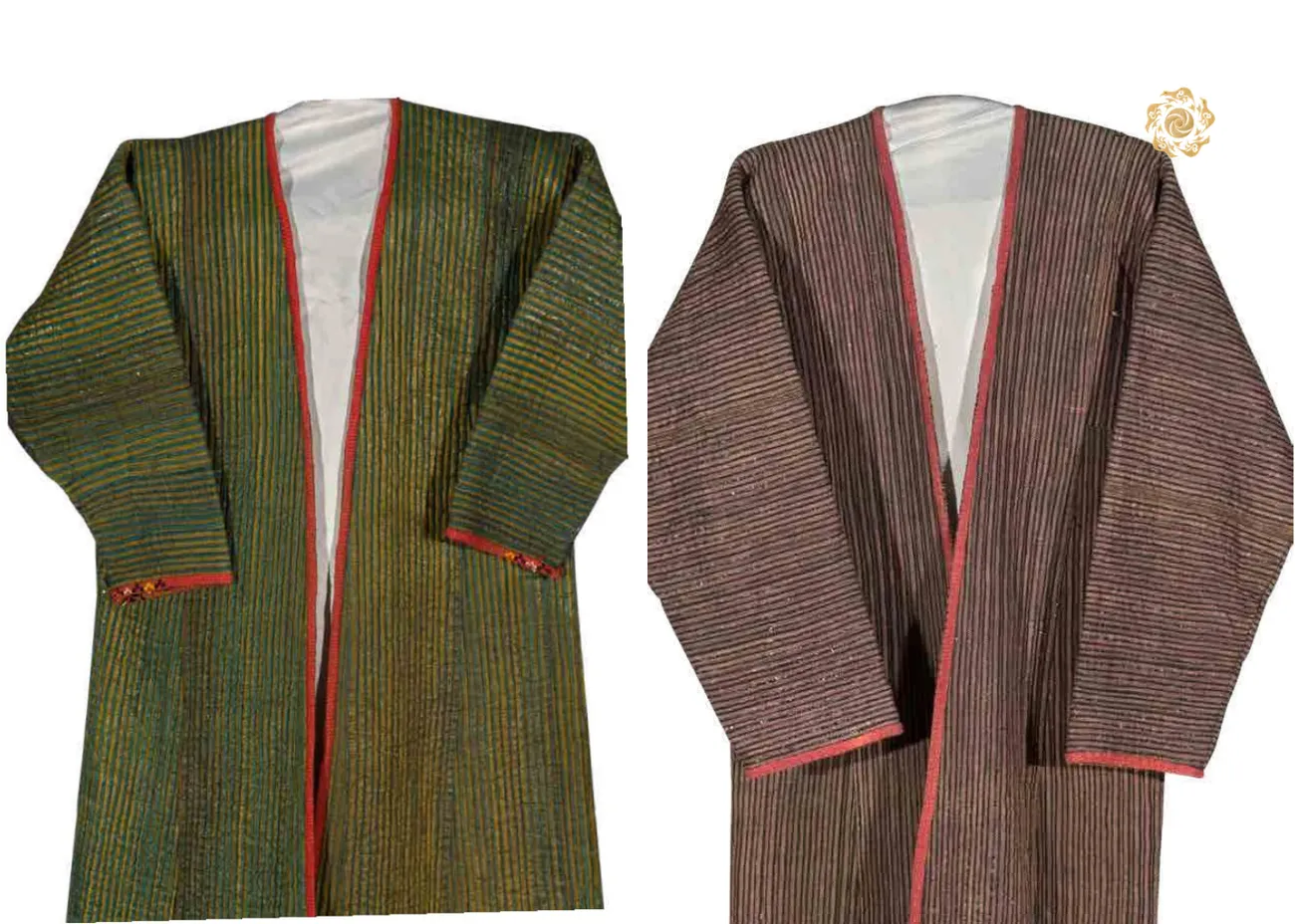
The Hungarian orientalist and traveler Arminiy Vamberi (1832–1913), who visited the Khiva Khanate several times, wrote: "Among the products of Khiva's industry, the Urgench chapan, i.e., the kaftan brought from Urgench, is famous. It is made of striped two-colored fabric (wool or silk, often a mixture of both threads), similar to our robes.
Khiva fabrics and products made from them were in high demand both in the local market and in neighboring regions. In particular, among the Turkmen tribes, there was a high demand for Uzbek high-quality cotton striped fabrics and winter cotton robes made from them – Khivadan (meaning "Hivese warm robe"), as well as Khivan floral calico – chintz with islimi and geometric patterns used for the lining of outerwear.
As in all of Central Asia, clothing in the Khiva Khanate was shaped by local climatic conditions, the ethnic composition of the population, and tribal traditions and customs. Clothing was also a sign of the owner's gender, age, and social status. Its fabric, color, cut, accessories—each of these factors was significant.
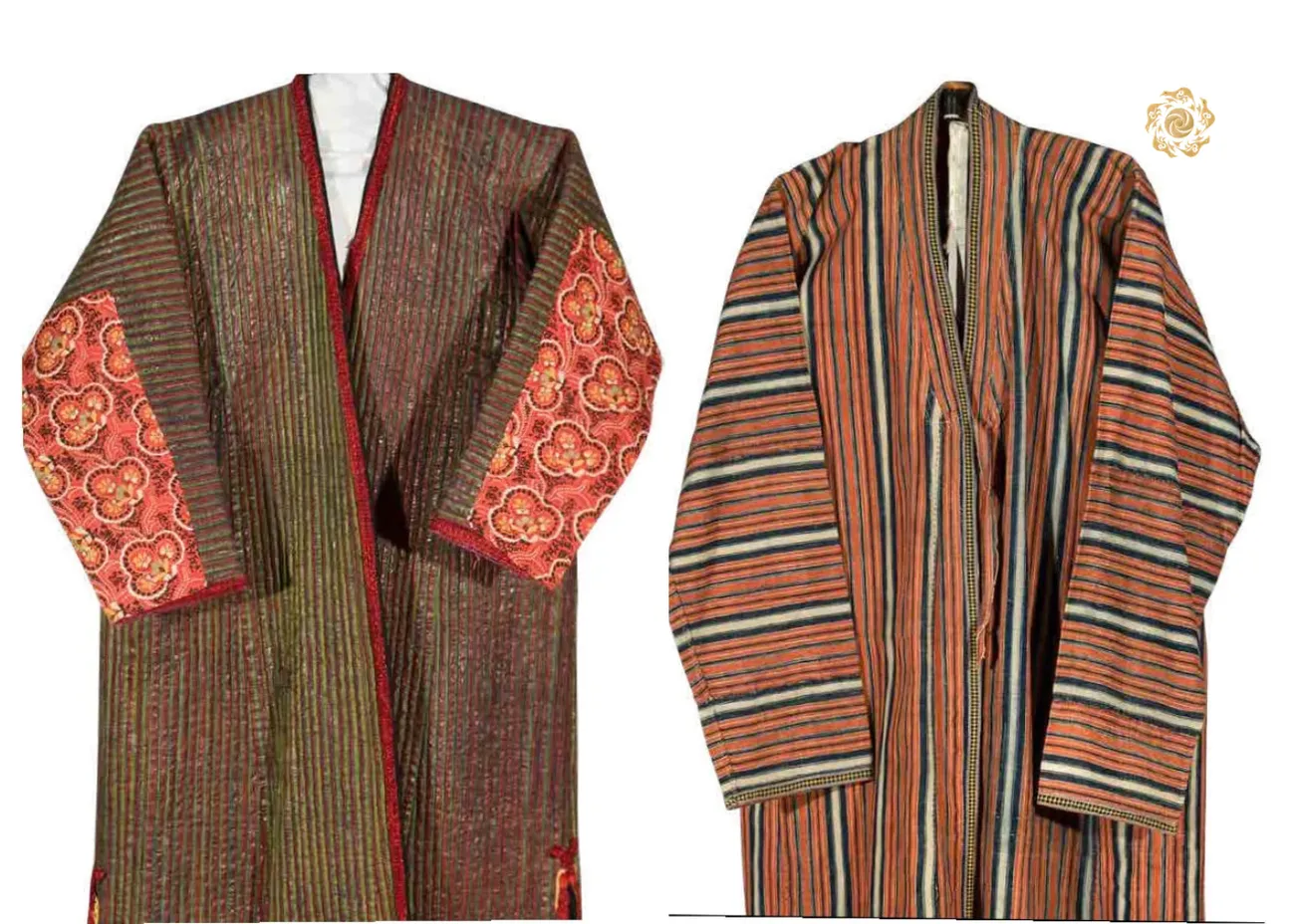
Researchers have repeatedly noted that the clothing of Khorezmians was modest in cut and was distinguished by a modest color palette. Today, the State Museum of Turkmenistan holds a unique collection of Uzbek textiles.