
A particularly well-known example of ancient art discovered in the territory of Uzbekistan is the fragment of a sculpture frieze, later to receive the name of the “Ayrtam frieze”.
It was discovered by Uzbekistan archaeologist M. E. Masson in 1932 – 19332. Made of marble-like limestone, it used to serve as a decoration in the Buddhist temple situated in the site of Ayrtam on of the Amudarya (Oxus) river near Termez (Surkhandarya region, Uzbekistan).
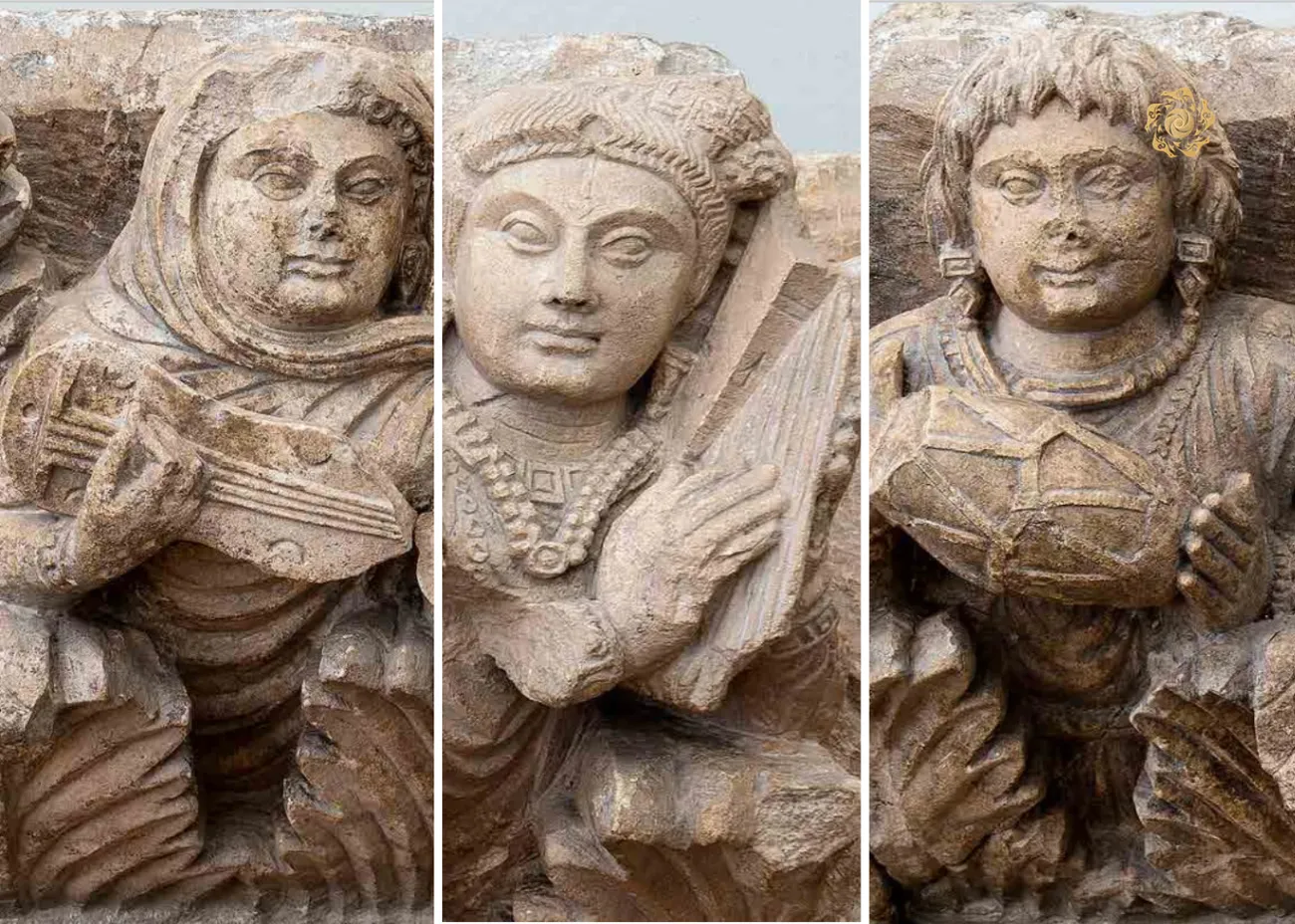
It depicts five female musicians (some researchers believe the drum player is male) with their musical instruments, forming an ensemble. Opinions on the exact date when the frieze was made vary, but most researchers agree it was created in the 1th– 2nd century AD.
According to S. P. Tolstov, G. A. Pugachenkova and other researchers, the women depicted in the frieze are of the local Bactrian ethnicity. This work of ancient art is a synthesis of various artistic traditions under the common name of Oriental-Hellenistic. It combines elements of Greek and North Indian or Gandhara art based on the Buddhist philosophy.
As Buddhologist S. F. Oldenburg once said to M. E. Masson, the sculpture composition of the five musicians expresses the Buddhist concept of “five great sounds” (pancha makhashabda). They are also often referred to as “the Heavenly Musicians”.
Several years after its discovery, the Ayrtam frieze was presented as a gift to the Hermitage Museum from the government of the Uzbek Soviet Socialist Republic.