
In the Museum of Arts and Crafts in Hamburg, Germany, there are 71 pieces of carved, glazed terracotta that once decorated the Bukhara mausoleum of Bayanquli Khan.
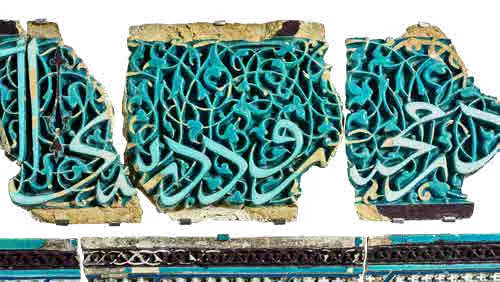
These tiles were acquired by the founder and first director of the Hamburg Museum, Justus Brinkmann, in 1895 in Paris thanks to the art dealer Siegfried Bing. The arrival of the tiles on the international market was due to the severe damage caused to the mausoleum by the earthquake of 1894 (?), and the Batumi merchant M. Yakhtajyan invited them to the Victoria and Albert Museum (London). The museum will buy some of them. In turn, the Hamburg Museum purchased a fairly large collection of tiles. The remaining fragments are scattered throughout the collections of various museums.
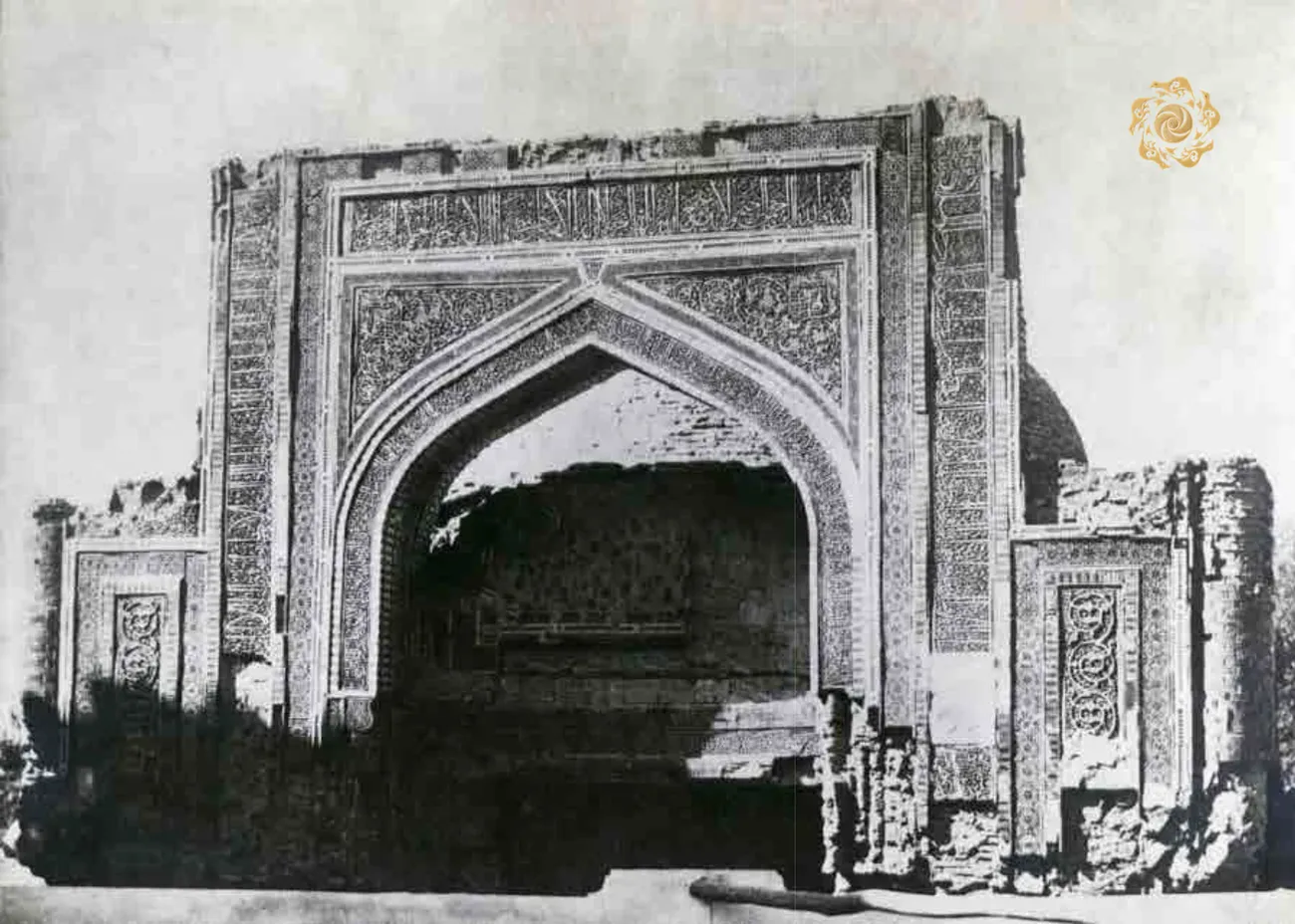
Bukhara, c. 1359.
Photo taken after the 1894 earthquake
... The 25th descendant of Genghis Khan, Bayanquli Khan, did not rule for long. His mausoleum, erected in Bukhara, was completely covered with glazed tiles from the inside and outside. Based on the complex relief methods and diversity of themes, the general appearance can be considered an intermediate stage between the methods of the Mongol and Timurid empires.