
Ornamental paintings on the margins of the book were very diverse. In this abundance of decor, compositions with a khatai motif should be highlighted.
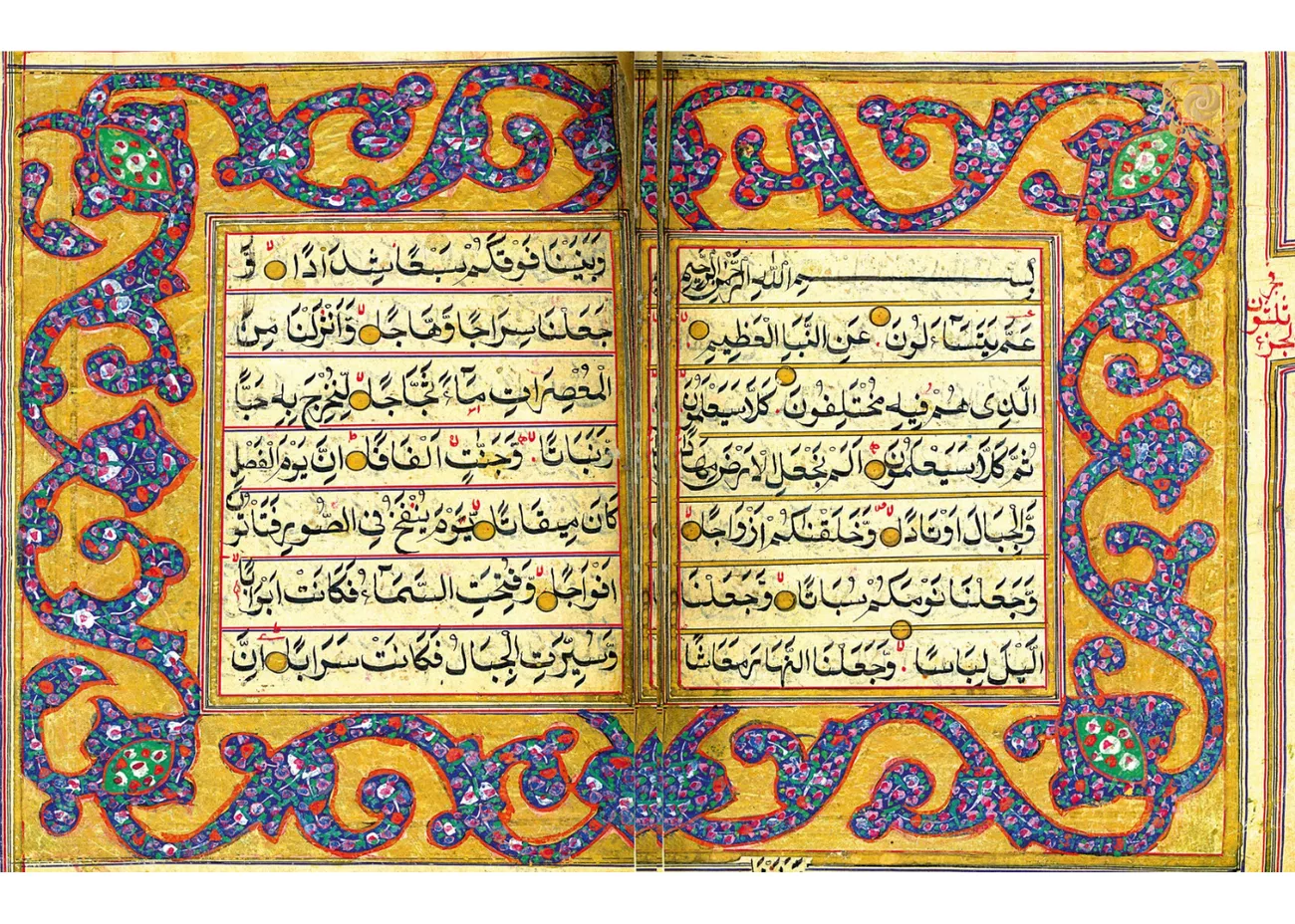
Its name meaning Chinese indicates the country of origin. Initially, khatai was a lotus-shaped palmette in combination with wide intertwining branches made with smooth lines. Thanks to Chinese silk fabrics produced specifi cally for the Islamic market, this motif is becoming popular in the architectural, book and textile decoration of the Muslim East.
In China, stylized lotus fl owers in weaves of ribbon shoots were sometimes combined with the “fl aming pearl” motif. Traditional Chinese hieroglyphs shou (longevity; a sign representing a turtle) or fu (happiness) inscribed in lotuses could easily be replaced with Arabic epigraphy to please Muslim buyers. Drawing with lotuses, pearls and hieroglyphs in the interlacing of ribbons or leafy shoots was endowed with a benevolent meaning.
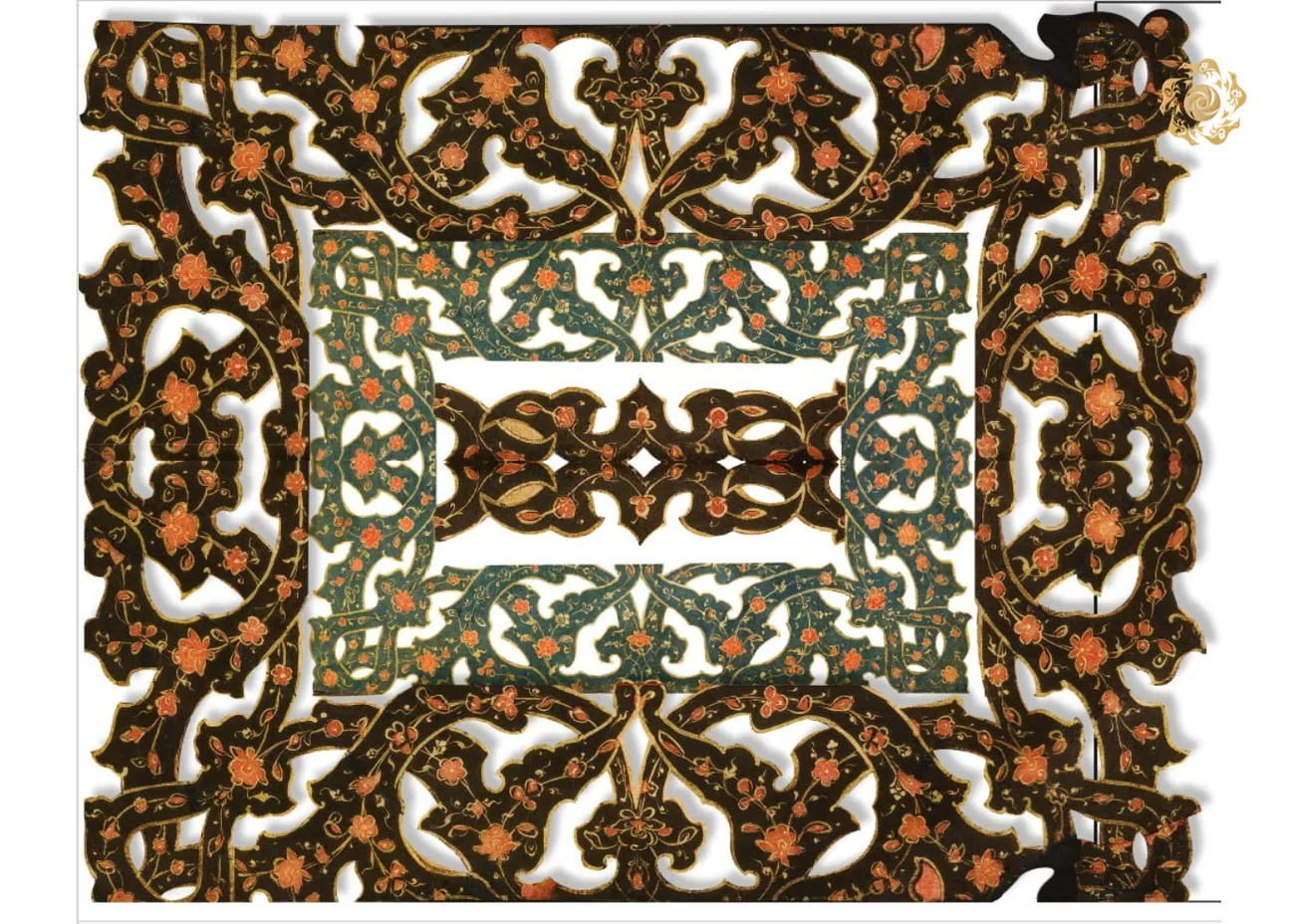
In the decoration of manuscripts, the khatai motif loses its Chinese appearance: “fl aming” pearls, hieroglyphs and mushroom clouds disappear against the background of lotuses. Now the khatai are wide, fl exible ribbon-sleeves, ending with large, gracefully forked islimi leaves, against which a thin branch studded with fl owers is drawn.
In some manuscripts, for example, in one of the 19thcentury Bukharan Qurans, the khatai is enlarged to the maximum, representing monumental “ducts” in which countless fl oral motifs are twisted into a spiral of “whirlpools”. The combination of large and small elements is one of the most striking features of the khatai pattern.